26.05.2026
313
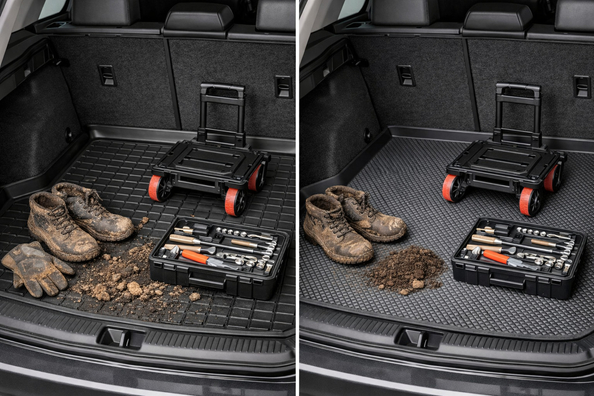
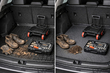
If a stroller, a toolbox, wet shoes, or dirty bags regularly ride in the trunk, in most cases a dense rubber or TPE tray with a raised edge and precise fit will be more practical. EVA is better where the load is lighter, the dirt is fine, and it matters to you to quickly shake out sand, dry the mat, and not carry extra weight.
The key here is not the material name, but how it behaves in a real trunk: whether there’s a lip, whether the mat slides, whether it blocks access to the spare tire, and whether items start slipping in turns. This is where people most often make the wrong choice.
EVA works thanks to its cells: they trap sand, water droplets, and fine dirt, while the material itself is lightweight and dries fast. For city use—when the trunk holds groceries, a backpack, spare shoes, or a folded stroller without constant moisture—it’s a convenient format.
A rubber or TPE tray is stronger in a different way: it isolates the factory trunk carpet better from wet and heavy loads, holds its shape under weight, and usually covers the entire floor better. For tools, wheel-related items, dogs, weekend trips, and regular dirt, it’s more often the better pick.
| Option | Strengths | Weaknesses | Best for |
|---|---|---|---|
| EVA trunk mat | Lightweight, traps fine dirt and water in cells, dries quickly, can be precisely fitted to complex shapes | Heavy items are more likely to slide, a one-piece mat can block access to the spare tire, sensitive to cutting accuracy | City driving, light loads, sand, small debris, occasional wet dirt |
| Rubber or TPE tray | Raised edge, better protection for carpet, handles wet and heavy cargo better, usually easier to wash | Can be heavier; some products may have a slippery surface or “new material” smell; universal versions require trimming | Stroller, tools, trips, dog, frequent dirt and water |
| Vehicle-specific premium tray | Precise cut, better fit, fasteners, lower chance anything gets under the mat | Higher price, not always available for a specific trim level | For those who carry things regularly and don’t want fitment compromises |
DD Tuning expert comment: Most often people don’t get the material wrong—they get the geometry wrong. They buy a universal mat without measuring, and then find it blocks the under-floor hatch or leaves corners open where all the moisture runs. If your trunk has wells, a subwoofer, or a complex floor, it’s better to check the cut right away rather than hope you can trim it later without consequences.
EVA’s strong point is everyday convenience. A cell roughly 8 mm deep collects sand, small stones, and water, and the material itself doesn’t absorb moisture, so after washing or rain it dries faster than a bulky tray. If the trunk is used gently, this is a genuinely comfortable setup.
But for tools, boxes, and stroller wheels, EVA doesn’t always perform as well. Items can slide on the surface, especially if they’re rigid and have no rubber feet. Another nuance is spare-tire access: when the mat is a single piece, lifting it every time is inconvenient.
In terms of durability, EVA lives fine in city use, but with constant metal abrasion, sharp corners, and dirt under load, it loses to a dense tray. If you want a neat trunk for daily life, it’s a good option. If it’s a work zone, it’s not so clear-cut.
One important note: the word “rubber” in retail often covers different compounds, and product behavior can vary. But in real trunk use, their strengths are similar: a stiffer outline, a raised edge, better stability under heavy loads, and straightforward protection for the factory lining.
For a wet stroller, garden gear, fishing equipment, or a toolbox, a tray is usually the better deal. It works like a separate tub: dirt and water stay on it instead of seeping into the carpet around the edges. If the fit is precise, removing and washing it is also easier.
There are downsides too. Some trays have a slippery surface, so boxes may slide no less than on EVA. New products sometimes have an odor, and universal versions with trimming lines are only good when the trunk shape is simple and you’ve measured everything accurately before buying.
The cheapest universal tray often looks like a bargain only until the first test fit. If your car has a double floor, side wells, or a complex contour, trimming takes time and doesn’t guarantee a neat result. A vehicle-specific product costs more, but there’s less chance dirt will get under the mat or the edge will start curling.
If you carry something heavy and dirty at least a few times a week, choose a tray with a raised edge. For that routine it’s simply less stressful: you don’t have to constantly think about whether water will spill over the edge or whether the load will deform the mat at a bend.
If your trunk is mostly clean and the debris is fine and dry, EVA is nicer day to day. It’s easier to shake out after sand, crumbs, soil from shoes, or small mess from kids’ items. In small crossovers and hatchbacks, it’s often a practical enough compromise.
A simple compromise is: for city driving and careful use—EVA; for regular wet loads—a vehicle-specific rubber or TPE tray. If you’re unsure, base your choice not on price, but on the worst realistic scenario in your trunk.
| Scenario | Best choice | Why |
|---|---|---|
| Stroller after rain | Rubber or TPE tray | Holds wet wheels better; water stays within the raised edge; lower risk of staining the carpet along the sides |
| Toolbox, jack, consumables | Rubber or TPE tray | Handles weight and abrasion better; easier to wash after grease, dust, and metal shavings |
| Daily groceries, backpack, small debris | EVA | Lightweight, quick to shake out, doesn’t require complicated care |
| Sand, soil, dry dirt after walks | EVA | Cells capture fine particles well; debris spreads less across the surface |
| Trips, dog, wet items, active trunk use | Vehicle-specific tray | Better fit, fewer exposed areas, higher practicality over the long run |
| Trunk with complex wells or hatches | Depends on the cut, but more often a vehicle-specific option | Shape matters more than material: a poorly chosen universal mat creates more problems than benefits here |
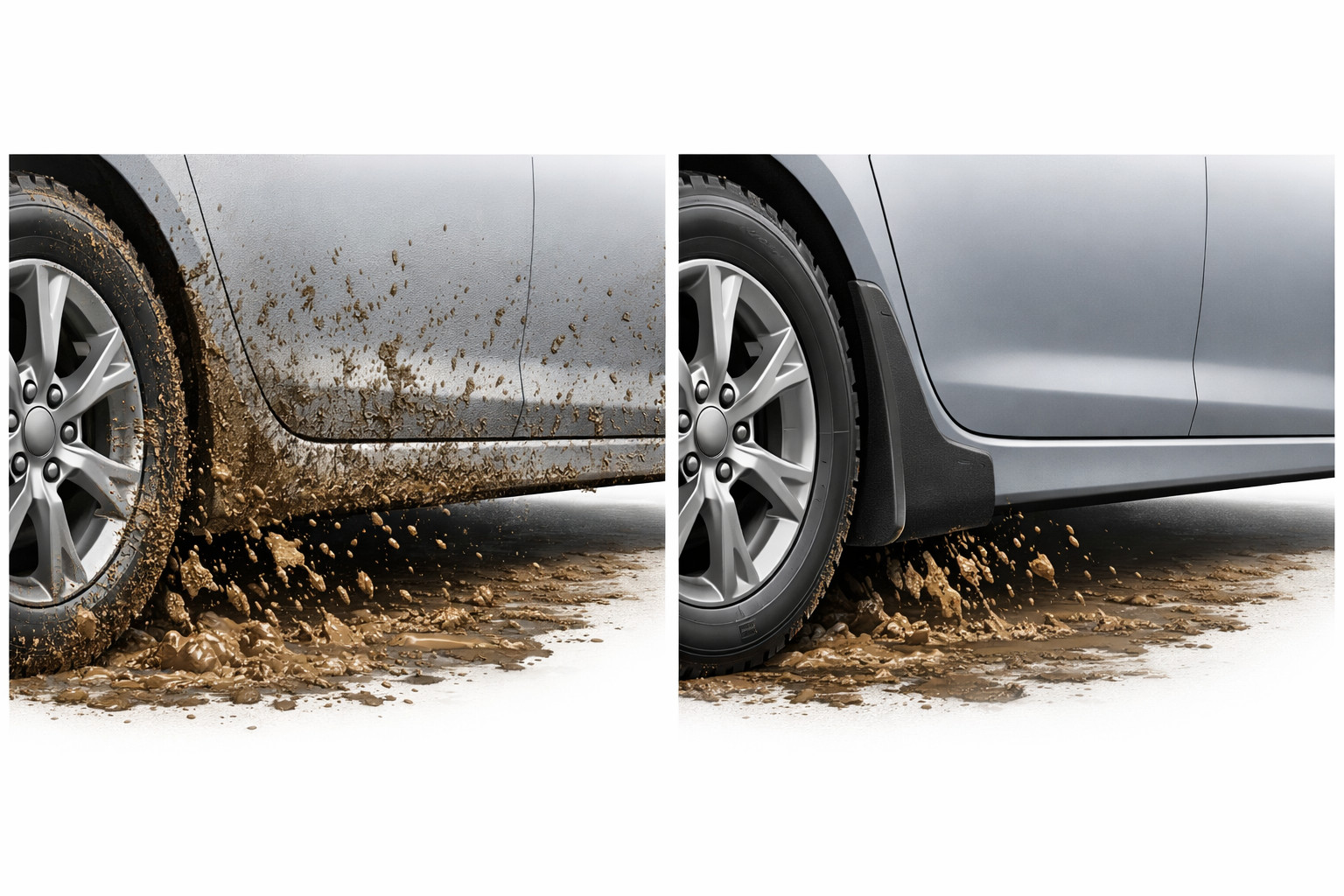
Paying extra is justified when the trunk actually works hard, not just occasionally carries shopping bags. If you need not a decorative accessory but stable fitment, proper edge protection, and less dirt in the cabin, it’s worth looking not at one product but a system: EVA for the trunk for a precise cut, EVA mats for the cabin for the same level of protection, and mud flaps so less wet dirt gets into the trunk and cabin in the first place.
A pricier solution also makes sense when the vehicle has a complex trunk shape, a double floor, or you often fold the seatbacks. In such cases, a well-made vehicle-specific product pays back not in “premium feel,” but in the fact that you don’t have to constantly adjust, remove, or shim anything.
From customer experience: most often people come to replace a cheap universal tray that had to be cut for a well and hatch, yet moisture still ran into a trunk corner. After switching to a more precisely fitted option, people usually value not the looks but the fact that the stroller and dirty items stop leaving marks on the factory lining—and they don’t have to pull out the entire mat every time just to access the well.
For a stroller, tools, and regular wet dirt, a dense rubber or TPE tray with a raised edge and precise cut more often wins. EVA is strong in light weight, fast drying, and capturing fine debris, but with heavy and slippery cargo—and in complex trunks—it more often falls short.
If you simplify the choice to one rule, it’s this: light city use—EVA; frequent dirt and loads—a tray. This material is based on real selection experience, hands-on practice, and real-life use cases—not on nice promises in a product card.
| ✔ | A dense rubber or TPE tray with raised edges is better suited for a wet cart, tools, and heavy items: it keeps its shape and prevents dirt and water from reaching the factory carpet. This is especially noticeable when the trunk is used regularly in dirty conditions. |
| ✔ | EVA is convenient for city use: it is lightweight, dries quickly after rain or washing, and catches fine sand, crumbs, and dry debris in its cells. It is easier to shake out when the trunk mostly carries clean or light items. |
| ✔ | A vehicle-specific tray with a precise cut fits better in a trunk with niches, access flaps, a double floor, or a complex shape. This reduces the chance that the mat will need constant adjustment or that dirt will get under the edge. |
| ✔ | EVA slightly better absorbs small rattles thanks to its foamed structure, but it does not replace proper load securing. For lighter items, this can be a pleasant bonus in daily use. |
| ✔ | A rubber or TPE tray is easier to wash after grease, dust, melting snow, or wet mud. It works like a separate tub, so dirt does not spread through the trunk as quickly. |
| ✘ | EVA handles constant rubbing from heavy boxes and sharp tool edges worse. In a work trunk, its durability gives way to a dense tray more quickly. |
| ✘ | On EVA, heavy or rigid items can slide, especially if they do not have rubber feet. For boxes, a jack, or a cart, this can be inconvenient. |
| ✘ | A solid mat or a poorly chosen universal tray can block access to the spare wheel, jack, or underfloor organizer. If you often open these compartments, this will become a daily inconvenience. |
| ✘ | Some rubber or TPE trays can have a slippery surface or the smell of a new material. In addition, universal versions often require trimming, and a mistake here cannot be corrected without consequences. |
Shipping to EU
Wholesale and retail
Own warehouse
Опис продукту
Подарунки не надаються при оформленні покупки у кредит під 0,01% або при покупці частинами.