23.07.2026
166
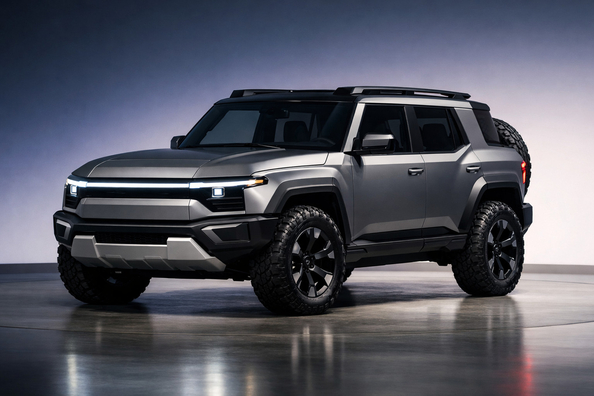
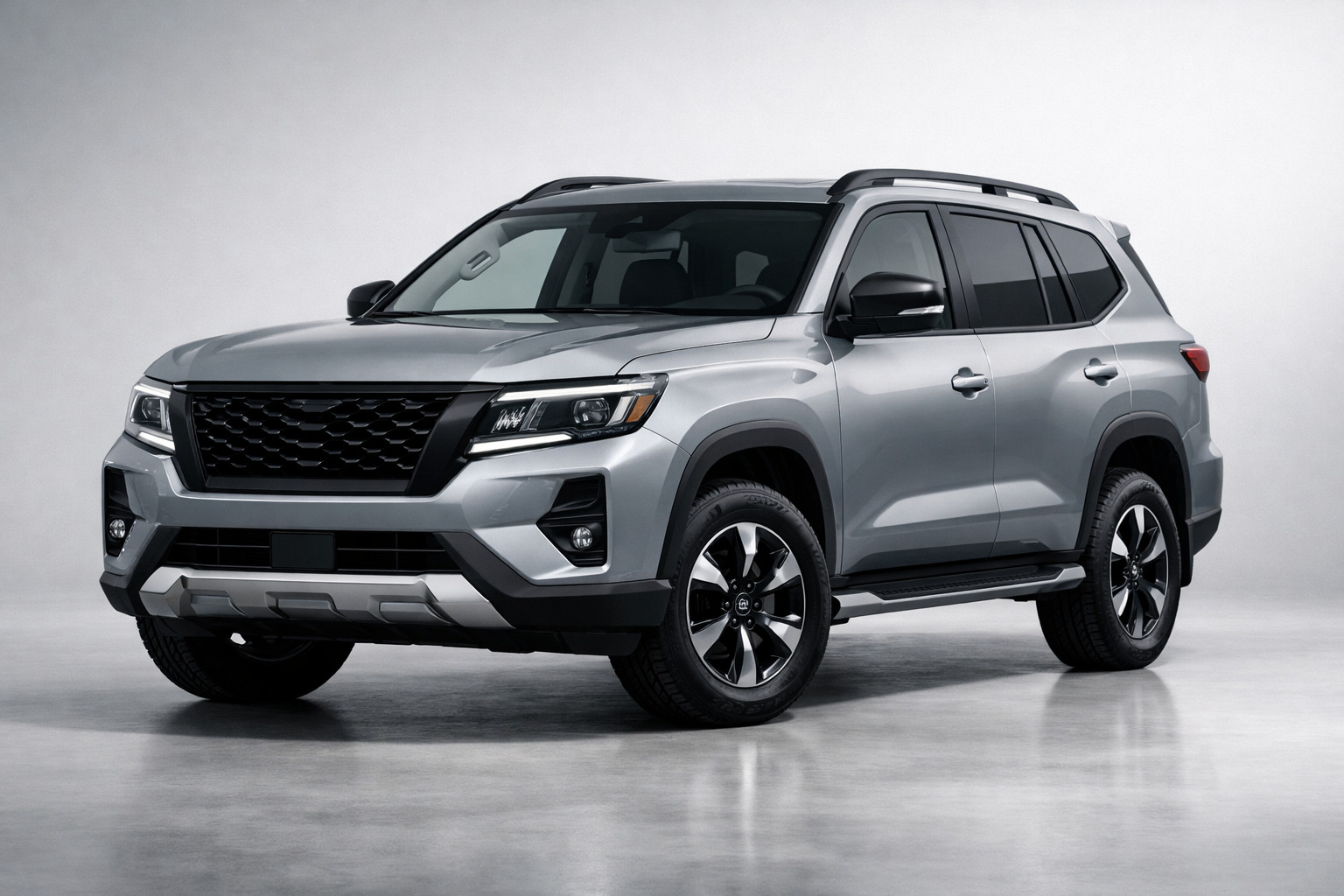
Hyundai Boulder Concept is an officially unveiled concept, not a production model and not a pre-production prototype. The world premiere took place on April 1, 2026 at the New York International Auto Show, where Hyundai showed a body-on-frame off-road project with a very strong focus on trail capability.
The key nuance is that the manufacturer has already confirmed the direction, but has revealed almost none of the technical details. So talking about a future rival to the Ford Bronco, Jeep Wrangler, or Toyota 4Runner is only market logic: the look and the architecture are officially confirmed, while everything else is either still to come or, in the author’s view, will be defined closer to production.
Officially confirmed by the manufacturer: Boulder has concept status and is not intended for sale. This is not just a teaser or a sketch, but a fully presented show car with photos, video, and clear positioning as an off-road design preview of Hyundai’s future body-on-frame project for the US.
Already announced are a body-on-frame construction, 37-inch mud tires on 18-inch wheels, a full-size spare on the tailgate, safari-style upper windows, rear-hinged (suicide) doors, a dual drop-down tailgate, a lowering rear window, and a real-time off-road guidance software system. In other words, Hyundai showed not only the shape, but also the usage scenario for trips and challenging terrain.
| What’s known | What’s expected | What’s unknown |
|---|---|---|
The premiere took place in New York on April 1, 2026; the model’s status is a concept. | By the end of the decade, the concept is expected to transition into a production American body-on-frame project. | Whether the production vehicle will keep the Boulder name and how close it will be to the show car. |
A full body-on-frame construction and a strong off-road focus are officially confirmed. | Most likely, the production version will get true 4WD and a more practical body. | Suspension type, lockers, low-range gearing, and exact approach/breakover/departure angles. |
37-inch tires, 18-inch wheels, a spare, a lowering rear window, and a dual tailgate are stated. | For production, the extreme wheels may be reduced to more daily-usable sizes. | Overall dimensions, weight, ground clearance in numbers, towing, and payload. |
The project is clearly aimed at the US. | North America—primarily the US—is expected to be the first market. | Official pricing, trims, and the list of other markets. |
Officially, the manufacturer speaks about a fully-boxed body-on-frame architecture, meaning a true ladder-frame structure. For a future production vehicle, this matters: such a base is better suited to large wheels, serious loads, heavy-duty armor, driving over rocks and ruts, and can potentially offer more strength reserve than a typical crossover unibody.
But after that, we enter the zone of assumptions. For now, it’s unknown what the suspension will be, whether there will be low-range gearing, and what differentials or electronic lockers will be used. In the author’s view, Hyundai won’t be able to enter this class without a genuine off-road toolkit—otherwise Boulder turns into a rough-styled crossover rather than a true segment product.
The powertrain has not been officially announced. There is no confirmation of a gasoline engine, a hybrid, or an EV layout; power, torque, transmission, range, and fuel consumption have not been named either.
Because this is a body-on-frame American project, the most realistic options look like a turbo gasoline engine or a hybrid with a conventional automatic transmission. A fully electric version is theoretically possible, but for this format you’d have to solve mass, traction-battery protection, and range loss off-road very aggressively—so at launch, I’d sooner expect ICE or a hybrid.
DD Tuning expert comment: The most common mistake in projects like this is to look only at big wheel size and not think about load on mounting points, space for the spare, and brake compatibility. If a production Boulder keeps off-road geometry, accessory selection should start with protection, mounts, and real compatibility—not decorative pieces. The second typical mistake is treating a concept as a ready catalog of future options, even though a portion of the solutions almost always changes by production.
On the outside, Boulder is executed with a very tough American logic: short overhangs, big arches, vertical surfaces, a high visual ride height, and maximum emphasis on the wheels. The 37-inch mud tires here don’t look like a decoration; they’re an element that immediately defines the vehicle’s whole character—higher seating position, different suspension behavior, and different requirements for body clearances.
The interior has only been partially revealed so far, but even the stated elements show Hyundai isn’t thinking only about show effect. The upper windows, lowering rear glass, and off-road guidance system hint at real interaction with terrain, visibility, and loading. The rear-hinged doors, however, will most likely remain a concept detail and reach production in a simpler form.
Officially, only part of the off-road data is stated: 37x12.50R18 LT tires, 18-inch wheels, a full-size spare, high ground clearance without an exact number, and aggressive approach, departure, and breakover angles without specific values. For real-world use, this already says a lot about the intent: the vehicle should look confident on rocks, in deep ruts, and on long off-road distances where a same-size spare is genuinely needed.
Length, wheelbase, weight, fording depth, towing capability, and payload have not been officially announced. So exact numbers right now would be fiction. I assume that by production the concept will lose some of its extremeness: the wheels will likely get smaller, and the geometry and exterior plastics will be adapted for noise, fuel consumption, drivetrain durability, and certification.
Hyundai has not officially named direct production rivals. But by the formula of a body-on-frame vehicle with a pronounced off-road character, Boulder logically sits alongside the Ford Bronco, Jeep Wrangler, and Toyota 4Runner. At the same time, it’s important to understand: this is a market interpretation, not a direct statement from the manufacturer—especially since Hyundai is also steering the concept toward a future mid-size pickup.
| Model | What it offers the market today | How Boulder could respond |
|---|---|---|
Ford Bronco | A modern body-on-frame format, a strong off-road image, and readiness for upgrades. | Fresher Hyundai design, new architecture, and potentially a more modern cabin interface. |
Jeep Wrangler | The toughest image and a very clear focus on true off-roading. | A more comfortable approach, broader daily usability, and a less utilitarian perception. |
Toyota 4Runner | A practical body-on-frame format for daily use and travel. | Bolder styling and a chance to enter the segment as a newer alternative. |
If Hyundai brings solid engineering to production, it has a chance to win customers who don’t want just another crossover, but a true body-on-frame vehicle with a modern feel. In the real market, this is visible even in demand for things like fender flares for Ford Bronco: in this class, people value not decoration, but durable, functional solutions.
According to official materials, the production vehicle is expected by the end of the decade, but there’s a discrepancy even within the brand: one official page points to 2029, another to 2030. So the correct way to put it is: the launch is officially expected in the 2029–2030 window.
The first market will almost certainly be the US, since the project is presented as designed, developed, and built in America. Pricing has not been officially announced. In the author’s view, if the production version arrives as a mid-size body-on-frame SUV or a related pickup with a pronounced off-road package, the start could be somewhere around $45–55k in the US, with well-equipped versions going higher.
For now, it’s unknown which exact powertrain will go into production, whether the model will have low-range gearing, what lockers it will use, what suspension type will be applied, and whether the Boulder name will remain. It’s also not officially announced whether the final vehicle will be a Bronco-style body-on-frame SUV or closer to a mid-size pickup, which Hyundai is directly hinting at.
There are also no reliable rumors that would allow us to cautiously name exact specs. In this situation, it’s better to honestly say “still unknown” than to draw attractive figures the manufacturer hasn’t confirmed yet.
From a customer’s experience: In a similar segment, a body-on-frame SUV owner first wanted to immediately install big wheels and an exterior kit, but after choosing parts he started with underbody protection, mud flaps, and cargo organization. In the end, the vehicle became more convenient for daily use, and he added the aggressive exterior set only after validating practicality. This order almost always turns out to be smarter than building a vehicle just for the look.
Hyundai Boulder currently looks like an officially confirmed concept with a very clear message: the brand is preparing for the US not a stylized crossover, but a body-on-frame project with real off-road substance. But the main part is still ahead, because the engine, drivetrain, suspension, and towing numbers will show whether this is truly a future rival to Bronco, Wrangler, and 4Runner—or only a strong design manifesto.
In the author’s view, the production vehicle will be calmer on the outside, more practical inside, and technically more conservative than the concept—but it will keep the body-on-frame philosophy, high ground clearance, and American positioning. This material is based on real selection experience, practical know-how, and real usage scenarios in the body-on-frame SUV segment, so the conclusion is simple: Boulder has potential, but it’s only worth judging it for real once production specs appear.
| ✔ | The body-on-frame construction has been officially confirmed, which gives an SUV a better foundation for large wheels, a силовий обвіс and tackling difficult terrain than a regular crossover body. |
| ✔ | Practical off-road features have already been announced: 37-inch mud tires, a full-size spare, a drop-down rear window and a dual tailgate. This clearly points to use in the field, not just a show effect. |
| ✔ | The concept is clearly aimed at the American market, which increases the chances of a truly adapted production version for local conditions and demand for body-on-frame SUVs. |
| ✔ | Hyundai has already shown not only the exterior, but also several useful off-road and loading solutions, including a real-time off-road guidance system and safari-style upper windows. |
| ✔ | By design, Boulder could become an alternative to Bronco, Wrangler and 4Runner for those who want a body-on-frame format, but with a fresher approach and a less utilitarian image. |
| ✘ | The main thing is still undisclosed: there is no official information about the engine, transmission, all-wheel drive, locking differentials, low-range gearing or suspension. Without this, it is difficult to assess the real off-road capability. |
| ✘ | The debut 37-inch tires and very aggressive geometry may turn out to be too extreme for production, so before reaching the market the vehicle will likely be simplified and made less striking. |
| ✘ | The exact dimensions, weight, ground clearance, towing capacity and payload are unknown, meaning there are no basic figures by which such models are usually compared. |
| ✘ | Series production is expected only in the 2029-2030 period, so there is still a long wait before the real car arrives, and for now there is only a concept without confirmed hardware. |
Shipping to EU
Wholesale and retail
Own warehouse
Опис продукту
Подарунки не надаються при оформленні покупки у кредит під 0,01% або при покупці частинами.