09.07.2026
397
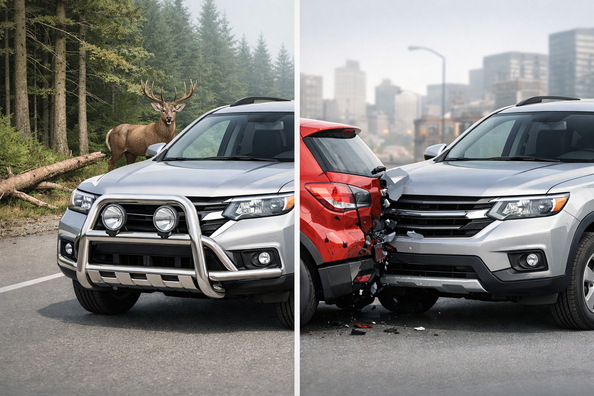
A bull bar only makes sense not on its own, but for a specific job. If the vehicle regularly drives on night highways, forest roads, fields, or in places where the real risk of hitting an animal or dense brush is high, front protection can save the radiator and headlights and let you keep driving under your own power. But if most of your mileage is city and highway, with just one motive — “to make it look tougher” — it’s often unnecessary stainless steel that adds weight, worsens the front-end geometry, and increases risk for pedestrians.
The problem is that people often mean completely different things by “bull bar”: from a decorative tube to a full-fledged, vehicle-specific heavy-duty assembly for a winch, sensors, and a camera. On a modern vehicle, that difference is critical: the wrong bar can interfere with parking sensors, change how the front end behaves in a crash, and even make outcomes worse where the owner expected “extra protection.”
The main reason for the confusion is that different designs look similar from the outside. But a decorative bar, a universal tubular product, and a vehicle-specific front protection system work differently. One option may only add weight and length; another can genuinely cover the lower front end and withstand real operating loads.
The second reason is that a modern car is engineered around crumple zones, airbags, parking sensors, cameras, and radars. Any rigid element up front changes how the vehicle absorbs an impact. For pedestrians this is especially critical: the survival margin in a collision with a rigid front element can drop by roughly half.
DD Tuning expert comment: the most common mistake is putting a universal bar on a crossover with sensors and expecting everything to work like factory. The second typical story is judging only the tube itself, not the brackets and compatibility with the mounting points. If you don’t regularly drive in areas with animals or need a winch setup, loading the front end with extra metal usually isn’t worth it.
| Symptom | Likely cause | What to do |
|---|---|---|
| You want to “feel safer” in the city | A psychological sense of toughness instead of a real need | Don’t install a bull bar just for looks; assess the real risks of your routes |
| After installation the parking sensors beep or errors appear | Incompatibility with sensors/camera or incorrect sensor orientation | Check that the kit is vehicle-specific, verify mounting and sensor placement; sometimes removal is required |
| The front end feels heavier; the car climbs ramps/curbs worse | Extra mass and a reduced approach angle | Evaluate whether you really need front protection; for city driving it’s often an unnecessary compromise |
| You need to mount a winch, lights, or an antenna | A functional task the factory bumper can’t solve | Look only for a vehicle-specific heavy-duty kit with proper mounting |
| You’re worried about minor hits from brush, grass, or animals on poor roads | A real operating risk to the radiator and front end | Consider compatible front protection, not a decorative bar |
Only the solution that matches the task works. If you need to handle regular dirt-road trips, forest driving, or night routes with animals, a vehicle-specific front protection system designed for your exact vehicle makes sense. In properly engineered systems, the bumper, lighting, sensors, and front-end geometry can be taken into account.
The second thing that truly helps is correct installation and post-install checks. Sensors must be positioned correctly, the bar must not touch the bumper or body while driving, and driver-assistance systems must not throw errors. After installation you need more than a quick look in the driveway — do a short road test with parking and maneuvering.
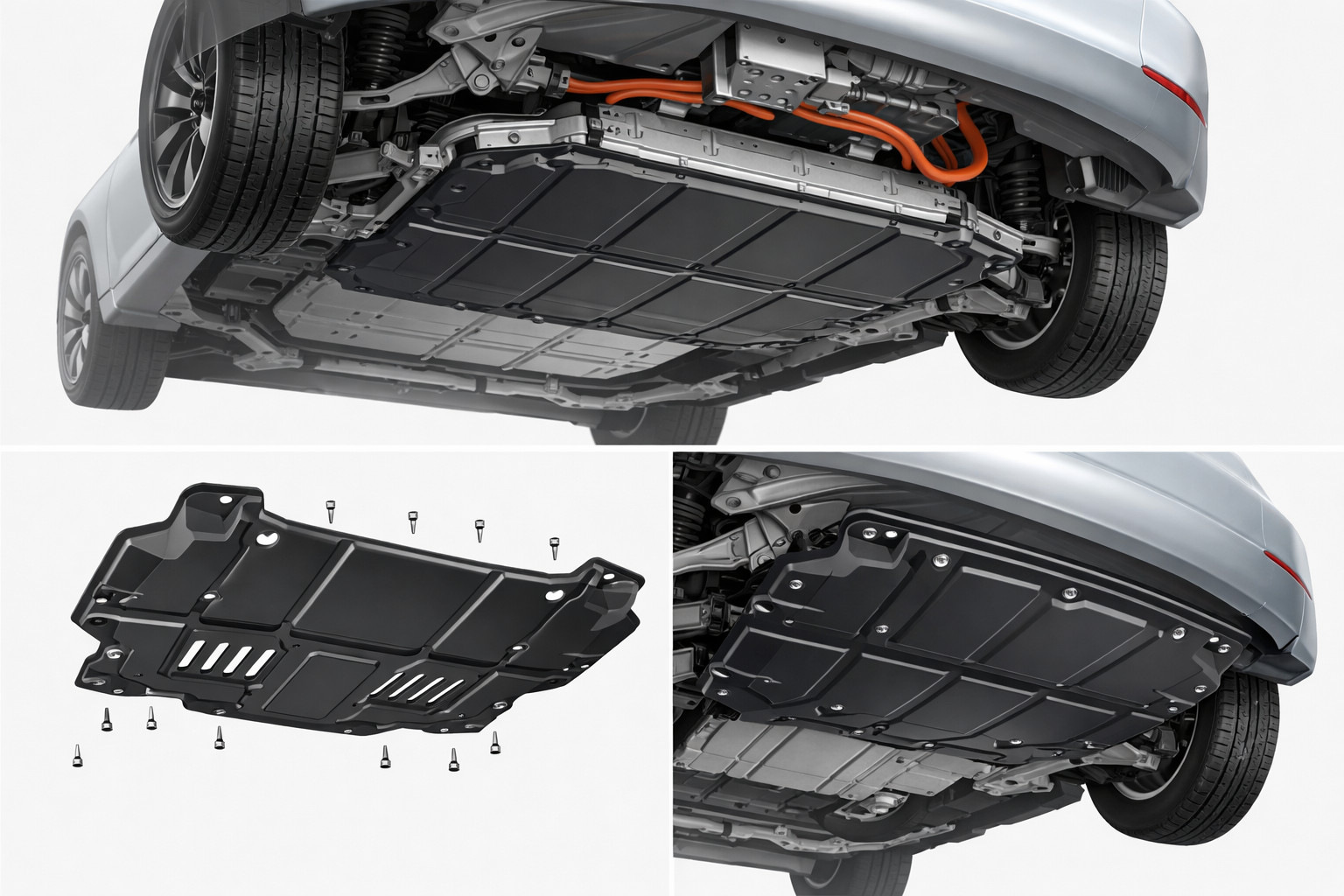
One more practical point: don’t mix up protection against different risks. Against rocks and terrain contact, underbody protection works better than a front tube. For awkward entry or side-sill contact, a side heavy-duty element helps — not a bull bar.
A decorative stainless bar without proper mounting doesn’t make the vehicle “armored.” In a minor impact it can become a problem itself: shift backward, damage trim, or transfer load to places that weren’t designed for it.
It’s a bad idea to install a universal product on a modern vehicle with a camera, radar, and parking sensors, and then “make it fit” on the spot. Painting sensors or arbitrarily repositioning them at a different angle doesn’t work either — detection gets worse. The “I’ll put it on just in case, maybe it’ll help” scenario almost never pays off.
If, after checking, the need is real, look not at the generic word “bull bar,” but at the type of solution for your task.
In many cases, changing the task gives a better result than replacing the bumper with a massive bar. If you need specific functionality rather than a “mean” look, it saves both money and unnecessary compromises.
| Solution | When it works | When it’s not worth spending money |
|---|---|---|
| Vehicle-specific front protection | Frequent off-road use, night routes with animal risk, need for a functional mount | The vehicle is mostly city/highway, and the goal is only appearance |
| Decorative stainless bull bar | Only as a styling element, if you consciously accept its downsides | When you expect real impact protection or full compatibility with all systems without verification |
| Lower front protection | When you need to slightly cover the lower front end without excessive mass up top | When you need a winch platform or serious protection from animals |
| Heavy-duty side steps | When side contact, easier entry, and protection of the lower body side are important | When you’re trying to replace front protection with them |
| Not installing anything | When your route doesn’t provide a real reason for this accessory | When you have an ongoing real risk of damaging the front end and getting stranded mid-route |
From a customer’s experience: a crossover owner was looking for a bull bar after several mountain trips because he wanted a “tougher nose.” After a conversation it turned out most of his mileage was city and highway, and the real issues weren’t up front but underneath and on the sides. In the end he skipped the front bar, chose other protective elements for his tasks, and avoided extra weight and sensor conflicts.
A bull bar makes sense when there’s a regular, clear operating scenario: animals, forest roads, off-road driving, additional equipment on the front end. In all other cases it often turns out not to be protection but a compromise involving weight, geometry, electronics, and safety. If you’re unsure, start not with choosing a tube, but by answering which specific risk you want to cover. This material is based on real selection experience, practical work, and real use cases — not on the myth that more metal up front automatically means more benefit.
| ✔ | Can protect the radiator, headlights, and front end on nighttime highways, forest roads, or where there is a real risk of hitting an animal or bushes. In such conditions, it can help you keep driving after contact. |
| ✔ | Suitable for tasks with additional front-mounted equipment, such as a winch, lights, or an antenna. However, this requires a model-specific heavy-duty kit with the correct mounting. |
| ✔ | With proper design and installation, it can take the bumper, headlights, sensors, and front-end geometry into account. This is important for vehicles where a decorative element is not needed, but functional front-end protection is. |
| ✔ | When the task is not frontal impact protection, but side contact or easier entry, heavy-duty side steps may be a more practical alternative. They better cover a different type of risk than a bulky tube up front. |
| ✘ | On city streets and regular highway routes, the benefit is often minimal, while the drawbacks are more noticeable. In such a scenario, the bull bar is often just unnecessary weight with no real payoff. |
| ✘ | A rigid front element changes how the crumple zone works and may worsen the consequences in a collision. For pedestrians, this is especially critical, because the chances of surviving a hit may drop by about half. |
| ✘ | Universal or decorative bars may interfere with parking sensors, the camera, radar, and other driver assistance systems. After installation, false activations, errors, or the need for removal may occur. |
| ✘ | It adds weight to the front axle and may worsen the approach angle, and sometimes fuel consumption as well. A cheap or poorly secured design also risks transferring the impact to the bumper or body instead of absorbing it. |
Shipping to EU
Wholesale and retail
Own warehouse
Опис продукту
Подарунки не надаються при оформленні покупки у кредит під 0,01% або при покупці частинами.