30.05.2026
415
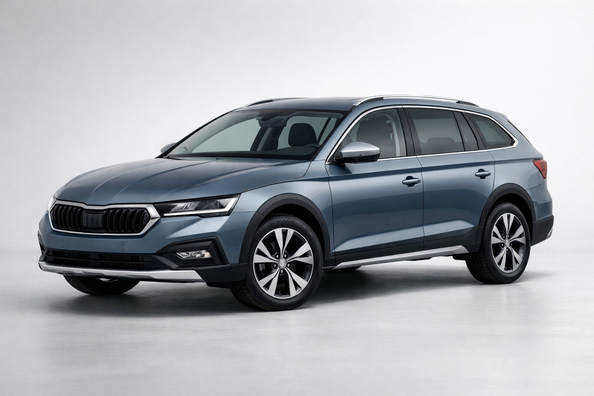

Škoda Octavia Scout A8 is not a crossover, but a raised estate based on Octavia IV, made for those who need one car for everything: city, highway, cottage trips, skis, kids’ stuff, and long journeys. It comes only as an estate body, with 161–163 mm ground clearance, a large 640 L trunk, and a calm, practical chassis setup.
The idea is simple: Scout takes the usefulness of a regular Octavia Combi and adds a little extra ground clearance, underbody protection and, depending on the version, all-wheel drive. But it’s not a car for serious off-road use and it’s not the cheapest to run, especially if you’re looking at 4x4 diesels and versions with a robotized gearbox.
Octavia Scout A8 sits between a classic estate and a compact crossover. It’s lower and lighter than most SUV-style models, so it feels more composed on asphalt, while using cargo and interior space more efficiently. For daily driving, this is often a more logical format than a crossover at the same price.
Scout suits families best, people who do frequent highway mileage, owners with regular cottage routes, and those who often carry gear. It makes less sense for drivers who almost only drive in the city, don’t need a big trunk, or want true off-road geometry.
Scout A8 belongs to the fourth generation Octavia, referred to as Octavia IV or A8. This version debuted in 2020 and differs from the regular Octavia with a raised suspension, exterior body protection, and a stronger focus on out-of-town trips.
In this generation, Scout exists only as an estate. An important nuance: the engine lineup and even the model’s availability varied by market, so when choosing a used car it’s better to look not only at the Scout name, but also at the exact drivetrain, gearbox, and fuel-tank configuration.
The Scout A8 lineup came without extremes. Base versions were front-wheel drive for those who prioritize fuel consumption, while at the top were all-wheel-drive diesels and the 2.0 TSI petrol for people who often drive loaded or tow a trailer.
| Engine | Power | Gearbox and drivetrain | What it delivers in practice |
|---|---|---|---|
| 1.5 TSI | 150 hp, 250 N·m | 6-speed manual, front-wheel drive | The simplest petrol version for calm everyday driving |
| 1.5 TSI mild hybrid | 150 hp, 250 N·m | 7-speed robotized, front-wheel drive | More convenient in the city, but without the benefits of all-wheel drive |
| 2.0 TSI | 190 hp, 320 N·m | 7-speed robotized, all-wheel drive | The liveliest petrol Scout, but with higher consumption |
| 2.0 TDI | 115 hp, 300 N·m | 6-speed manual, front-wheel drive | An economical choice for high mileage without extra weight |
| 2.0 TDI | 150 hp, 360 N·m | 7-speed robotized, all-wheel drive | The most versatile version for pull and running costs |
| 2.0 TDI | 200 hp, 400 N·m | 7-speed robotized, all-wheel drive | A strong option for highway driving, full loads, and towing |
On official figures, petrol versions can come in at roughly 5.5–7.5 L/100 km, and diesels at about 4.3–6.0 L/100 km, but there are differences between documents and markets. In real life, diesel Scouts are most often praised for highway efficiency, while city driving and all-wheel drive noticeably increase consumption.
By size, it’s a large family estate: length 4703 mm, width 1829 mm, height depending on the version 1487–1488 mm. The wheelbase also differs slightly in the specs — 2680 or 2688 mm — but in practice what matters more is that the cabin is roomy and the trunk is genuinely large.
The Scout suspension is tuned for poor roads, and the Rough-Road package adds underbody protection and extra ride height compared to a regular Octavia. Ground clearance of 161–163 mm doesn’t make it an off-roader, but it works well in snow, ruts, gravel roads, and over high city curbs.
| Parameter | Value |
|---|---|
| Body | Estate, 5 seats |
| Length | 4703 mm |
| Width | 1829 mm |
| Height | 1487–1488 mm depending on the version |
| Wheelbase | 2680–2688 mm depending on the version |
| Ground clearance | 161–163 mm |
| Trunk | 640 L, up to 1700 L with the second row folded |
| Loading sill height | 650–651 mm |
| Turning circle | 10.4 m |
| Fuel tank | 45 or 55 L depending on the version |
| Roof load | 75 kg |
| Towing | up to 2000 kg in the 2.0 TDI 200 hp 4x4 version |
Scout’s strength is not flashy décor, but space and logic. There’s enough room up front and in the back for adults, the trunk is wide and deep, and the low loading sill makes handling a stroller, suitcases, or gear easier. For a family car, that matters more than bright interior accents.
Equipment in the A8 is modern: a large central screen, a digital instrument cluster, voice assistant, and in higher trims — a head-up display and a 360-degree camera. Safety features include blind-spot monitoring, automatic braking, cross-traffic alerts, and other assistants. A weak spot to keep in mind is the electronics and infotainment: this is where owners most often mention minor glitches.
In the city, Scout doesn’t feel bulky: a 10.4 m turning circle is normal for this class, the seating position is slightly higher than a regular estate, and visibility is good. On the highway, the car is strong on quietness, stability, and long suspension travel. That’s why Scout is often chosen not as an emotional purchase, but as a very functional daily driver.
From an owner’s perspective, the most practical versions are the 2.0 TDI diesels, especially if the car often travels far. If your trips are short, the city dominates, and you don’t need a trailer or mountain routes, the point of the heavier 4x4 is no longer so obvious. Before buying, it’s worth honestly assessing your usage pattern, because it determines whether Scout will be economical and convenient, or simply more expensive than a regular Octavia.
Scout has little that’s showy, but plenty of small advantages that reveal themselves in everyday life. Below is a short, no-frills balance of плюси and compromises.
| Pros | Cons |
|---|---|
| 640 L trunk and up to 1700 L with the second row folded | All-wheel-drive versions are heavier and use more fuel |
| Raised suspension and underbody protection are genuinely useful on bad roads | Electronics and infotainment can annoy with minor glitches |
| Diesels have good pull and are suitable for long trips | Front-wheel-drive Scout versions partly lose the model’s core idea |
| Comfortable cabin and low loading sill | This is not a car for serious off-road use; ground clearance is moderate |
| Stronger versions offer real towing potential | More complex configurations are costlier to choose and maintain |
In short, Scout is for those who want one practical car instead of an estate and a crossover at the same time. It’s not for those who need either the cheapest possible family transport or truly off-road hardware.
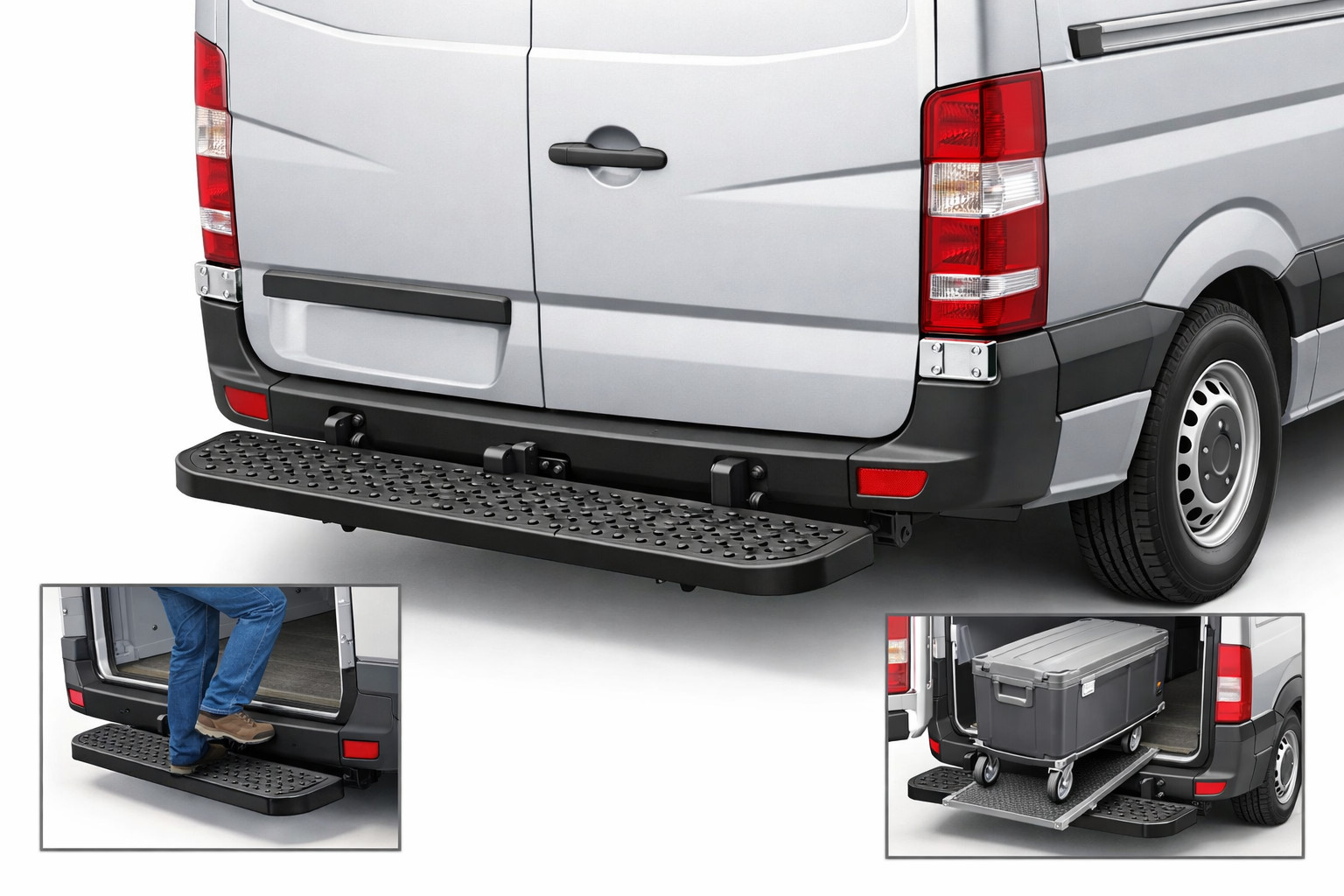
For Octavia Scout, tuning makes sense not as a decorative story, but as a way to better protect the interior and body for real routes. Most often, owners look for floor mats, roof solutions, and small accessories for trips in rain, snow, and the in-between seasons. An important point: before ordering accessories for Scout A8, it’s worth double-checking compatibility by generation and the type of roof rails.
Škoda Octavia Scout A8 is a strong option for those who need a spacious estate with slightly better geometry, a large cargo area, and confident behavior on broken roads. Its best use cases are family life, highway driving, travel, gear, and occasionally a trailer. If you need a strictly city car or real off-road capability, it’s better to look elsewhere.
This material is based on real selection experience, practice, and real usage scenarios: in them, Scout looks not like a trendy alternative to a crossover, but like a sensible working tool for every day.
| ✔ | The large 640-liter trunk and up to 1700 liters with the second row folded make the model very convenient for family trips, strollers, and bulky luggage. |
| ✔ | The raised suspension, underbody protection, and 161–163 mm ground clearance really help on bad roads, in snow, on dirt roads, and over high curbs. |
| ✔ | The diesel versions have good pulling power and seem the most suitable for long-distance trips and high mileage. |
| ✔ | The cabin is spacious, and the low loading sill makes everyday use easier, especially when loading items frequently. |
| ✔ | The stronger versions have practical towing potential, and the all-wheel-drive variants are better suited for heavily loaded routes. |
| ✘ | All-wheel-drive versions are heavier and noticeably consume more fuel, so their economy in the city is no longer so attractive. |
| ✘ | The electronics and multimedia are mentioned as a weak point: owners may run into minor glitches. |
| ✘ | Front-wheel-drive versions partly contradict the very idea of Scout, as they do not provide the model’s main advantage in more challenging conditions. |
| ✘ | This is not a vehicle for serious off-road use: the ground clearance here is only moderate, and off-road it quickly limits the capabilities. |
Shipping to EU
Wholesale and retail
Own warehouse
Опис продукту
Подарунки не надаються при оформленні покупки у кредит під 0,01% або при покупці частинами.