07.04.2026
322
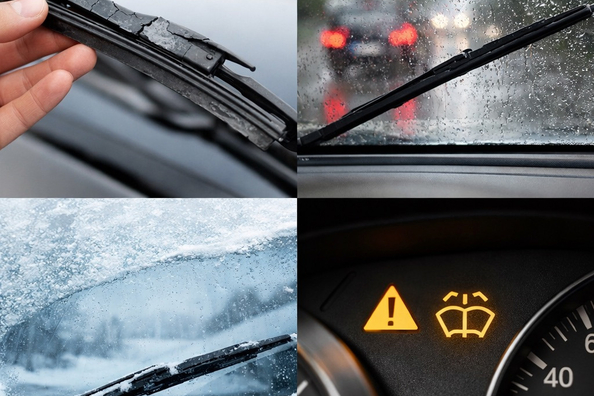

When to change your car’s wiper blades is not a question of “looks” — it’s about visibility. If the blades leave streaks, smears, missed spots, start squeaking, or “chatter” across the glass, that’s already a problem: in rain and snow you literally see the road worse.
The time guideline is simple: usually blades last about 6–12 months, but the real lifespan depends on sun, frost, dirt, how often you use them, and whether you force the wipers to rub on dry or icy glass. So you should replace them either by symptoms, or seasonally — before the wet/cold part of the year.
A wiper works like a “scraper”: the thin rubber edge must press evenly against the glass and remove water and dirt. When the edge wears out, the rubber hardens, cracks, or gets clogged with film, the blade stops gliding and starts smearing, skipping areas, or making noise.
Important: not all “bad wipers” are worn rubber. Often the culprit is dirty glass, the wrong washer fluid, the wrong arm angle/downforce, or defects in the glass surface. So diagnose first, buy later.
The most typical scenario. Rubber loses elasticity from time, sun, temperature swings, salt, and road chemicals. The edge rounds off — and the wipers leave streaks and smears, especially at speed.
The second most common cause. Tree sap, road tar, leftover wax after a car wash, insects, dust — all of this makes friction uneven. Result: squeaks, jerks, smearing. And it happens even with almost new blades.
Typical in summer (dust) and winter (ice). If you often run the wipers “dry,” or the washer doesn’t feed fluid properly, the rubber overheats, wears faster, and starts making noise. Same if the nozzles spray weakly or off-target — the water doesn’t reach the blade’s working area.
Typical after a replacement “as long as it fits.” Wrong length, wrong adapter, the mount not snapped in straight — and the blade doesn’t press properly or works at the wrong angle. Symptoms: skipped areas, knocking at the edges, uneven cleaning along the arcs.
Less common, but very real. Weak spring pressure, a bent arm, play in the joints — and even new blades will “chatter” and leave skips, especially on the driver’s side.
Rare, but expensive. Pitting (small “craters”), scratched glass, or hydrophobic/wax coatings sometimes cause a “juddering” effect and noise because the blade slips in jumps. Here, replacing the blades may not solve the problem without cleaning or correcting the surface.
Start with a simple test so you don’t buy anything unnecessary.
When you need service. If the wipers move in jerks, stop, run slowly, don’t return to “zero,” or you hear unusual noises from the mechanism — that’s no longer about the blades, but about the drive and the wiper linkage.
| Symptom | Likely cause | What to do |
|---|---|---|
| Streaks along the entire sweep | Worn/hardened rubber, cracks on the edge | Replace the blades; before replacement make sure the glass is clean and free of oily film |
| Smears, “mess” like an oily film | Dirty glass or glass polished with wax; deposits on the blade | Deep-clean/degrease the glass, wipe the blades; if it doesn’t help — replace |
| Squeaking and sharp jerks (wipers “chatter”) | Dry friction, deposits on the glass, wrong blade angle, weak arm pressure | Check the washer, clean the glass; if it remains — check the arm and installation, sometimes the arm needs replacement |
| Skipped areas (doesn’t clear a section of glass) | Deformed blade, wrong selection/mounting, weak pressure | Check length and adapter, seating; if the skip is consistent — check the arm |
| One side cleans worse than the other | Bent arm, uneven pressure, blade misalignment | Compare pressure, inspect the arm; replacing blades without checking the arm may be pointless |
| Noise only at high speed | Aerodynamic lift, weak pressure, blade not matched to your windshield profile | Check the correct blade type (profile/spoiler), assess the arm condition |
| Wipers smear only in frost or after overnight | Freezing, hardened rubber, ice residue on the edge | Don’t rip the blade free by force; defrost, clean; if the rubber is “rock hard” — replace |
| Washer works, but dirt doesn’t wash off | Weak/poor-quality fluid, low fluid level, nozzles spray off-target | Use a proper seasonal fluid, check nozzles and level; then evaluate the blades |
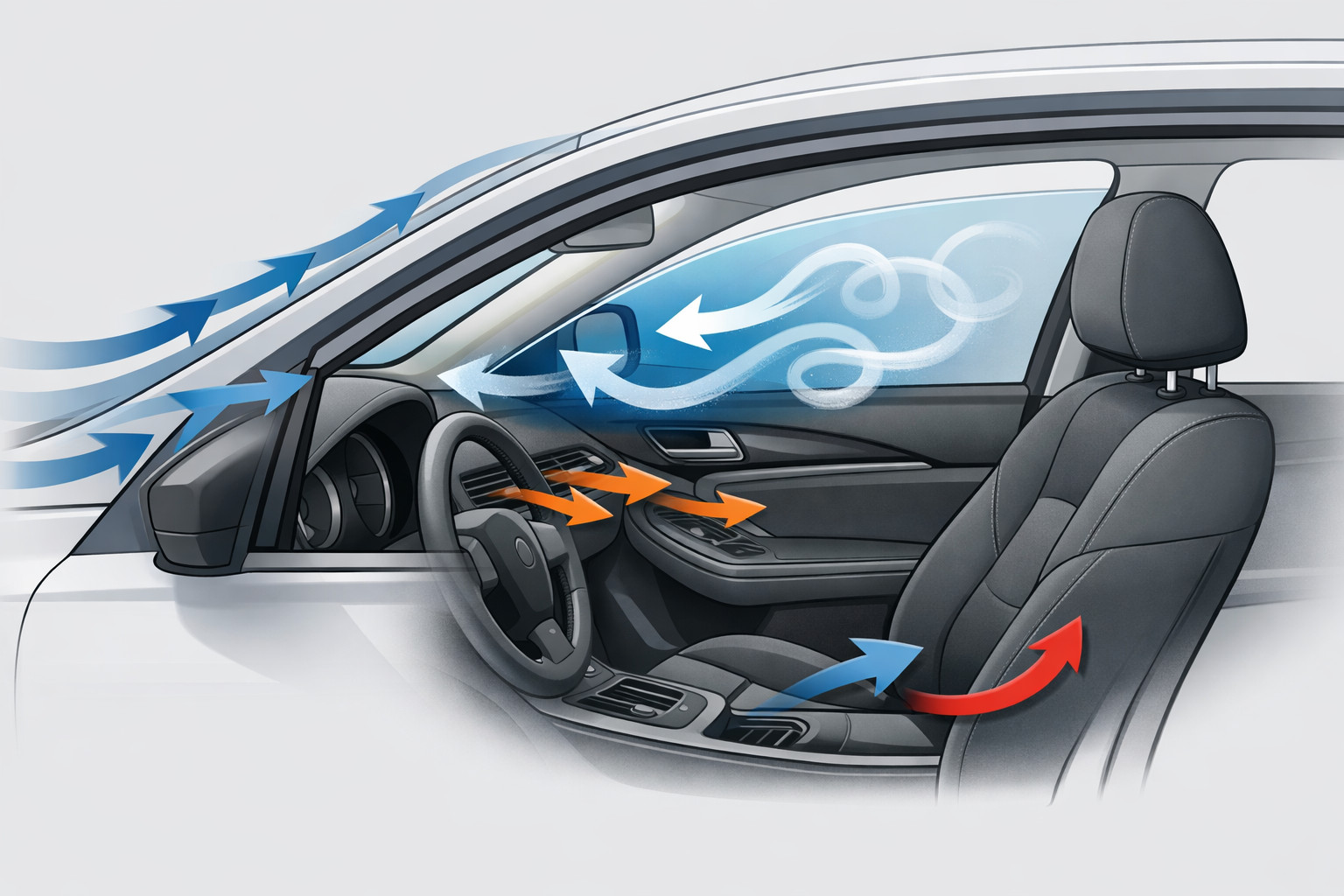
| Windows keep fogging up, and wipers “don’t help” | This isn’t a wiper job: the issue is cabin moisture, ventilation, dirty inside glass | Check the cabin filter/airflow, remove moisture, clean the inside glass; wipers have almost nothing to do with it |
Buying new blades always makes sense when symptoms are consistent. If the wipers leave streaks, skips, or make noise even after proper glass cleaning and checking the washer — that’s a direct signal to replace them. Look in the wiper blades category.
The right washer fluid matters when smearing happens in dirt. If you’re asking “how to remove smears” and the problem appears after highway driving, insects, or winter slush — often it’s not the blade, but poor or mismatched fluid. Seasonal selection is in windshield washer fluids.
Glass cleaners matter when the glass is “oily” and the blade jerks. If after a normal wash the wipers still rustle and “chatter,” or a film remains after rain — you need to remove the buildup. Then the blade starts gliding properly. See glass cleaners.
When replacing blades isn’t enough. If one side consistently cleans worse, the mechanism jerks, or wipers perform poorly only at speed — check the arms, mounts, and drive. Here, “buy more expensive wipers” may solve nothing.
| Solution | When it works | When it’s not worth spending money |
|---|---|---|
| Replace blades | Cracks, hard rubber, stable streaks/skips, noise on wet and dry glass | The glass is dirty or waxed, the washer isn’t delivering fluid, there’s an arm issue — fix the cause first |
| Clean and degrease the glass | Smears like a film, juddering, “smearing” even with almost new blades | The rubber is already “dead” (cracks, stiffness) — the effect will be short |
| Wipe the blade edge | Quickly remove deposits, temporarily reduce noise and streaks | As a permanent “strategy” instead of replacement: it won’t restore a worn edge |
| Seasonal washer fluid and proper delivery | Wipers are noisy/smear in dirt, insects, slush; low volume or mis-aimed spray pattern | The problem is consistent and doesn’t depend on the washer — then the cause is blades or arms |
| Check/replace wiper arms | One side is worse, a skip in one spot, “chatter” doesn’t go away after cleaning and replacing blades | If the issue is clearly in the rubber (cracks, wear) — start with blades, not the arm |
| Drive diagnosis (linkage, motor) | Jerky motion, slow sweep, stopping, uneven operation, unusual noises | When everything moves smoothly and the issue is only cleaning — it’s not the motor |
The first things to check: glass cleanliness, washer delivery, and the condition of the rubber edge. If after proper cleaning and washer work the wipers still smear, squeak, or skip — replace the blades and stop trying to talk yourself into it.
Real results come from the combo: clean glass + proper fluid + decent blades matched to your mount and length. If you want to close the issue fast — see wipers for your car and replace by symptoms, not “when you can barely see anything.”
Shipping to EU
Wholesale and retail
Own warehouse
Опис продукту
Подарунки не надаються при оформленні покупки у кредит під 0,01% або при покупці частинами.