21.09.2026
242
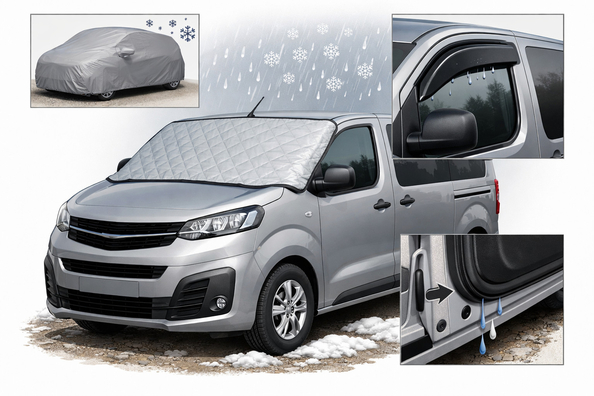

In an open parking lot, Opel Vivaro 2019+ doesn’t suffer only from dirt on the body. Worse is this: snow and dust build up in the area under the windshield and at the front under the hood, and moisture from wet mats, clogged drains, or leaky joints turns into constant interior fogging. If you simply cover the vehicle with any tarp, you may not solve the problem—you can make it worse.
For this body, what works is not airtight wrapping but the right approach: clean gutters and the cowl air intake, a dry body before covering, a breathable, precision-fit cover for long-term parking, and moisture control inside. Separately, in winter it’s important not to let snow pack into the front area and not to ignore wet carpet under the mats.
Vivaro has a large roof area, a long windshield, and wide seam zones, so when parked outdoors, water, snow, dust, and road salt stay on the body longer. After a thaw or overnight temperature swings, moisture doesn’t just sit on top—it also gets into the gutters, air-intake areas, and door seals.
The second part of the problem is the cabin. If the vehicle drives short routes every day, moisture accumulates from clothing, shoes, and snow on the mats. If, at the same time, recirculation is used constantly or the interior isn’t dried out, the windows fog up from the inside, and dampness appears under the carpet—easy to mistake for a leak.
DD Tuning expert comment: the most common mistake is buying a universal “waterproof” tarp and covering a wet Vivaro after snow or rain. The second typical miss is looking for a door leak when there’s already water under the carpet from wet mats and a clogged area under the windshield. Before choosing a cover, it’s worth verifying the body by the vehicle identification number, especially for 2019 vehicles.
| Symptom | Likely cause | What to do |
|---|---|---|
| Windows fog up from the inside every morning | Wet mats, moisture under the carpet, recirculation without dehumidification | Dry the interior, check the mats, use air dehumidification, don’t keep recirculation on all the time |
| Wet under the front mat | A/C drain, glass joints, seals, or drains | Do a localized water test, check the drain, and remove the mat to inspect the base |
| Snow and ice build up at the front under the hood | Outdoor parking, blizzard conditions, lack of seasonal protection and regular cleaning | Clean the front area more often; if compatible, use a seasonal cold-weather protective cover |
| Damp under the cover even though it’s no longer raining | Airtight material or covering a wet vehicle | Dry the body before covering and switch to a breathable, water-resistant cover |
| Scuffs appear on the paint | A loose universal cover that moves in the wind | You need a precision fit and proper fastening; otherwise it’s better not to use a cover |
| Musty smell in the cabin without an obvious puddle | Hidden moisture under the carpet or a dirty air intake | Check the floor under the mats, clean the area under the windshield, and dry the interior |
The best option for long-term parking is not a cover but a dry, ventilated place. But if you don’t have it, a combination of a few simple actions works: wash the body, remove dust, tar, bird droppings, don’t leave salt on the paint, and periodically renew the protective wax layer.
For open parking, the only truly useful option is a breathable, water-resistant, precision-fit cover that sits snugly and doesn’t slap against the body in the wind. Put it on only over a clean, dry vehicle. If you cover a dirty or wet car, moisture and abrasive particles will remain between the fabric and the paint.
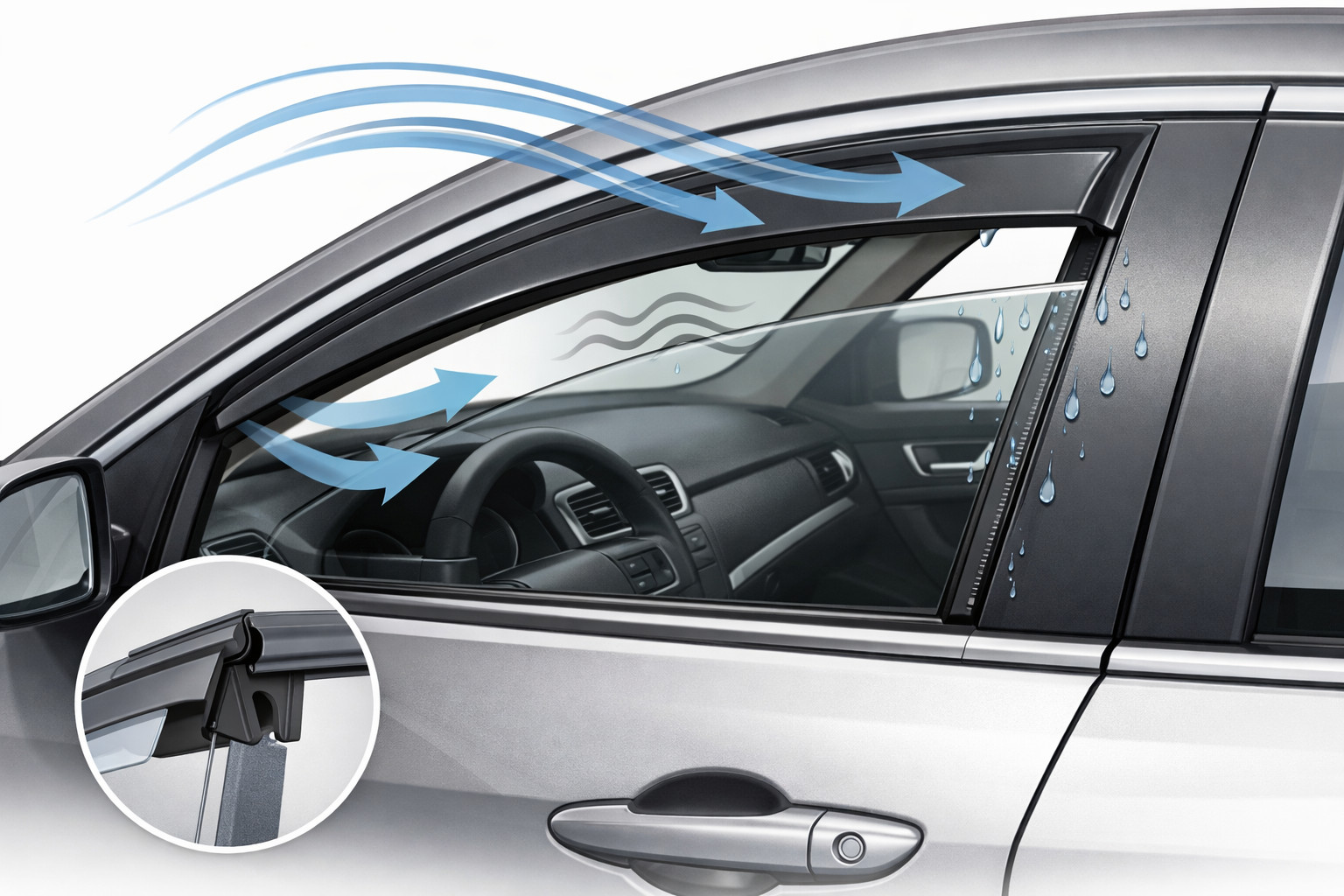
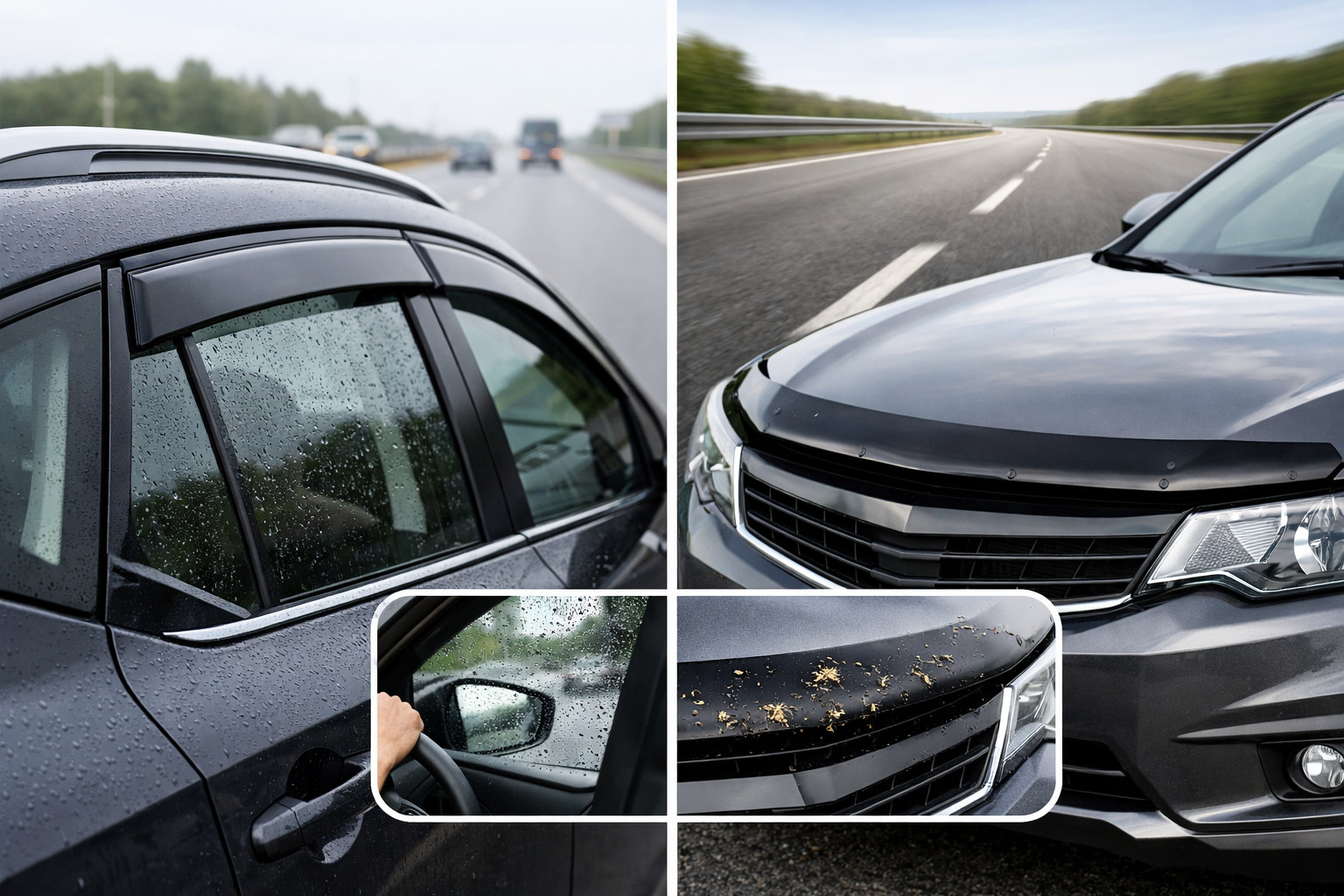
In winter, regular cleaning of the area under the windshield, the gutters, and the front section from snow really helps. For versions where it’s designed for, a seasonal cold-weather protective cover can make sense—but only during freezing periods and without trying to drive with it all year round.
For the cabin, the most important thing is not letting moisture live under the mats. After snow, dry the floor, don’t overuse recirculation, and make sure ventilation works properly. If water has already gone under the carpet, simply wiping the glass won’t help.
Plastic or fully airtight covers create a false sense of protection. They don’t let moisture escape, so the body and seals stay damp longer. In open parking, this is often worse than no cover at all.
A large universal tarp is also a weak solution. In photos it looks convenient, but in reality it rubs the paint, collects dust in folds, and in the wind acts like sandpaper. Likewise, don’t rely only on moisture-absorber packets in the cabin: they can help maintain dryness a bit, but they don’t replace fixing a leak or proper dehumidification.
Some winter hacks, like removing the seal under the hood, may temporarily help some people with snow, but it’s not a universal solution. Without regular monitoring and cleaning, they don’t eliminate the root cause of moisture buildup.
An accessory makes sense when it solves a specific problem rather than masking it.
Replacing seals is justified if shrinkage or cracks are visible, or if there’s a clear localized leak after a water test. But if the cabin gets damp only after winter trips with wet mats, you should start not with buying seals but with drying the interior and checking the drains. For 2019 vehicles, it’s better to verify accessory compatibility by the vehicle identification number so you don’t mix up body generations.
| Solution | When it works | When it’s not worth spending money |
|---|---|---|
| Breathable precision-fit cover | Long outdoor parking, clean dry vehicle, proper wind fastening | If the vehicle is wet and dirty every day or you need “airtight” protection |
| Regular cleaning of the area under the windshield and the drains | There are leaves, dust, snow, fogging, or water after precipitation | If the source is already definitely a damaged seal or glass |
| Seasonal cold-weather protective cover | Winter use, compatible vehicle version, controlled usage mode | In warm weather, without checking compatibility, or as a year-round solution |
| Rubber mats and drying the interior | Moisture comes in on shoes and melted snow; trips are short | When there’s already water under the floor due to a real leak |
| Seal replacement or re-sealing the glass | There’s an exact leak location and visible wear | When parts are replaced at random without diagnostics |
| Moisture absorbers in the cabin | As a supplementary measure in an already dry vehicle | As a replacement for repairs, floor drying, or proper ventilation |
From a customer’s experience: a minibus sat under an apartment building for a whole week, and the owner was looking for the most airtight tarp possible because the windows kept fogging up. After inspection, it turned out the main problem wasn’t the body but wet mats and a clogged area under the windshield. As a result, he bought a cover for long-term parking, switched to rubber mats, and started cleaning the drains regularly—fogging became rare, and the body stays cleaner in winter.
For Opel Vivaro 2019+ in open parking, what works best is not airtight covering but the right sequence of actions: clean drains and the cowl air intake, a dry interior, body care, and only then—a breathable, precision-fit cover for long-term parking. If there’s a localized leak, no accessory will fix it without checking seals, glass, or the A/C drain.
The key is to distinguish external contamination from an actual leak and not waste money on random tarps and short-term hacks. This material is based on real selection experience, practice, and real-use scenarios, so the conclusion is simple: first find the cause of the moisture, and only then buy a solution for the specific task.
Shipping to EU
Wholesale and retail
Own warehouse
Опис продукту
Подарунки не надаються при оформленні покупки у кредит під 0,01% або при покупці частинами.