11.09.2026
119
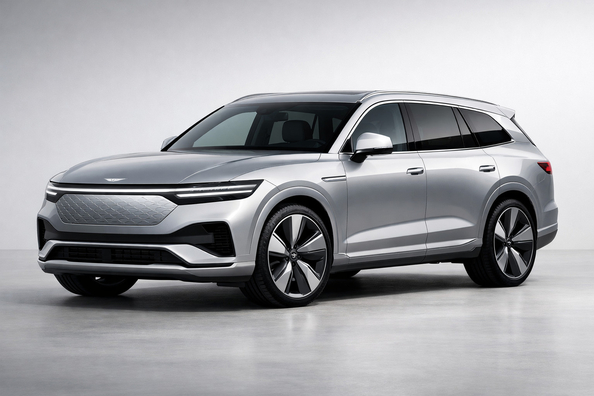
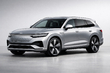
Genesis GV90 is not just “another big premium crossover”, but the brand’s bid for the top tier of electric family flagships. One important clarification right away: the query mentions 2027, but the official premiere took place in 2026, and in the US market the model is already referred to as the 2028 GV90.
In essence, the GV90 moves into BMW X7 and Mercedes GLS territory in size, status, and cabin format, but does so without gasoline or diesel versions. It’s an option for those who want a large, quiet electric crossover for family use or executive travel, but not yet for those who want to rely on years of ownership statistics.
The GV90 is positioned as the Genesis flagship: it’s larger than the GV80 and plays in the full-size three-row premium crossover class. Dimensionally, it slightly exceeds the BMW X7 and Mercedes GLS, but its key difference isn’t in centimeters—it’s in the concept: instead of six- or eight-cylinder engines, you get a large battery, two electric motors, and all-wheel drive from the start.
For now, we’re essentially talking about the first production generation of the GV90, which grew out of the Neolun concept. The lineup already includes several versions: the standard GV90, the GV90 Neolun, and a special first-series edition.
| Period | What’s known |
|---|---|
| 2024 | The Neolun concept was shown, setting the design for the future production model. |
| 2026 | The production GV90 was officially unveiled as Genesis’ electric flagship. |
| 2028 model year | Genesis USA is already listing the model under this designation, although publications also sometimes tie it to 2027. |
Officially, one powertrain layout is announced: two electric motors and all-wheel drive. For the GV90, engine displacement doesn’t apply because it’s a pure EV with no ICE. The front motor produces 240 kW and 350 N·m, the rear motor 250 kW and 450 N·m, for a total of 490 kW and 800 N·m.
The battery has a capacity of 123.5 kWh. The claimed driving range is about 500 km for the 7-seat version, but that’s an internal estimate rather than a certified figure. DC fast charging up to 350 kW allows you to go from 10 to 80% in 22 minutes.
| Parameter | Data |
|---|---|
| Platform | eMP |
| Powertrain | 2 electric motors, all-wheel drive |
| Power | 490 kW total |
| Torque | 800 N·m |
| Battery | 123.5 kWh |
| Range | about 500 km, no final EPA/WLTP |
| Charging | 10–80% in 22 min at 350 kW |
| Dimensions | 5285 × 2030 × 1815 mm |
| Wheelbase | 3245 mm |
| Ground clearance | not officially published |
| Cargo volume | not officially published |
| Cabin | 7 seats or a 4-seat executive version |
The GV90’s body is large even by class standards: a length of 5285 mm and a 3245 mm wheelbase clearly point to rear-seat priority and a smooth ride. For the version on 22-inch wheels, the height is stated as 1815 mm; for the 24-inch setup, 1825 mm.
On the chassis side, the package is strong: multi-chamber air suspension, electronically controlled dampers, and active rear-wheel steering up to 5°. It’s a good combination for a heavy, large electric crossover, but there’s still no official data on ground clearance, approach and departure angles, or wading depth. The Neolun version is also said to get coach doors without a B-pillar, while the standard GV90 uses a conventional layout.
The interior is one of the main reasons to look at the GV90. In the standard version, it’s a 7-seat family format, while the executive version shifts the focus to the second row and maximum passenger comfort. There’s 4-zone climate control, a powerful Bang & Olufsen audio system with 25 speakers, a large head-up display, and a retractable central screen.
Safety equipment is also unusually generous: 12 airbags, including a roof airbag, plus battery monitoring and pre-diagnostic systems. One important nuance: some equipment may vary by market, so it’s worth checking the final trim separately.
In daily life, the GV90 looks convincing for highway and family scenarios: a big battery, fast charging, and the expected quiet ride. But it’s a very large vehicle, so narrow parking garages, older underground lots, and tight courtyards won’t disappear as a problem—even with rear-wheel steering.
There are other practical limitations as well. There are no official consumption figures in kWh per 100 km, no exact cargo volume, and no public owner feedback yet. That means you’ll have to judge the model not by accumulated statistics, but by factory data and your own use case.
| Pros | Cons |
|---|---|
| Very spacious interior and a choice between 7 seats and an executive layout | No final certified data on efficiency and range |
| Large battery and fast charging for long routes | Ground clearance and exact cargo volume are not officially disclosed |
| Air suspension and rear-wheel steering should help comfort and maneuverability | Its size makes life harder in dense urban environments |
| Strong focus on quietness, multimedia, and safety | No real-world owner statistics yet and no established accessories market |
From a future owner’s perspective, the GV90’s main advantage is the combination of a large premium format with an electric architecture. The main downside is that the model is still very new, which means you’ll have to wait for some key everyday figures until after sales begin.
For the GV90, the aftermarket accessories lineup hasn’t formed yet, so the selection logic for now is simple: not decorative bits, but things that actually work in a big family crossover. In the first wave, roof transport systems, cargo-organization solutions, and interior protection usually make the most sense.
In this class, it’s usually not “decorations” that win, but smart space organization and protection from everyday wear. That’s exactly where it’s worth starting once a dedicated model offering for the GV90 appears.
The Genesis GV90 looks very strong on paper: a large cabin, a large battery, fast charging, serious comfort, and flagship-level tech. But it’s still early in the model’s life cycle, so before buying it’s worth realistically accepting the lack of some day-to-day figures and real-world ownership statistics. If you specifically want a large premium electric crossover instead of a BMW X7 or Mercedes GLS, the GV90 already looks like one of the most interesting options. This material is based on real selection experience, practice, and real-world usage scenarios for large family vehicles—not on advertising promises.
| ✔ | Very spacious cabin with a choice between a 7-seat configuration and a 4-seat executive version. This makes the GV90 practical both for family use and for trips with greater comfort for rear passengers. |
| ✔ | A large 123.5 kWh battery and fast charging up to 350 kW provide a convenient setup for long journeys. Recharging from 10 to 80% in 22 minutes looks like a strong argument for highway driving. |
| ✔ | Air suspension, electronically controlled dampers, and rear steering of up to 5° should help with both comfort and maneuverability of this large crossover. For such a bulky vehicle, this is an important advantage in everyday use. |
| ✔ | The cabin is well equipped in terms of comfort and multimedia: there is 4-zone climate control, a Bang & Olufsen audio system with 25 speakers, a head-up display, and a retractable center screen. This underlines the model’s focus on quiet and premium driving. |
| ✔ | In terms of safety, a generous set is claimed: 12 airbags, including a roof airbag, as well as battery monitoring and pre-diagnostic systems. This adds confidence for a large family electric crossover. |
| ✘ | There are no final certified data on energy consumption and driving range. The claimed around 500 km is an internal estimate, not a confirmed figure. |
| ✘ | Ground clearance and exact trunk volume have not been officially published. This makes it harder to assess the model’s real suitability for our roads and its practicality in everyday use. |
| ✘ | The GV90 is very large in dimensions, so it will be inconvenient in tight yards, old parking lots, and narrow passages. Even rear steering does not fully eliminate this limitation. |
| ✘ | The model is still new, so there is no real owner statistics or established used market. For a buyer, this means more uncertainty regarding ownership and resale. |
Shipping to EU
Wholesale and retail
Own warehouse
Опис продукту
Подарунки не надаються при оформленні покупки у кредит під 0,01% або при покупці частинами.