17.08.2026
161
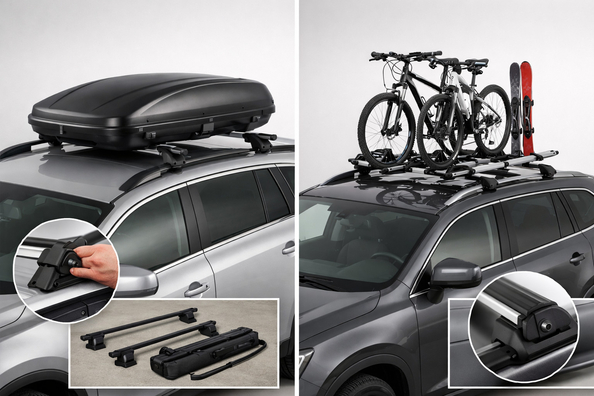
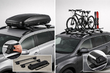
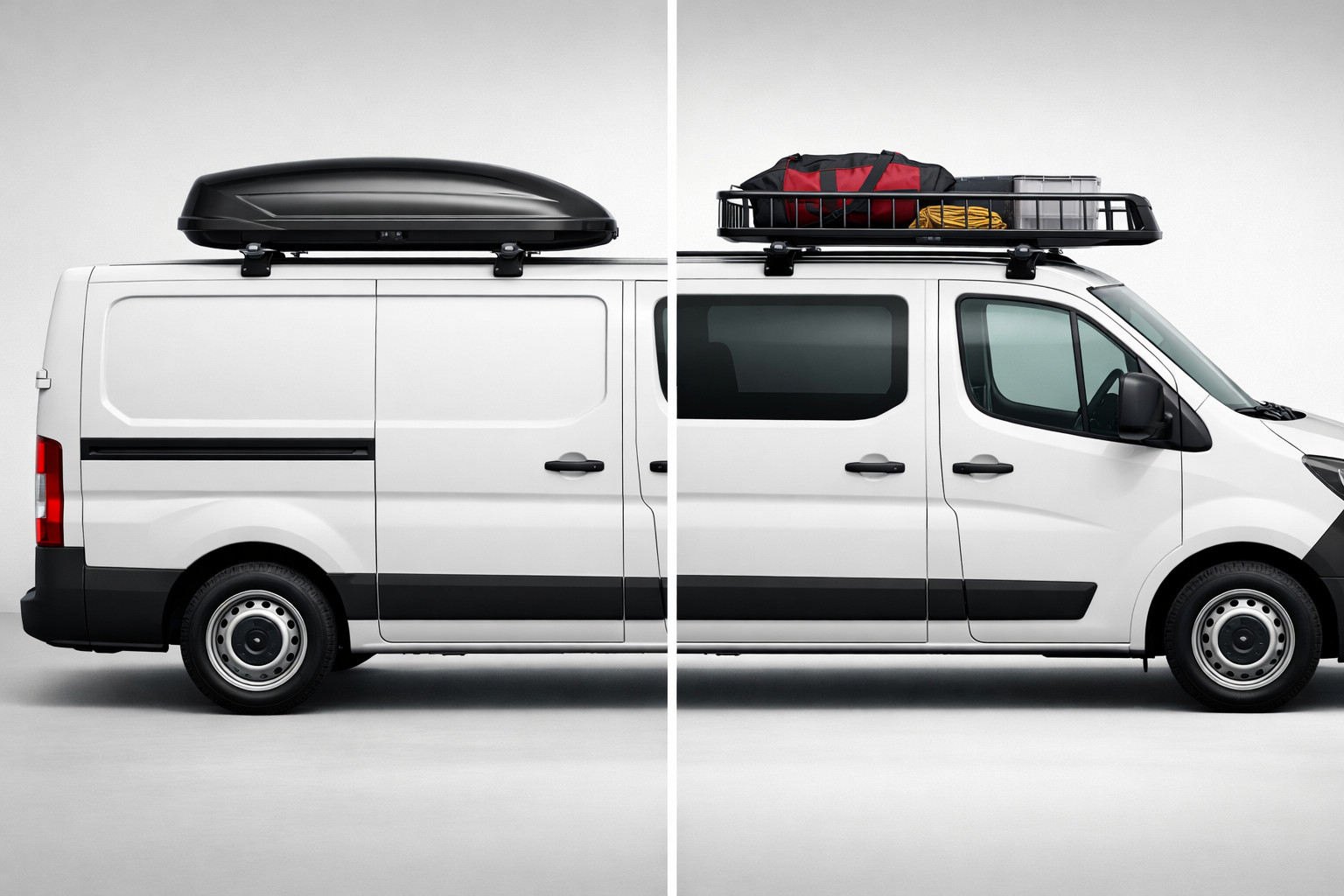
If you need a roof rack a few times a year, in most cases a removable crossbar kit is more practical: between trips the car is quieter, lower overall, and doesn’t carry extra aerodynamic drag every day. A fixed setup makes sense not “just in case”, but when the roof is used regularly: frequent trips, a heavier platform, rough roads, or work use.
The key is not only the mounting, but the use case. For many basic systems the load guideline is in the 60–75 kg range, but you should calculate from the lower limit: whatever your vehicle or the rack itself allows. On some cars with a panoramic roof the limit is lower, so people buy not just crossbars, but a compatible kit for a specific roof.
A removable roof rack is a system you install for a trip and remove afterward. Usually this means crossbars with feet and a vehicle-specific fitting kit. After the initial setup, reinstalling often takes little time, but it still must be done carefully.
A fixed option is either crossbars that stay on the car all the time, or a stiffer base on fixed points or a track. It’s more convenient for everyday readiness, but it constantly brings noise, extra height, and aerodynamic losses.
For infrequent trips the trade-off is simple: either you spend 5–15 minutes installing it a few times per season, or you accept every day that the rack is there even when you don’t need it.
Also look at the permissible load. The weight of the crossbars, feet, and accessory is part of the limit too: if the box or platform is heavy by itself, the remaining payload capacity drops sharply.
Also remember that a loaded roof changes handling and sensitivity to crosswinds. For many systems, speed recommendations end around 130 km/h, but you should follow the instructions for your specific car and rack.
| Option | Strengths | Weaknesses | Who it’s for |
|---|---|---|---|
| Removable roof rack | Quieter and more economical between trips, easier to wash the roof, fewer issues with parking garages, not on the car when not needed | Must be installed and the tightening checked each time, less convenient for spontaneous trips, requires storage space | For those who go on vacation, ski trips, to the country house, or with a bike a few times a year |
| Fixed roof rack | Always ready, convenient for frequent use, stiffer base for heavier platforms and rough roads | Constant noise and drag, higher overall vehicle height, sometimes requires more complex installation or drilling | For those who carry loads often, use the roof regularly, or plan heavy gear |
DD Tuning expert comment: The most common mistake is choosing crossbars by the “they look like they’ll fit” principle without checking the roof type, the foot kit, and the real load limit for your specific vehicle. The second typical story is buying a heavy roof box or platform and not accounting for the fact that the system’s own weight already consumes part of the allowed margin. For infrequent trips it’s better to set the kit up accurately once and mark its position so the next installation is quick and aligned.
Its main advantage for occasional trips is that you don’t carry the rack when you’re not using it. This directly affects acoustic comfort and fuel consumption, but the exact benefit always depends on the vehicle, bar shape, speed, and load.
After the first fitting, many kits really do come off and go on fairly quickly. But that only works if you have the correct fitting kit, the settings haven’t shifted, and you’re in the habit of checking the tightening before departure, after the first 50 km, and then periodically on long trips.
The downside of the removable approach is discipline. If you have regular spontaneous trips, the need to take the crossbars out, install them, and then remove them again may wear you out more than the noise of a permanent setup.
Its strength is constant readiness. You don’t spend time before leaving and you get a base that’s better suited to frequent transport, long platforms, work tools, or rough roads.
But you pay for that readiness every day. Even without a load, crossbars create noise and drag and add height. For a city car this is felt sooner than for a vehicle that constantly drives with gear.
A special case is fixed-point and track systems. They’re stiffer, sometimes hold more, and are better for heavy-duty scenarios, but they may require more complex installation—and a track may even require drilling the roof. On fixed points, the crossbar spacing is often determined by the vehicle design, so there’s less flexibility. For two vacations a year, it’s usually overkill.
If you already have factory rails or fixed mounting points, the question often isn’t “fixed or removable roof”, but whether the crossbars themselves are removable. In that case the compromise is simple: the basic mounting elements stay in place, and the crossbars go on only for a box, skis, or a bike.
For a city car that drives without cargo most of the time, a removable kit is almost always more practical. You don’t pay with daily noise for two or three trips per season.
For frequent weekend trips, sports gear, or work use, the advantage is no longer so clear. If you need the crossbars constantly, the time to install, the risk of under-tightening something in a hurry, and storing the kit become real drawbacks.
If you’re planning heavy accessories, long platforms, or off-road travel, don’t focus on how easy it is to remove—look at the base type, the vehicle limits, the system’s own weight, and the allowed driving mode. Here fixed solutions often win not on comfort, but on structural reserve.
| Scenario | What to choose | Why |
|---|---|---|
| 2–4 long trips per year | Removable roof rack | Doesn’t create noise and extra consumption between trips, and installation time is small |
| Weekend bike trips or skiing all season | Fixed or semi-fixed option | Constant readiness matters more than the gain in quietness; less hassle with weekly installation |
| City, underground parking, car washes | Removable roof rack | Lower height risk, easier roof care, and no need to carry extra crossbars |
| Work use, tools, rough roads | Fixed base on fixed points or a track | Better rigidity and convenience for regular loads |
| Heavy roof box, platform, or rooftop tent | Depends on the vehicle, but more often a rigid fixed base | You must separately verify dynamic and static load ratings and compatibility; compromises here are risky |
Paying extra is justified when you’re buying not just “crossbars”, but convenience or a reserve for the task. For regular accessory changes, better aerodynamics, and proper locks, it makes sense to start with the hanging roof rack category. If the car has factory rails and you want a quick everyday scenario, it’s more practical to look right away at a roof rack for rails with quality aero crossbars. And when the task is family vacations a few times a year, sometimes it’s smarter to invest not in a permanent heavy base, but in a roof box for removable crossbars.
A more expensive fixed base is truly appropriate for heavy platforms, frequent use, long routes with a loaded roof, and tougher operating conditions. But if you just want to take suitcases or skis once a season, it often adds more permanent downsides than real benefit.
From a customer’s experience: A crossover owner was looking for a solution for a summer vacation, a winter ski trip, and a few nature getaways. At first, he planned to leave the crossbars on the car all the time, but after assessing the noise, parking height, and the fact that the car drives around the city daily without cargo, he chose a removable kit. As a result, he installs it only for trips and doesn’t carry an extra structure the rest of the time.
For infrequent trips, a removable roof rack is more practical: it’s quieter in everyday driving, doesn’t get in the way in the city, and doesn’t make you pay constantly in noise and consumption for rare use. A fixed option makes sense when the roof is truly used often, under heavier loads, or in tougher conditions. This material is based on real selection experience, hands-on practice, and real-life use cases, so the main advice is simple: choose not “the strongest”, but what matches your trip frequency, roof type, and real load.
| ✔ | A removable roof rack for occasional trips does not create постоянний noise or extra aerodynamic drag in everyday driving. This is especially noticeable for a city car that most of the time travels without cargo. |
| ✔ | It can be removed between trips, so it does not interfere with roof washing, winter cleaning, or driving into low parking garages. There is also less risk of constantly having to remember the car’s overall height. |
| ✔ | After the initial setup, many kits can be installed quite quickly, so for a few trips per season it does not take much time. The article explicitly gives a benchmark of 5–15 minutes for installation. |
| ✔ | A fixed roof rack is convenient when the roof is used regularly: for weekend trips, work equipment, or heavier platforms. It is always ready and does not require weekly installation. |
| ✔ | A fixed base is better suited for heavy accessories, long platforms, and harsher conditions on poor roads. In such scenarios, structural strength matters more than the ability to remove the system. |
| ✘ | A removable roof rack requires discipline: it has to be mounted every time, the tightening checked, and the fit verified repeatedly. If you often travel spontaneously, this can be irritating. |
| ✘ | After removing the kit, you need storage space for it. For small apartments or garages, this can be inconvenient. |
| ✘ | A fixed roof rack constantly adds noise, height, and aerodynamic losses even without cargo. For daily city driving, this feels like a constant drawback. |
| ✘ | Some fixed solutions are more complicated to install, and track systems may even require drilling the roof. For infrequent trips, this looks like unnecessary complexity. |
Shipping to EU
Wholesale and retail
Own warehouse
Опис продукту
Подарунки не надаються при оформленні покупки у кредит під 0,01% або при покупці частинами.