24.07.2026
190
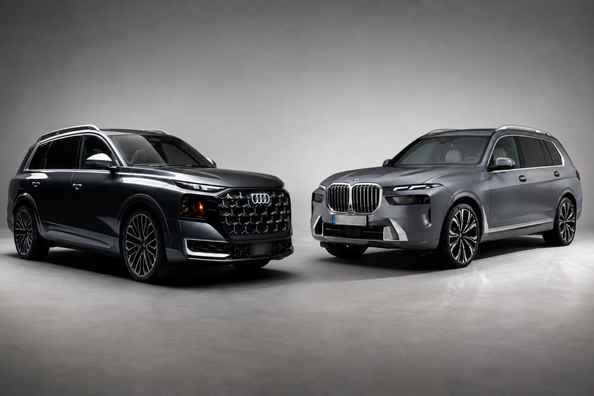

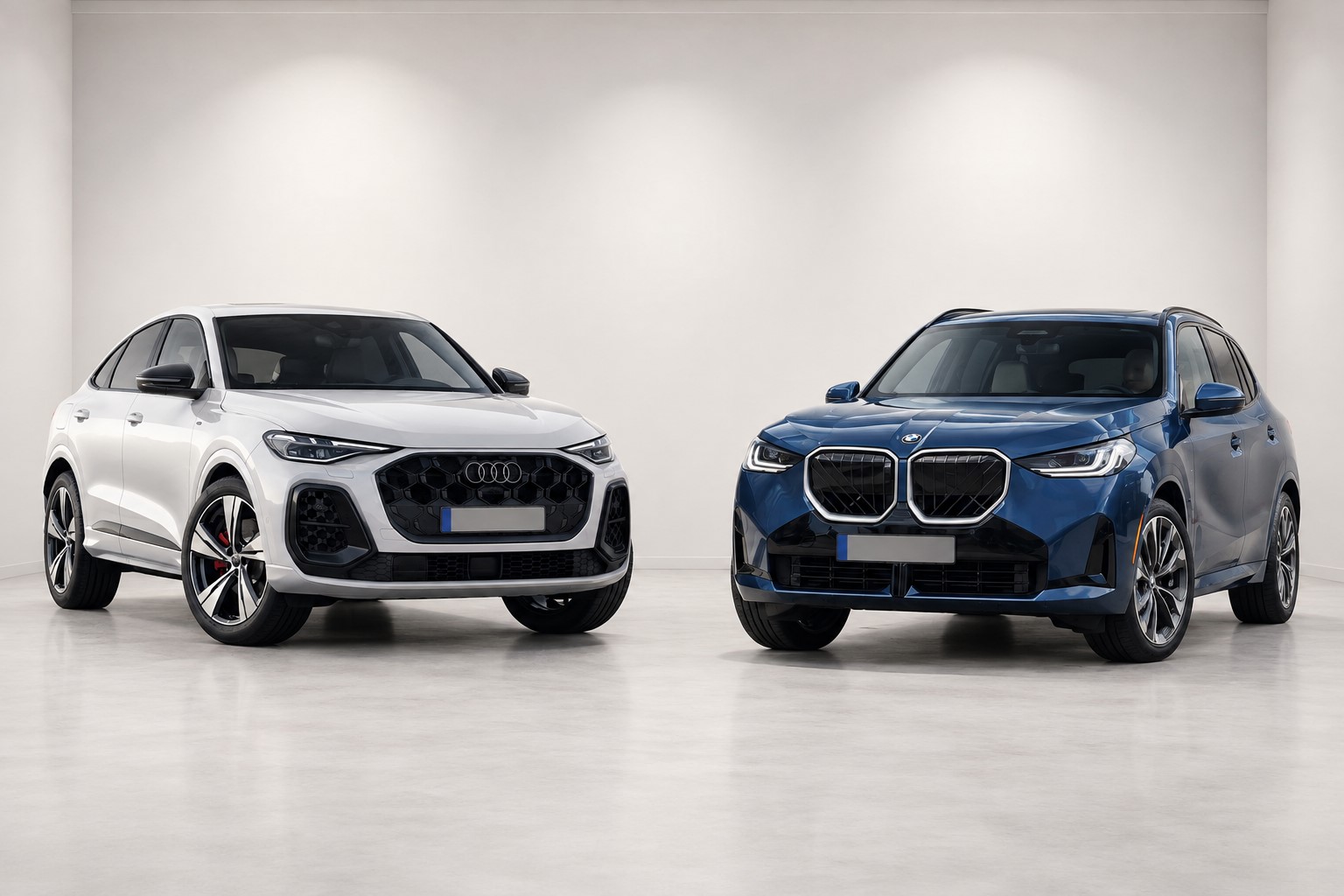
If you’re buying this kind of SUV right now, the more rational choice is the facelifted BMW X7 G07. It has well-understood hardware, standard all-wheel drive, air suspension, real-world cargo and towing figures, and a body of feedback already collected on noise, comfort, and weak points.
Audi Q9 is more interesting as a new flagship cabin concept: more focus on the second row, power-assisted doors, a very large panoramic roof, and more modern day-to-day features. But it’s still a new model without long-term durability statistics, real winter behavior data, or a fully public technical spec sheet. So the choice is simple: a proven vehicle versus a fresher, but less predictable flagship.
BMW X7 — is a bet on predictability. You know what you’re getting on the highway, how much cargo space there is, how the vehicle tows a trailer, and what to pay attention to when inspecting a specific example. Audi Q9 — is a bet on novelty: more wow-factor in the cabin, a stronger focus on rear-passenger comfort and, likely, an even higher level of “lounge” feel, but without a solid answer on long-term ownership.
So the main question isn’t which SUV looks more expensive, but what matters more to you: a proven result right now or the newest flagship concept with the inevitable unknowns of the first model year.
| Option | Strengths | Weaknesses | Who it’s for |
|---|---|---|---|
| BMW X7 G07 Facelift | Proven model, standard xDrive, adaptive air suspension, towing up to 3,500 kg, known highway comfort, predictable cargo space | Third row isn’t very spacious, cargo space behind three rows is modest, there are known points to watch in the suspension and certain transmission components | Those who want to buy a large premium SUV without a first-year experiment |
| Audi Q9 2027 | More modern cabin, strong focus on the second row, power-assisted doors, up to 7 seats, large panoramic roof, modern charging and multimedia options | No fully public technical passport/spec sheet, not enough statistics on noise, durability, real-world consumption, and winter operation | Those who are willing to wait or accept new-model risk for the newest Audi flagship format |
Q9’s strong point isn’t the numbers, but the cabin concept. Audi is clearly betting on a sense of space and second-row comfort: a wide door opening, power-assisted doors, up to seven seats, the option of a six-seat layout, a large panoramic roof, and a strong set of everyday features like two wireless chargers and powerful USB-C.
For a family with a driver, or for trips where adults often ride in the second row, the Q9 looks very convincing. This is exactly where it can outperform the X7 in the feeling of “air” and overall cabin convenience. Another plus — a diesel version has been spotted, meaning the model is being prepared not only as a gasoline image flagship.
Q9’s weak point is the same as with most completely new models: too many unknowns. There’s no full public set of technical parameters, no long-term statistics on road noise on rough asphalt, suspension and electronics durability, real-world consumption, and small day-to-day ownership nuances. For buying as an early adopter, this matters more than a beautiful roof or new screens.
The X7 wins not with novelty effect, but with maturity. It’s already known that even the more basic versions deliver the level of pull and stability that will be more than enough for most. The xDrive40i is quick without unnecessary edginess, and the M60i is only for those who truly want a very powerful large SUV, not just the “top” line on the price list.
In terms of practicality, the X7 is strong too: standard all-wheel drive, two-axle air suspension, the ability to tow up to 3,500 kg, sensible cargo-space math, and predictable highway behavior. For long trips, autobahn driving, towing, or a big family, that’s a very strong argument.
But the X7 shouldn’t be romanticized. Its third row isn’t a benchmark for regular adult use, and with all three rows up, cargo volume isn’t impressive. Also, the model has known minor risks: squeaks, rattles, and suspicions around certain suspension or transmission components on some vehicles. So the X7’s advantage isn’t that it’s trouble-free, but that its issues are already more or less known.
For buying without waiting and without surprises, the X7 is better. It already offers a clear balance of comfort, pull, quietness, and practicality. If the vehicle needs to be the only one in the family, often does highway miles, or must tow a trailer, BMW simply has fewer blank spots.
If the main priority is rear passengers, the feel of a next-generation cabin, and maximum “lounge” comfort, the Q9 looks more promising. But it’s a choice for someone who’s ready to accept that some conclusions will only be possible after real-world use begins.
For city driving, the X7 also looks like the safer option. The Q9, based on available data, will be even larger, which means maneuvering, parking, and everyday convenience will become even more critical. If, however, you often carry six to seven people and want the most modern cabin possible, then the Q9 may meet expectations better.
| Scenario | What to choose | Why |
|---|---|---|
| You need a flagship SUV right now | BMW X7 G07 Facelift | Proven hardware, clear trims, known highway behavior, and accumulated ownership statistics |
| Frequent long trips with the whole family | BMW X7 G07 Facelift | Strong comfort at speed, quietness, towing up to 3,500 kg, and predictable practicality |
| Second-row comfort is the priority | Audi Q9 2027 | The cabin and rear area look like the main trump card of the new model |
| You don’t want to take a risk on a brand-new model’s durability | BMW X7 G07 Facelift | The model already has a track record, and weak points are at least known and can be checked before purchase |
| You want the newest Audi flagship and are willing to wait | Audi Q9 2027 | Q9 promises a fresher cabin format and more new solutions, but it requires patience until the full picture emerges |
Paying extra only makes sense when you actually use what you’re paying for. With BMW, that could be a more powerful version if you need not just smoothness, but a genuinely very fast large SUV. With Audi, a more expensive configuration is justified if your main goal is the second row, cabin comfort, and the maximum number of new features, not predictable ownership.
There’s also a second tier of spending: if you’re buying a flagship, it makes sense to cover the practical items right away. For BMW, it’s useful to check out accessories for BMW X7 G07 and separately floor mats for X7, because daily use of such an interior quickly shows the value of model-specific solutions. If you’re interested in the new Audi, it makes sense to follow the appearance of items on the Audi Q9 page, since for a new model the assortment and installation options usually expand gradually.
As of today, the better choice for most people is the BMW X7 G07 Facelift. It isn’t perfect, but it’s understood: comfortable, practical, torquey, and already market-proven. The Audi Q9 looks more interesting as a new flagship passenger space, but for now it’s a choice for those who are ready to buy not only a car, but also a share of uncertainty. If you need a sensible purchase right now — X7. If you want Audi’s freshest idea and you’re willing to wait for the full picture — then the Q9 is worth keeping on your radar.
| ✔ | BMW X7 G07 Facelift looks more practical to buy right now: it has proven hardware, standard all-wheel drive, and already accumulated usage statistics. This reduces the risk of unpleasant surprises in the first year of ownership. |
| ✔ | For long trips, the X7 has strong arguments: well-known highway comfort, good cabin quietness, and towing capacity of up to 3,500 kg. This makes it a convenient option for family travel and trips with a trailer. |
| ✔ | The Audi Q9 2027 is strong precisely as a new flagship cabin: more attention to the second row, power doors, a large panoramic roof, and modern convenience features. For rear passengers, this can be a noticeably more comfortable format. |
| ✔ | The Q9 also offers up to 7 seats and even a six-seat configuration, so it is better suited to a scenario where six to seven people often travel. It has the potential to become a more lounge-like SUV than the X7. |
| ✔ | The X7 has clear strengths in everyday use: cargo space, comfort at speed, and predictable behavior. This is convenient when the vehicle is the main family car and is often used in the city and on the highway. |
| ✘ | The Audi Q9 2027 is still too new, so there is no full statistics on durability, noise, real fuel consumption, or winter behavior. For a buyer, this means more unknowns than with the X7. |
| ✘ | The Q9 still does not have a full public technical specification sheet, so it is harder to objectively assess its real capabilities and weak points before purchase. This makes the choice more difficult for those who do not want to take risks. |
| ✘ | The BMW X7 G07 Facelift is not the benchmark as a seven-seat SUV: the third row is not very spacious for adults, and with all three rows folded out, the cargo area is already modest. If you often carry a full cabin, this will be a noticeable compromise. |
| ✘ | The X7 has known minor risks with the suspension and individual transmission components, as well as possible creaks and rattles in some cars. So it is proven, but not absolutely trouble-free. |
Shipping to EU
Wholesale and retail
Own warehouse
Опис продукту
Подарунки не надаються при оформленні покупки у кредит під 0,01% або при покупці частинами.