06.08.2026
103
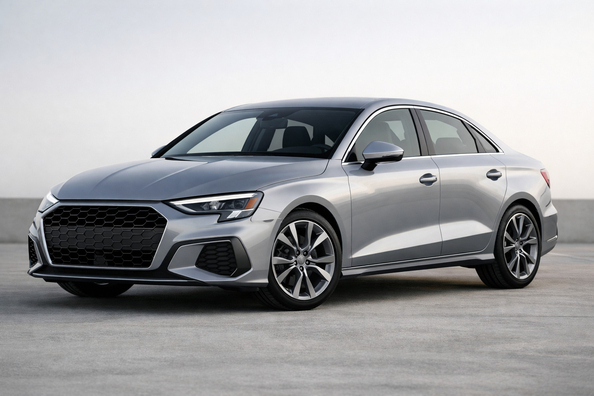

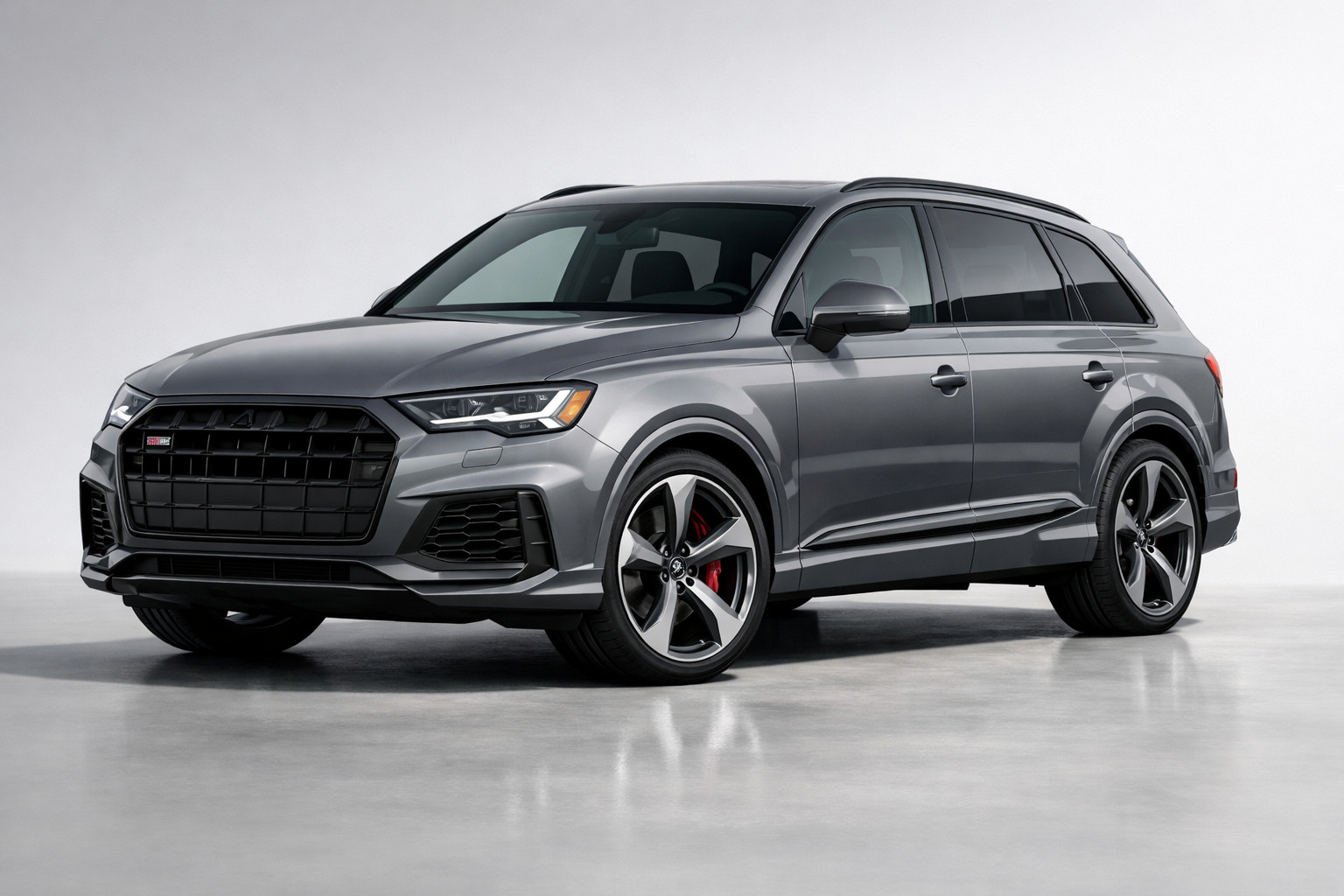
Audi A3 Sedan 4th generation is a compact premium sedan for those who find a regular Golf-class car not quite enough, but don’t need a larger, more expensive sedan. Its strengths are a precise driving position, intuitive handling, a grown-up cabin feel, and a proper trunk; its weaknesses are not class-leading rear space, a firmer ride in stiffer versions on large wheels, and lower practicality when carrying bulky items.
We’re talking about the 8Y generation, which debuted in 2020 and, in some markets, effectively went on sale as a 2021 model year. It’s a spot-on daily driver for a solo owner, a couple, or a small family if the priorities are quality, compact size, and steering feel rather than high ground clearance or maximum space.
The A3 Sedan sits between mainstream C-segment sedans and larger premium models. Essentially, it’s the choice for those who want a compact car with a more premium presentation than typical classmates, but without stepping up to the size and budget of the Audi A4.
The model suits those who drive in the city and on the highway, value steering precision and solid ergonomics, and don’t regularly haul big items. If you need maximum second-row space, frequent trips with four adults, or a relaxed attitude toward potholes and curbs, this isn’t the most fitting format.
There’s an important nuance here: for the entire A3 lineup this is the fourth generation, but for the sedan body style it’s effectively the second. The first A3 Sedan appeared back in the 8V generation and was produced roughly from 2013 to 2020, and the current 8Y replaced it in 2020.
Within this generation there have been equipment updates and a facelift, including in 2024. But the core idea hasn’t changed: a compact front- or all-wheel-drive sedan on the group’s modular platform, focused on everyday handling and the feel of a more expensive car.
For the A3 Sedan 8Y, the engine lineup depends on the market, but the main versions are well known. Below are the most common non-performance variants excluding the sporty S3 and RS 3.
| Version | Engine | Power | Transmission |
|---|---|---|---|
| 30 TFSI | 1.0 turbo petrol | 110 hp | 6-speed manual or 7-speed S tronic |
| 35 TFSI | 1.5 turbo petrol | 150 hp | 6-speed manual or 7-speed S tronic |
| 30 TDI | 2.0 turbo diesel | 116 hp | 6-speed manual or 7-speed S tronic |
| 35 TDI | 2.0 turbo diesel | 150 hp | 6-speed manual or 7-speed S tronic |
For most drivers, the best balance comes from the 1.5 TFSI with 150 hp: it’s enough for both city and highway. If mileage is high and there are many high-speed trips, it makes more sense to look at the 2.0 TDI. In some markets you’ll also find stronger 2.0 TFSI petrol options and versions with all-wheel drive, so you should always verify a specific car by its actual configuration, not just the A3 Sedan name.
| Parameter | Value |
|---|---|
| 8Y generation production years | since 2020 |
| Body style | 4-door sedan |
| Length | about 4495 mm |
| Width | 1816 mm |
| Height | about 1425 mm |
| Wheelbase | 2636 mm |
| Ground clearance | about 140 mm, depending on suspension |
| Trunk volume | 425 l |
In terms of chassis, the A3 Sedan is built on the MQB Evo platform. Up front it uses MacPherson struts, while the rear layout depends on the version: lower-output trims may have a simpler torsion-beam setup, while more powerful ones get a multi-link arrangement. In practice, that means how the car feels depends not only on the engine, but also on wheels and the specific suspension.
For daily use, the most harmonious versions are usually those with a moderate wheel diameter. Large rims add sharper responses and visual impact, but on rough roads they make the car noticeably firmer.
The A3 Sedan’s cabin is driver-focused: a low seating position, convenient placement of key controls, and good front-seat geometry. Perceived quality is generally high, but it noticeably depends on trim level: richer versions look and feel more premium, while base cars are simpler than in the promo photos.
In the second row there’s enough room for two average-height adults, but there isn’t the reserve you get in larger sedans. Safety is also equipment-dependent: some cars will have only a basic set of assistants, while others add adaptive cruise control, blind-spot monitoring, lane keeping, and advanced lighting. So when choosing, it’s more important to look at the specific list of systems than at screen sizes.
In the city, the A3 Sedan is convenient thanks to its compact length, decent visibility, and an easy sense of the car’s dimensions. On the highway, it’s enjoyable because it doesn’t make you fight a high seating position or extra wind sensitivity, as can happen after a crossover. But there are practical limits: the trunk is roomy on paper, yet a sedan opening isn’t as convenient for bulky items.
For winter and poor roads, keep in mind the modest ground clearance and the lower edge of the bumper. If the car will be driven daily through yards, ruts, and broken asphalt, it’s better not to chase the sporty suspension and large wheels.
| Pros | Cons | What it means for the owner |
|---|---|---|
| Precise handling and a great driving position | Firmer versions on large wheels | On smooth roads the car feels very tight and composed, but comfort heavily depends on configuration |
| High-quality front row and ergonomics | Rear seat space isn’t class-leading | Excellent for 1–2 people, but frequent family trips involve compromises |
| 425 l trunk | Less convenient opening than a hatchback | Suitcases and everyday items fit easily, but large boxes are harder to load |
| Wide choice of engines | Equipment and hardware vary greatly by market | You need to buy a specific version, not rely only on the A3 Sedan name |
The model’s main strength is the feel of a more mature car without stepping up into a larger class. The main weakness is that people often expect crossover-like capacity or the softness of a larger sedan—yet this is simply a different type of car.
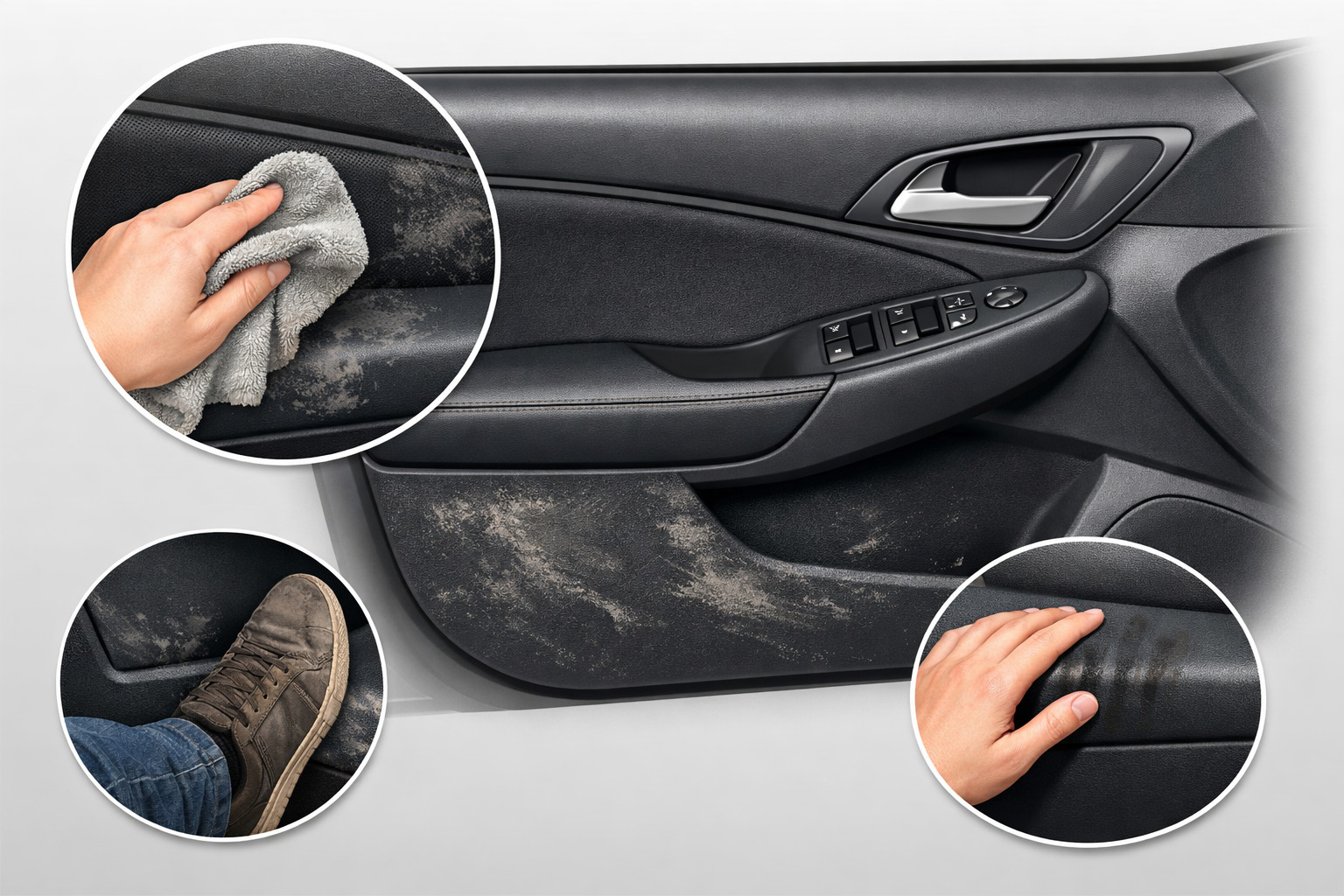
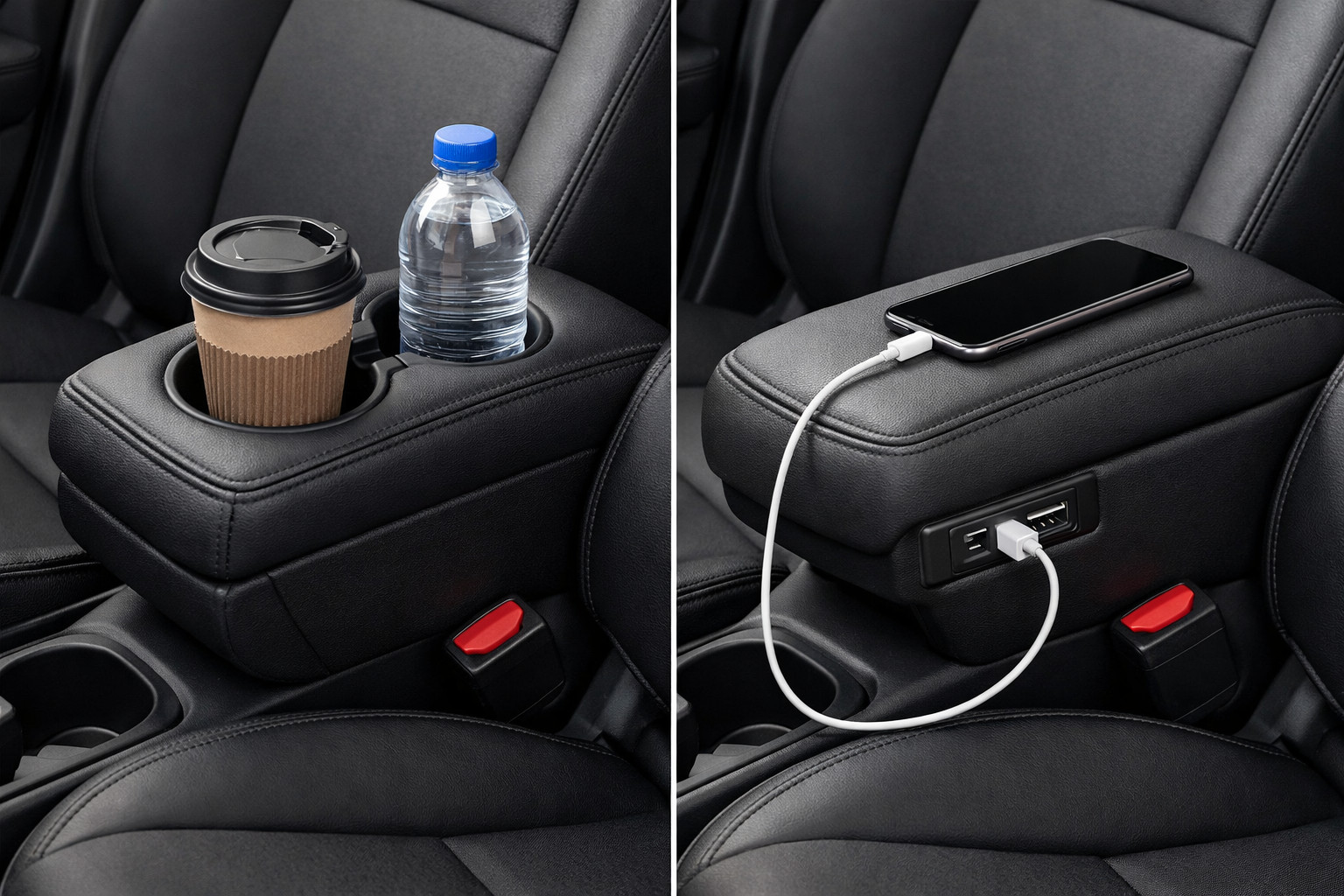
For the A3 Sedan, the most effective approach is functional rather than flashy tuning: protecting the interior, trunk, and the lower part of the body. A compact sedan is easy to overload with decorative add-ons, so practical accessories are usually more appropriate here than exterior décor.
The Audi A3 Sedan 8Y suits those who want a compact, composed, high-quality daily sedan without stepping up a class. The most sensible versions for most people are the 1.5 TFSI or 2.0 TDI depending on mileage; if high ground clearance, maximum second-row space, or frequent transport of bulky items is the priority, it’s better to choose a different body format. This material is based on real selection experience, practical know-how, and real-world usage scenarios, so the conclusion is simple: the A3 Sedan is strong where daily driving feel matters more than maximum capacity for the same money.
| ✔ | Precise handling and a comfortable driving position make the A3 Sedan pleasant for everyday driving, especially in the city and on the highway. The car feels composed without moving into a larger and less convenient format. |
| ✔ | The cabin is driver-oriented and offers good ergonomics, so the main controls are within easy reach, and the front row feels mature and well-built. This matters for those who drive mostly alone or as a pair. |
| ✔ | The 425 l trunk is enough for everyday items, suitcases, and shopping. For a compact sedan, this is a practical amount of space without unnecessarily increasing the car’s dimensions. |
| ✔ | There is a choice between gasoline and diesel engines, as well as a manual gearbox or S tronic. This makes it possible to choose a version according to your mileage and driving style. |
| ✔ | Compact dimensions and good visibility make city maneuvering easier. The car does not require getting used to its size, unlike larger sedans or crossovers. |
| ✘ | Rear-seat space is not record-breaking, so for frequent trips with four adults, this is already a compromise. The model is better suited to a single driver, a couple, or a small family. |
| ✘ | Versions on larger wheels and with stiffer suspension noticeably reduce comfort on broken roads. For everyday use, this can matter more than the looks or sharper response. |
| ✘ | Low ground clearance and the lower edge of the bumper make the car more vulnerable to potholes, curbs, and winter conditions. For bad roads, the A3 Sedan is not the most convenient format. |
| ✘ | Although the trunk is generous in volume, the sedan’s opening is not very convenient for bulky items. Large boxes or unusually shaped cargo are harder to load than in a hatchback or wagon. |
Shipping to EU
Wholesale and retail
Own warehouse
Опис продукту
Подарунки не надаються при оформленні покупки у кредит під 0,01% або при покупці частинами.