
































































 Author: Radomskyi Maksym Vasyliovych
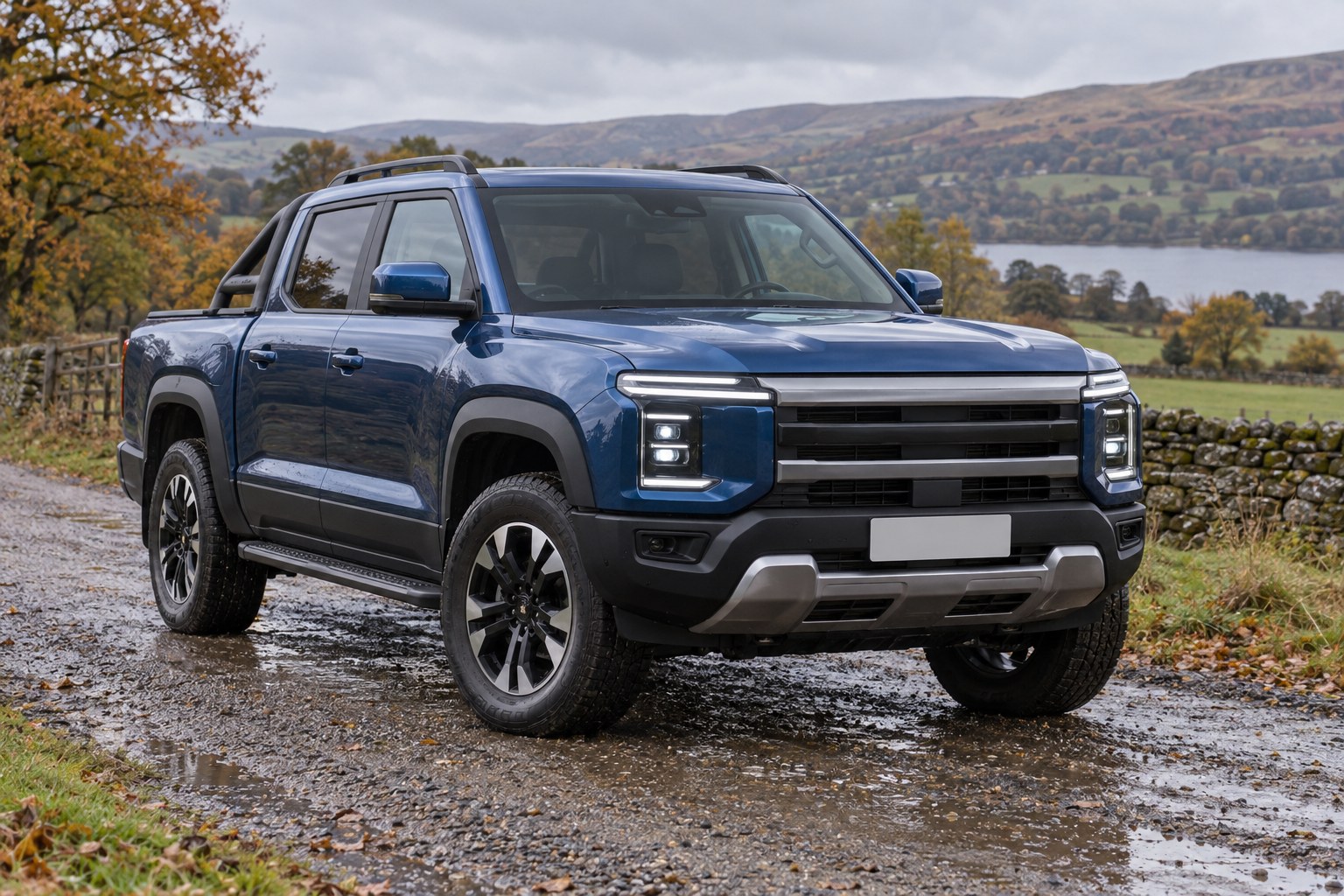
BYD Shark is the first pickup from the Chinese brand BYD for Europe: a body-on-frame pickup with a double five-seat cab and the Super Hybrid DMO plug-in hybrid system (1.5-litre turbo engine and two electric motors, 436 hp, 650 N·m) and a 32.2 kWh battery, enough for up to 90 km on electricity alone under WLTP. In the UK it is already on sale in a single trim from £47 290 incl. VAT, with the first cars to reach customers in Q4 2026. The EU European premiere took place on 12 October at the Paris Motor Show; BYD promises to start sales in selected countries within three months, with a broader rollout in the first half of 2027.
Contents
- What BYD Shark is and where it came from
- When Shark will appear in Europe and how much it costs
- How the DMO hybrid works and how far it will go on electricity
- Dimensions, body and payload capacity
- How Shark differs from the Ford Ranger PHEV
- What accessories such a pickup needs
What BYD Shark is and where it came from
Shark is BYD’s first mass-production pickup. Its world premiere took place in May 2024 in Mexico, where the vehicle is already on sale; in Australia the same model is known as Shark 6. For Europe, BYD kept the Shark name and made one well-equipped double-cab version. The pickup’s European debut was in July 2026 at the Goodwood Festival of Speed, and on 12 October it was shown to the EU public at the 91st Paris Motor Show — alongside the seven-seat crossover BYD Atto 8.
Technically, it is a classic body-on-frame pickup: a ladder frame, independent double-wishbone suspension front and rear, and all-wheel drive thanks to a separate electric motor on each axle. The transmission has modes for sand, mud, snow and gravel, and a hill descent assist system. At the same time, according to Auto Express, there is no low-range gear or differential locks — Shark is aimed at dirt roads and towing rather than serious off-roading.
When Shark will appear in Europe and how much it costs
The first European market is the UK: BYD announced the price on 8 July 2026 and opened orders the same day. Shark is sold in a single trim for £47 290 incl. VAT; there are five colours (Atlantis Blue as the base, black, white, grey-green and orange), and the wheels are 18-inch. BYD and dealers cite the first deliveries to UK customers in Q4 2026.
For the rest of Europe, there are no official prices yet. In Paris, BYD said that Shark will go on sale in “selected markets” within the next three months, with a broader rollout in the first half of 2027. In summer, the German press wrote that Germany would be served later in 2026, but the manufacturer has not confirmed any dates or EU prices; euro figures that appear in the press are publication estimates, not BYD’s price list.
How the DMO hybrid works and how far it will go on electricity
The Super Hybrid DMO (Dual Mode Off-road) system consists of a 1.5-litre four-cylinder turbo engine producing 150 hp and two electric motors: a front motor with 231 hp and 310 N·m, and a rear motor with 204 hp and 340 N·m. Total output is 436 hp and 650 N·m, 0–100 km/h takes 5.7 s, and top speed, according to auto motor und sport, is 180 km/h. The petrol engine here works mainly as a generator, while the wheels are driven by the electric motors — so in character Shark is closer to an EV with a backup “tank” than to a conventional hybrid.
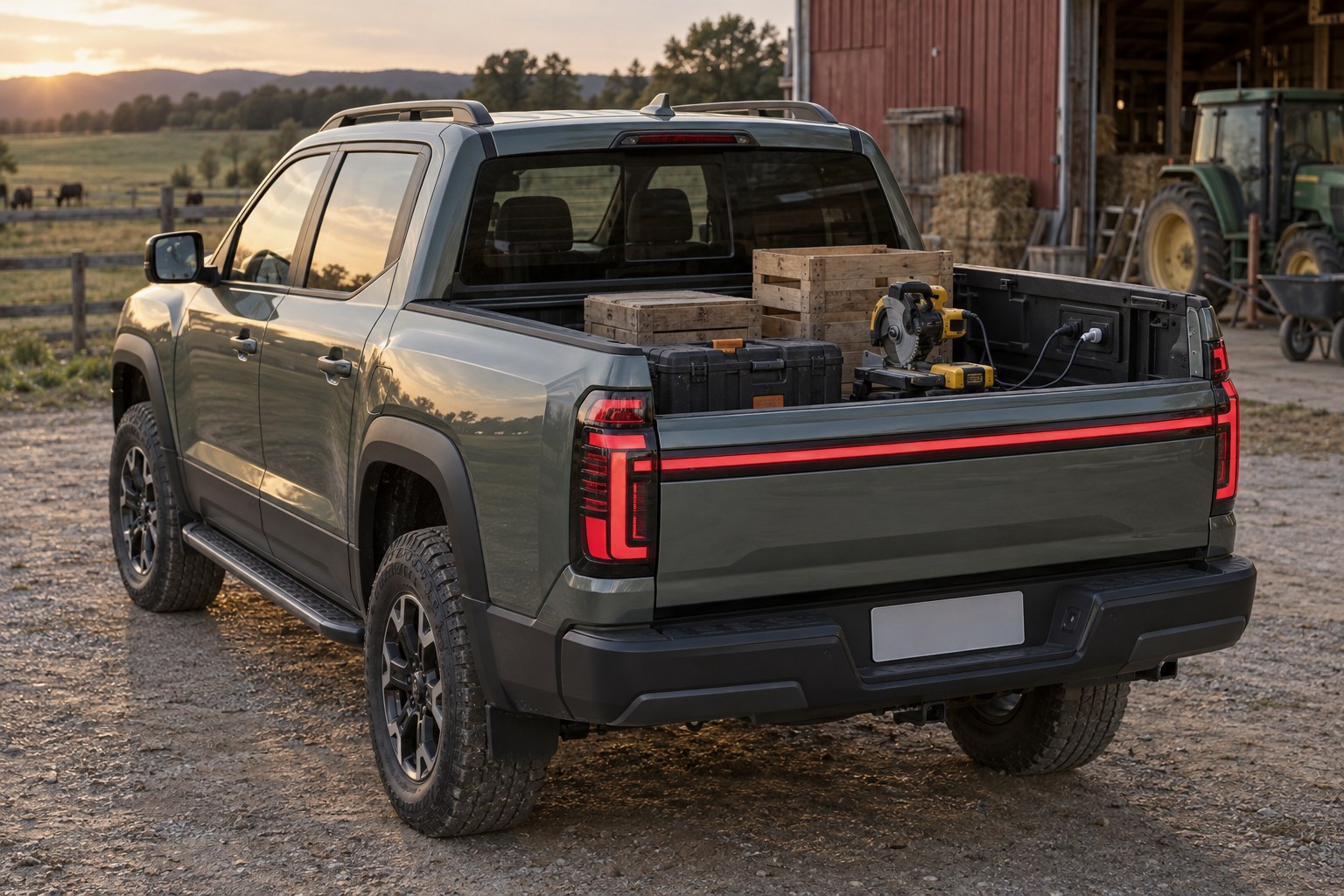
The battery is a 32.2 kWh lithium iron phosphate Blade pack. That is enough for 55.9 miles (about 90 km) on the WLTP cycle without starting the engine; with a full tank, total range is 419 miles, or about 675 km. From a DC fast charger of up to 55 kW, the battery can be charged from 30 to 80% in about 21 minutes; on 11 kW AC, a full charge takes a little over three hours. There is a V2L function — up to 6.6 kW via two sockets, one of which is mounted in the bed: you can power tools or camping equipment from the pickup.
It is worth noting a discrepancy between sources: in an October piece, the UK’s Auto Express cites a capacity of 29.58 kWh and a range of up to 55 miles, whereas BYD’s UK press release and most outlets state 32.2 kWh and 55.9 miles. Most likely, the first figure is usable (net) capacity, but there is no official explanation.
Dimensions, body and payload capacity
| Parameter | BYD Shark (United Kingdom) |
|---|---|
| Body | double cab, 5 seats, ladder frame |
| Length × width × height | 5 457 × 1 971 × 1 925 mm |
| Wheelbase | 3 260 mm |
| Ground clearance | 230 mm (unladen) |
| Approach / departure angles | 31° / 19.3° |
| Bed volume | 1 200 L, bed length about 1.5 m |
| Payload | 790 kg |
| Towing | 2 500 kg braked, 750 kg unbraked |
| Weight | a little under 2.7 t, gross — 3.5 t |
| Drive | all-wheel drive, electric motor on each axle |
| Total power | 436 hp, 650 N·m |
| Battery / electric range (WLTP) | 32.2 kWh / 55.9 miles (≈90 km) |
| Price | from £47 290 incl. VAT |
Inside there is a 15.6-inch central screen, a 10.25-inch digital instrument cluster, a head-up display, a 12-speaker Dynaudio audio system, wireless Apple CarPlay and Android Auto, heated and ventilated front seats, and 360-degree cameras. Safety systems include seven airbags, adaptive cruise control, blind-spot monitoring and lane keeping assist.
The main limitation is payload. 790 kg is 210 kg short of the one-tonne requirement in the UK for a pickup to be classed as a commercial vehicle. Therefore, businesses cannot reclaim VAT on the Shark as they can for most competitors — UK publications note this directly.
How Shark differs from the Ford Ranger PHEV
The only other plug-in hybrid pickup currently sold in Europe is the Ford Ranger PHEV. BYD deliberately compares itself specifically to it and emphasizes that the Shark’s battery is almost three times larger.
| Parameter | BYD Shark | Ford Ranger PHEV |
|---|---|---|
| Power | 436 hp (430 bhp) | 275 bhp |
| Electric range (WLTP) | up to 55.9 miles (≈90 km) | 27 miles |
| Towing | 2 500 kg | 3 500 kg |
| Payload | 790 kg | 1 000 kg |
| UK price | £47 290 incl. VAT | the base version is slightly cheaper than Shark |
So Shark wins on performance and urban electric driving, while Ranger wins on towing and payload, and also has commercial status in the UK. For those who drive around the city every day and head out to the country with a trailer up to 2.5 t, Shark has the advantage; for work with heavy trailers and out in the field, Ranger does. We looked at how Ranger compares with the updated Toyota in the comparison Hilux 2026 vs Ford Ranger.
What accessories such a pickup needs
There are no model-specific accessories for Shark yet — the vehicle is only just appearing in Europe, and bed dimensions and mounting points have not yet been worked through in accessory makers’ catalogs. However, there are things worth fitting right away, and some of them are universal.
- Mud flaps. Large wheels and 230 mm of ground clearance throw mud and small stones onto the sills and the sides of the bed. Universal mud flaps made of rubber will work, including ones specifically for 4×4 vehicles.
- Crossbars and a bed bar. A 1,200 L bed needs tie-down points for cargo. Universal crossbars are mounted on the bed sides; there are no model-specific bed bars (roll bars) for Shark yet — they should only be chosen to exact bed dimensions.
- Roll cover or bed lid. Protects cargo from rain and theft, and the V2L socket in the bed makes an enclosed bed convenient for tools. For options for other pickups, see roll covers for the bed.
Accessories for other models of the brand are in the BYD tuning section.
We ship via Nova Poshta across all of Ukraine.
Pros and Cons of the BYD Shark
A total of 436 hp and 650 Nm, 0-100 km/h in 5.7 s
Up to 90 km on electric power by WLTP — daily trips without gasoline
Frame, all-wheel drive with two electric motors, and 230 mm ground clearance
V2L up to 6.6 kW with a socket directly in the cargo bed
Rich standard equipment in a single trim
Payload of only 790 kg — not considered a commercial vehicle in the UK
Towing capacity of 2,500 kg — less than diesel rivals and the Ranger PHEV
No low-range gear or differential locks
Prices and dates for EU countries have not been officially announced
There are no model-specific accessories yet