24.09.2026
273
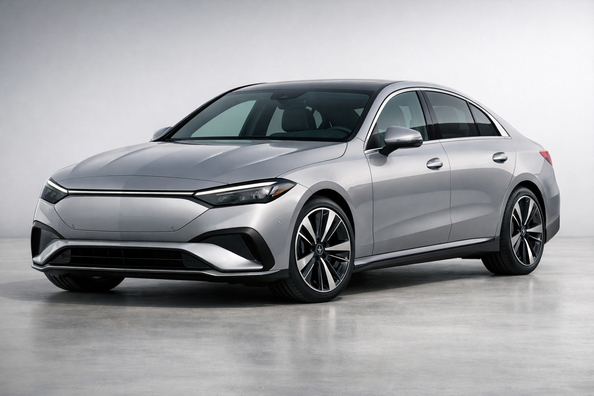
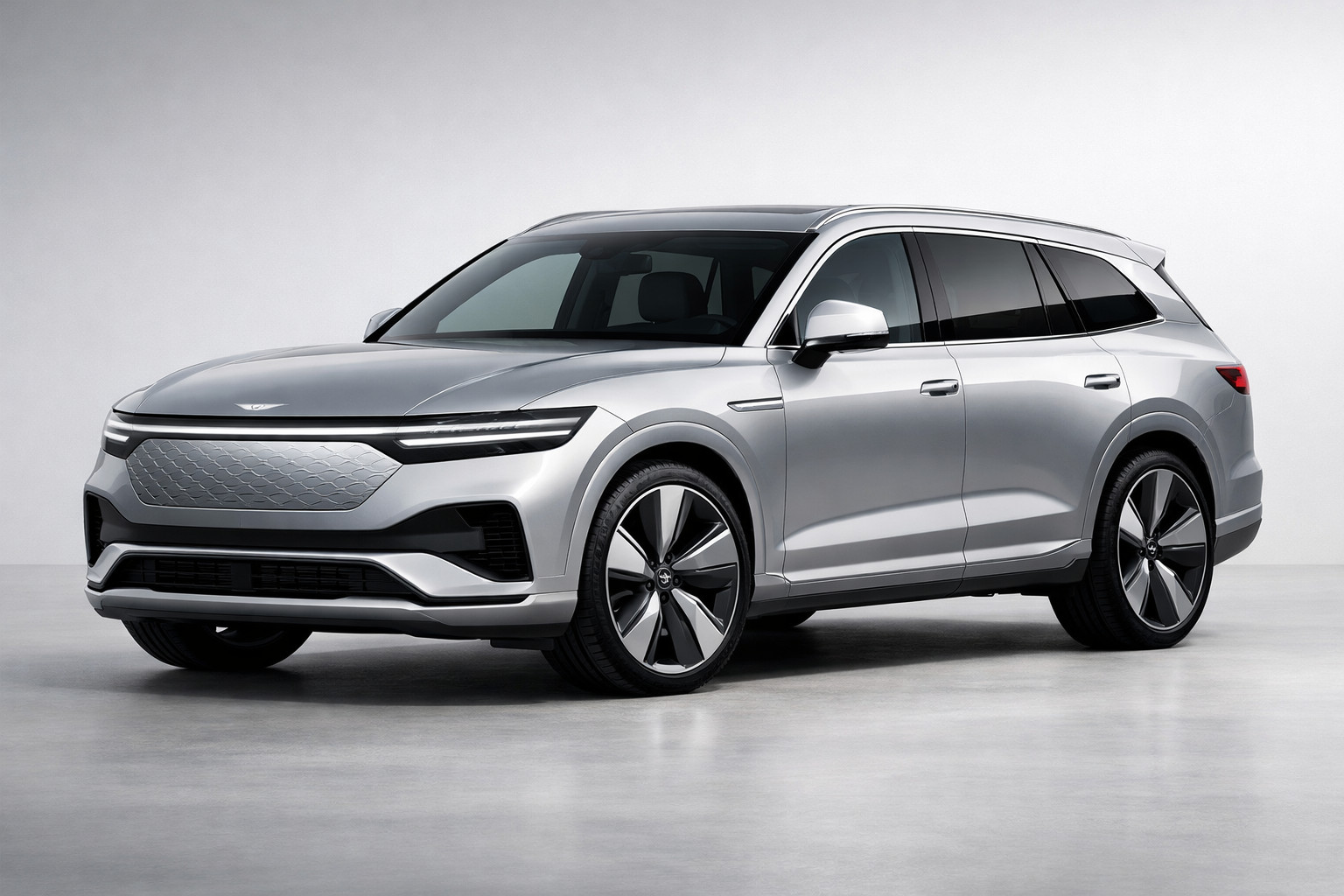
The electric Mercedes-Benz C-Class 2027 enters the segment not as “just another battery version”, but as a standalone premium sedan on the MB.EA platform. In its launch spec as the C 400 4MATIC electric, it delivers 360 kW, 800 N·m, a 94 kWh battery, up to 762 km on the WLTP cycle, and DC fast charging up to 330 kW. In character, the model doesn’t come across as a sporty toy, but as a quiet and very long-range daily driver.
The key caveat is simple: the model is only coming to market, so some data will still be уточнюватиметься depending on country and trim. As for the powertrain and basic day-to-day practicality, the numbers are already clear, but there’s still no complete picture on ground clearance, long-term reliability, and all safety packages.
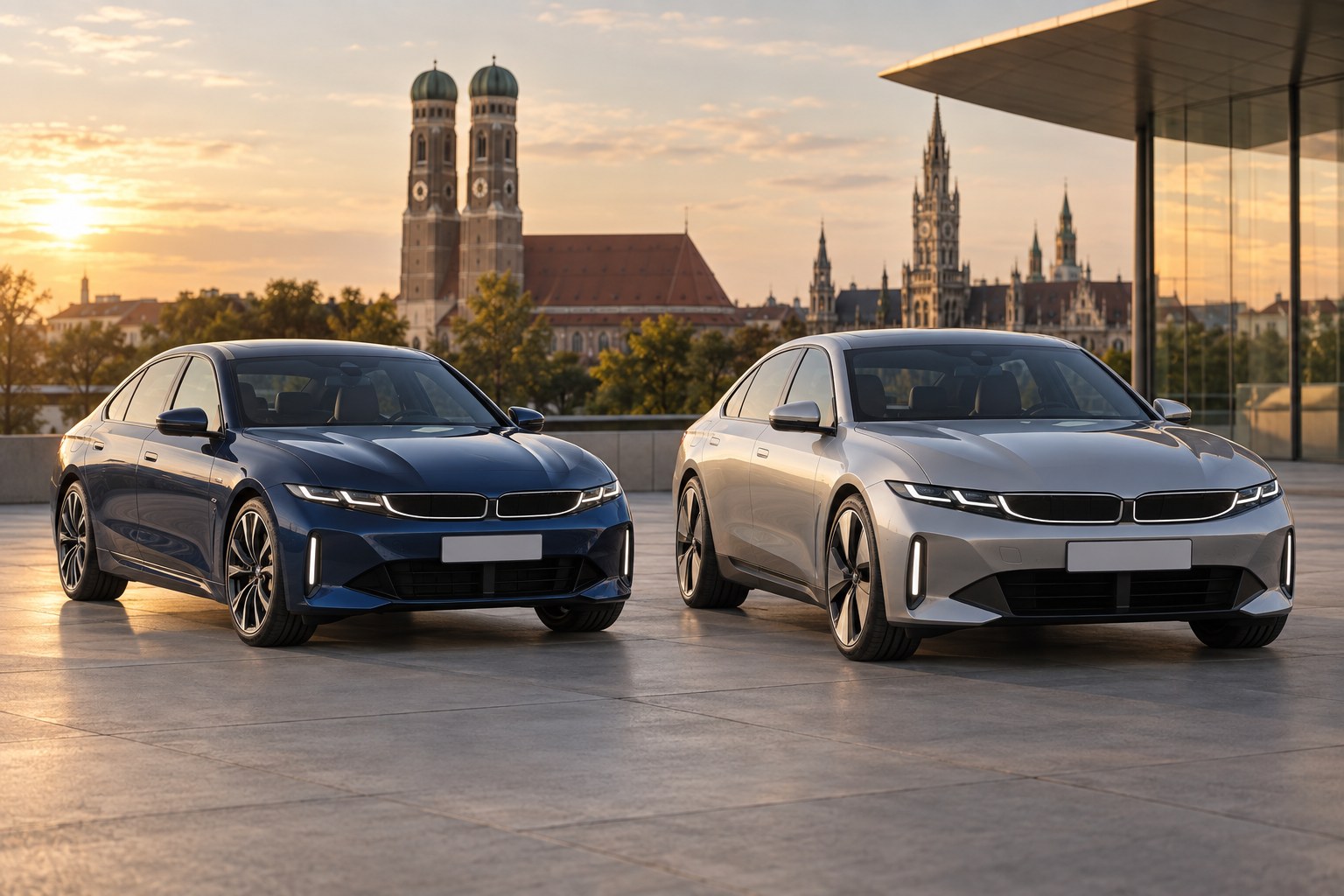
By size and positioning, the electric C-Class targets the heart of the premium D-segment. The most direct benchmark right now is the new BMW i3 on the Neue Klasse platform, but it’s important not to confuse it with the old city BMW i3: here we’re talking about a full-size sedan. Against that rival, Mercedes is betting on comfort, silence, greater everyday usability, and a straightforward highway use case.
| Parameter | Mercedes-Benz C 400 4MATIC electric | BMW i3 50 xDrive |
|---|---|---|
| Power | 360 kW | 469 hp |
| Torque | 800 N·m | 645 N·m |
| Architecture | 800 V | 800 V |
| Range | up to 762 km WLTP | up to 900 km WLTP, preliminary |
| Fast charging | up to 330 kW | up to 400 kW, preliminary |
| Practicality | trunk 470 L, frunk 101 L, towing up to 1.8 t | frunk 31 L, some everyday specs are not finalized yet |
On paper alone, BMW promises stronger range and charging figures. But for now they’re preliminary, while Mercedes already looks more convincing specifically as a family or fleet sedan, where the trunk, tow bar, and relaxed highway manners matter.
The electric C-Class currently has only one generation: it’s the first all-new electric C-Class, not a reworked gasoline or diesel version. The official debut took place in 2026, with the market launch announced for 2027. Production is being set up at the plant in Kecskemét, which also signals serious intent rather than a one-off experiment.
This is an important point for the buyer: essentially, Mercedes is starting a new branch within the familiar C-Class name. So the usual associations with the W206 are only partly useful: philosophically it’s the same compact premium sedan, but technically the car now lives by the rules of a dedicated electric platform.
At launch, one main version is known — C 400 4MATIC electric. There’s no internal combustion engine here, so the “displacement” item simply doesn’t apply: the powertrain consists of two electric motors, one on each axle. The rear and front motors work through 4MATIC all-wheel drive, and the rear axle uses a two-speed transmission — a rare but logical solution to combine a hard launch with lower consumption at high speed.
| Version | Powertrain | Displacement | Power | Torque | Transmission |
|---|---|---|---|---|---|
| C 400 4MATIC electric | two electric motors, all-wheel drive | not applicable | 360 kW | 800 N·m | two-speed rear transmission |
The performance is serious too: 0–100 km/h in 4.0 s and a top speed of 210 km/h. But the main point of this setup isn’t records — it’s that Mercedes is trying to deliver both a quick start and more efficient highway behavior, where an electric sedan owner spends a lot of time.
Based on early publicly available data, it’s a large sedan for the class: around 4882 mm long, 1892 mm wide, and 1504 mm tall, with a 2962 mm wheelbase. Drag coefficient starts at 0.22, and the rear wheels can steer up to 4.5°, so city maneuverability should be better than you’d expect from an almost 5-meter car.
| Specification | Value |
|---|---|
| Years of production for the electric version | debut 2026, market launch from 2027 |
| Generation | first generation of the electric C-Class |
| Length × width × height | approximately 4882 × 1892 × 1504 mm |
| Wheelbase | 2962 mm |
| Ground clearance | not officially stated in available specifications |
| Curb weight | around 2268 kg |
| Trunk | 470 L |
| Frunk | 101 L |
| Towing | up to 1.8 t |
| Turning circle | 11.2 m |
Chassis-wise, this is one of the model’s most interesting points. If AIRMATIC and rear-axle steering are included on a given version, the car should be very comfortable on long trips and not overly nervous in tight courtyards or parking garages.
Inside, the focus is on a digital environment: the large MBUX Hyperscreen, the new MB.OS software architecture, over-the-air updates, a panoramic roof, and plenty of ambient lighting atmosphere. For the driver, that means a modern interface and lots of customization scenarios, but there’s a downside too: the big screen surface collects fingerprints, and some functions are buried deeper in menus than you’d like.
Comfort looks like a strong suit. First impressions of the model come down to a quiet cabin, a calm suspension, and a very “highway” vibe. As for safety, it’s best to wait for final equipment lists for each market, so it’s better to judge the car not by general promises, but by the actual trim when it goes on sale.
In daily life, the electric C-Class looks strong exactly where many EVs are annoying. There’s a proper trunk, a separate front compartment, solid on-paper range, fast 800-volt charging, and the ability to tow up to 1.8 t. For someone who drives far, carries suitcases, boxes, or occasionally a trailer, these are genuinely important things, not just catalog checkmarks.
Weak spots are already visible too. The price is high, the rear row doesn’t promise the best seating position in the class, and real-world energy consumption, as with any powerful electric sedan, will noticeably depend on pace, weather, and route. On top of that, there simply isn’t a full base of long-term owner feedback yet, so reliability is still an open question.
| Strengths | Weaknesses |
|---|---|
| Very large claimed range | Some competitors already promise better on-paper figures |
| Fast charging and 800-volt architecture | Real-world results depend on battery temperature and the charging station |
| Practical trunk, frunk, and towing capability | High weight and a not-so-small price tag |
| Comfort-oriented character and good maneuverability for its size | Not everyone will like the interior’s heavy digitalization |
| A strong bid for the role of a long-distance family electric sedan | No long-term reliability statistics yet |
Who this model suits: a driver who wants a quiet premium sedan for city and highway, isn’t willing to sacrifice trunk space, and values comfort over showy sportiness. Who it may not suit: those looking for the cheapest entry into EVs, who prefer a simple cabin without large screens, or who want a design proven over years.
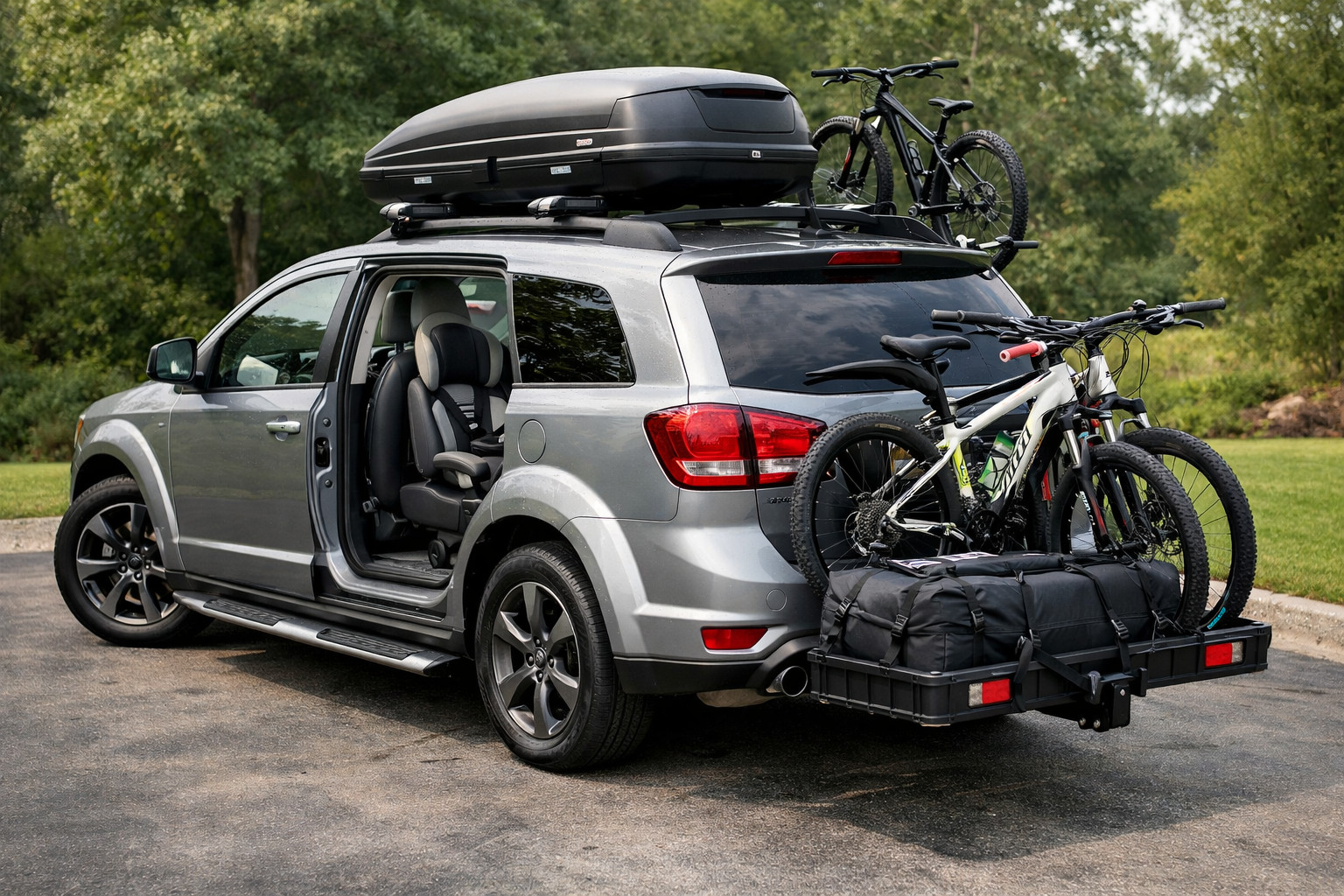
For such a new model, the tuning logic is simple: protection and everyday usability first, decorative details later. A dedicated catalog specifically for the electric C-Class 2027 usually doesn’t appear right away, so at the start it’s worth looking at practical solutions and checking compatibility each time, because the electric version is not identical to the standard W206.
Tuning makes sense for this model, but it’s not about “effect” — it’s about preserving the body and interior. For a new electric sedan, this is usually the smartest first wave of spending.
The electric Mercedes-Benz C-Class 2027 looks like a very strong contender for the role of a comfortable long-distance sedan: quick, practical, well thought-out for highway use, and noticeably more useful in everyday life than many flashy but less convenient EVs. If the BMW i3 truly confirms its preliminary numbers, the fight will be tight, but even now Mercedes wins not with showmanship, but with balance. The material is based on real selection experience, practical know-how, and real usage scenarios, so the main takeaway is simple: this model is worth waiting for if you need not just an EV, but a mature daily tool without obvious everyday compromises.
| ✔ | The claimed range of up to 762 km WLTP and a 94 kWh battery make the model suitable for long trips without frequent charging stops. |
| ✔ | The 800-volt architecture and charging at up to 330 kW should reduce battery top-up time at compatible stations. |
| ✔ | For everyday use, the sedan looks practical: a 470 l trunk, a 101 l front trunk, and towing capacity of up to 1.8 t. |
| ✔ | Dual-motor all-wheel drive and 800 Nm deliver quick acceleration, while the two-speed rear transmission is designed to combine strong launch torque with better highway behavior. |
| ✔ | Despite its large dimensions, the model has rear-wheel steering and a drag coefficient of 0.22, which for this class should help maneuverability and efficiency. |
| ✘ | The price is expected to be high, so it is not an option for those looking for an affordable entry into electric cars. |
| ✘ | A curb weight of around 2268 kg can be noticeable in the city and affect real-world efficiency. |
| ✘ | Some specifications are still not finalized, including ground clearance, certain safety packages, and some market-specific features. |
| ✘ | There is no long-term reliability data yet, as this is the first generation of the electric C-Class and the model is only entering the market. |
| ✘ | The interior with the large Hyperscreen and deep menus may not appeal to those who want simpler controls without excessive digitization. |
Shipping to EU
Wholesale and retail
Own warehouse
Опис продукту
Подарунки не надаються при оформленні покупки у кредит під 0,01% або при покупці частинами.