04.10.2026
10
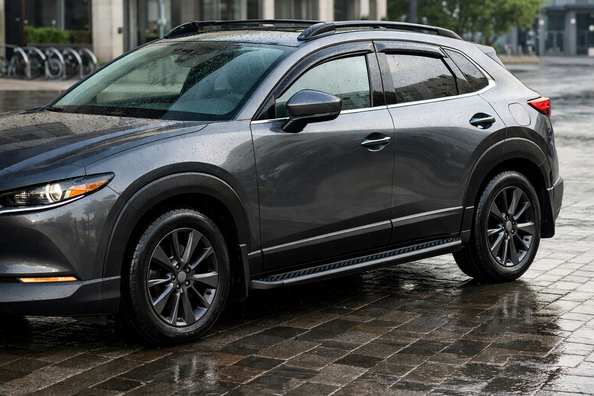

This set of upgrades is for a Mazda CX-30 owner who drives mostly in the city, regularly gets caught in the rain, pulls into yards with wet mud, and wants less to decorate the car than to wash the sills, interior, and rear of the body less often. The key here isn’t to pile up accessories as a checklist, but to eliminate the sources of dirt in the right order.
The logic is simple: first reduce spray from the wheels and water on your shoes, then protect the areas that get scratched and soiled every day, and only then look at comfort items. Separately, it’s worth double-checking the model year, trim level, and exact version of the car, because some CX-30 accessories differ in design.
For the “city + rain + clean sills” scenario, the main task isn’t adding another decorative layer to the body. You need to reduce the amount of water and dirt that gets thrown onto the lower part of the doors, the sills, and the rear of the car, and localize whatever still gets inside onto floor mats and in the trunk.
On the Mazda CX-30, the basic exterior protection is already partly handled by the lower plastic cladding, so not every expensive add-on is mandatory here. But if the car drives daily on wet asphalt, through puddles, parks close to curbs, and carries grocery bags, kids’ items, or sports gear, the difference from the right starter kit is noticeable quickly.
Top priority is front and rear mud flaps. They address the cause, not the consequence: less gets thrown onto the sills, lower door sections, and rear bumper. If you drive almost entirely on dry asphalt, the effect will be moderate, but in the rainy season and on dirty city roads the benefit is clearly noticeable.
Second step is rubber or all-weather interior floor mats. They don’t make the exterior cleaner, but they save the cabin from wet sand, salt, and shoe marks. An important safety note: the driver’s mat must be secured using the factory fixings, and you shouldn’t place one mat on top of another.
Third step is a trunk tray and trunk edge protection. If the trunk often takes grocery bags, a stroller, a scooter, or wet items, a tray makes maintenance easier. Trunk edge protection is useful where scratches come not from rain, but from daily loading.
| Upgrade | Why it’s needed | Who really benefits |
|---|---|---|
| Front and rear mud flaps | Reduce spray, dirt, and small debris on the lower body and behind the car | Anyone who drives in rain, through wet yards, in winter, or simply doesn’t want to wash the sills and rear end often |
| Rubber interior floor mats | Collect water, sand, and dirt from shoes, making cleanup easier | Anyone who drives in the city daily and gets into the car with wet shoes |
| Trunk tray | Protects the trunk lining from moisture, dirt, and cargo marks | Anyone who carries grocery bags, kids’ items, tools, sports gear, or a dog |
| Trunk edge protection | Takes the scratches during loading and unloading | Anyone who uses the trunk often and doesn’t want to ruin the top of the bumper quickly |
| Film for the door openings | Protects contact areas from minor scuffs and dirt | Families, cars with frequent passengers, anyone whose sills are already regularly hit by shoes |
| Sill plates | Add mechanical protection in the entry area, though it’s partly also about looks | Those who often carry passengers or already have marks on the sills; for everyone else it’s not a first purchase |
After the basic set, it’s logical to move on to protecting contact areas: film for the door openings and sill plates. If the goal is specifically cleaner, less scuffed sills, film is more practical than decorative solutions: it works discreetly and doesn’t change the cabin’s appearance. Sill plates make sense when passengers, kids get in often, or the sills already take regular hits from shoes.
DD Tuning expert comment: the most common mistake with this scenario is starting with sill plates or window deflectors without dealing with wheel spray first. The second typical story is buying universal mud flaps without checking fitment, then modifying the mounts and putting up with a crooked look. If you want a practical result, start with mud flaps, mats, and trunk-area protection, and only then everything else.
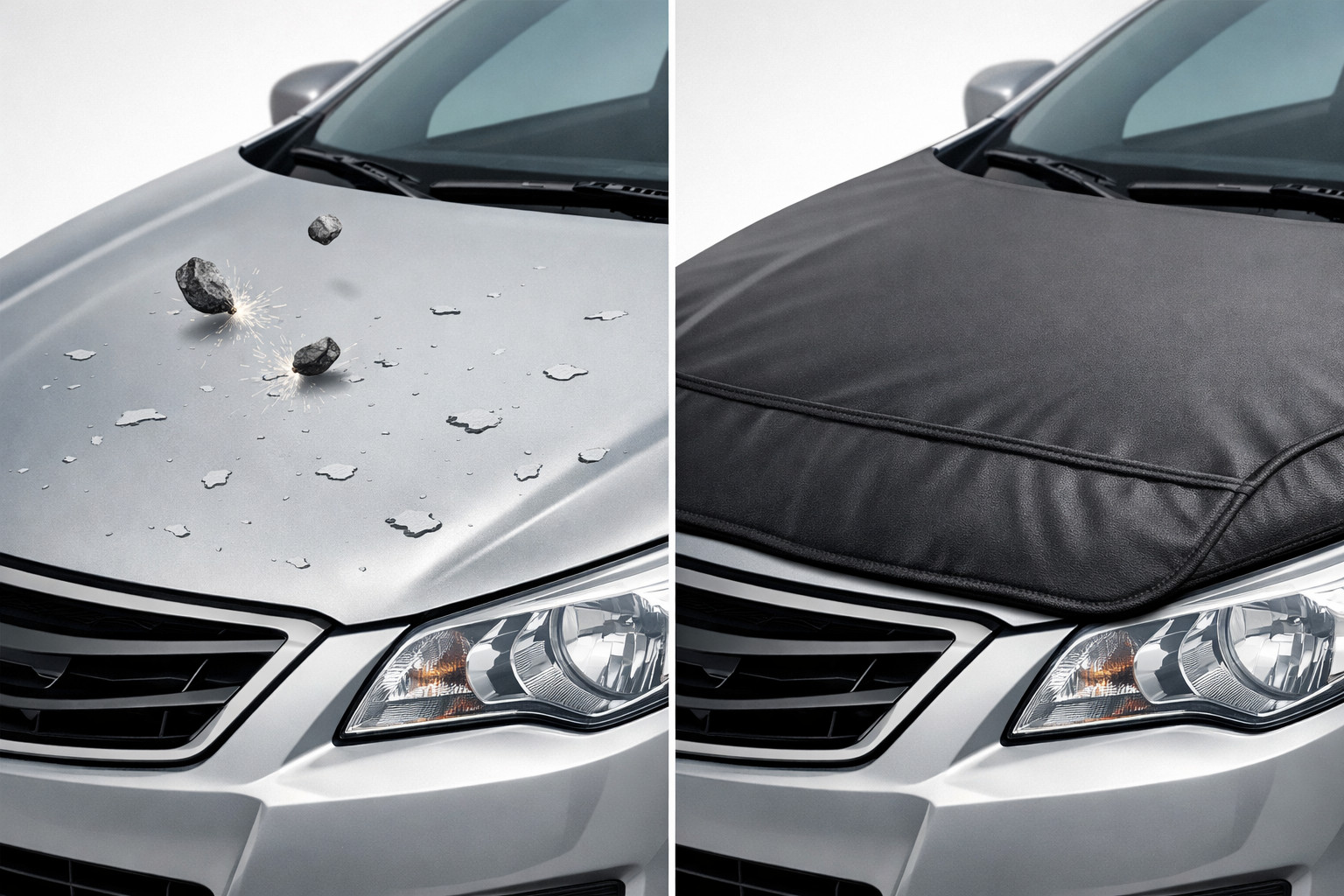
Metal engine bay protection is not a basic upgrade here. For strictly city use it’s secondary, but it can make sense if you have rough roads, winter driving with ruts, or regular trips where the underside is genuinely at risk of being hit.
Window deflectors on the CX-30 make sense not for clean sills, but if you really like cracking a window open in the rain or airing out the cabin while parked. For some drivers it’s convenient; for others it’s extra wind noise at speed. So it’s not a must-have, but an option based on how you use the car.
Wireless charging, illuminated sill plates, and similar items don’t solve the dirt-and-water task at all. They can be nice, but in a daily wet city-use scenario they’re a third-priority expense, not the foundation.
Most often, people waste money on things that look good in the description but don’t change day-to-day life: big wheels, decorative trim with no protective function, a roof box for a car that only drives in the city, or chrome details low on the body. For rain and clean sills, that’s almost zero benefit.
The second mistake is overpaying not for quality, but for the image. For example, buying window deflectors just because they “should be there,” even though you almost never open the windows in the rain. Or saving on mud flap fitment by buying a universal set that then requires extra fasteners and still works worse than a model-specific solution.
The third mistake is buying accessories without matching them to the trim. For the trunk area on the CX-30, it’s worth verifying the version for your specific car; otherwise the tray may not match in shape or layout details.
| What to install first | What you can postpone | What’s not mandatory |
|---|---|---|
|
|
|
More expensive solutions are justified where precise fitment, proper mounting, and a predictable result without modifications matter. For this scenario, that primarily applies to model-specific mud flaps for the CX-30: if you don’t want to tweak a universal set, it’s better to buy the correct model option right away.
The second place where it makes sense not to save is rubber floor mats. Geometry, raised edges, and proper fixation matter here: a cheap compromise can sometimes look fine, but it holds water worse and becomes annoying faster in daily use.
Third is trunk-area protection. If you often carry hard or dirty items, rear bumper protection or trunk edge protection justifies the higher price better than any decorative upgrade, because it removes a very specific scratch risk.
From a customer’s experience: a CX-30 owner in a daily city-driving scenario initially wanted window deflectors and sill plates because the sills bothered them the most. After selection, they started with mud flaps, interior mats, and a trunk tray, and added film for the door openings later. As a result, the cabin became easier to clean, and dirt on the lower doors and around the sills decreased more noticeably than from any decorative add-on.
For a Mazda CX-30 in the “city, rain, and clean sills” scenario, the sensible order is: first mud flaps, then interior floor mats, then a trunk tray and trunk edge protection, and only after that film for the door openings, sill plates, and comfort items. This sequence delivers a practical result, not just a shopping list.
In short, clean sills here are achieved not by decorative elements, but by a combination of three things: less spray from the wheels, less water in the cabin, and protected daily contact areas. This material is based on real selection experience, hands-on practice, and real use cases, so the prioritization logic is more important than the number of accessories.
| ✔ | Front and rear mud flaps really reduce splashes onto the side sills, lower doors, and rear bumper. For city driving, rain, and wet courtyards, this is the most direct way to reduce dirt on the body. |
| ✔ | Rubber or all-weather floor mats make it easier to clean the cabin after wet shoes. They collect water, sand, and salt, so the floor gets dirty less every day. |
| ✔ | The trunk liner helps when you often carry bags, kids’ items, tools, or wet things. It protects the trunk lining from moisture and marks from cargo. |
| ✔ | The trunk edge protector takes the scratches during loading and unloading. This is practical if the trunk is used regularly, not just from time to time. |
| ✔ | Film on the door openings works well exactly where the sills and door edges get scuffed by shoes. It protects discreetly and does not change the look of the cabin. |
| ✘ | Some accessories in this set do not solve the main dirt problem, but only add comfort or style. For example, wind deflectors, wireless charging, or decorative trims do not make the sills cleaner. |
| ✘ | Universal mud flaps may require adjustments and fit worse than model-specific ones. If you install them without checking the fit, you can end up with a crooked look and weaker effect. |
| ✘ | The trunk liner and other elements need to be matched to the specific CX-30 version. Otherwise, there is a risk that the part will not match in shape or layout. |
| ✘ | A metal engine bay guard for purely urban use is not a basic purchase. Its point only appears on bad roads, in winter, or where there is a real risk of an удар from below. |
Shipping to EU
Wholesale and retail
Own warehouse
Опис продукту
Подарунки не надаються при оформленні покупки у кредит під 0,01% або при покупці частинами.