01.08.2026
86
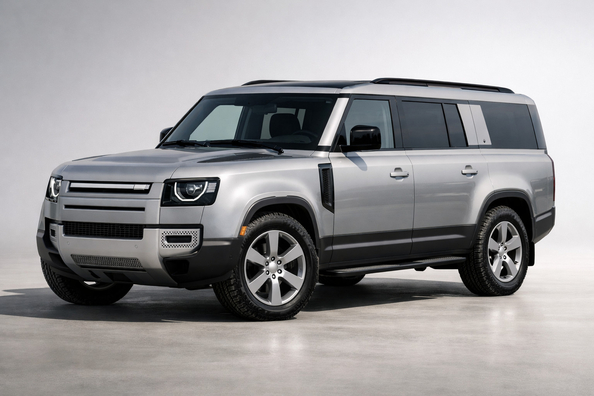
The Land Rover Defender 130 in the L663 body — is the longest and most family-oriented version of the modern Defender. The idea is simple: keep the Defender’s off-road capability, towing strength, and character, but add a proper third row and more usable space for traveling with people, gear, and a trailer.
This vehicle suits those who truly need 7–8 seats, long-distance routes, towing, and durability off the asphalt. If your main priorities are compact size, fuel economy, cheaper tires, and easier city parking, the Defender 130 is unlikely to be the most rational choice.
The Defender 130 sits at the intersection of two classes: large premium family SUVs and genuinely capable vehicles for bad roads. Compared to most three-row crossovers, it differs not only in design but also in its engineering: permanent all-wheel drive, serious off-road electronics, strong pulling power, and geometry that is, overall, much closer to a true SUV than to an urban wagon.
But the 130 isn’t a replacement for the shorter Defender 90, and it’s not even a direct analogue of the Defender 110. It’s chosen not for compactness, but for the ability to combine a spacious cabin, a third row, and a travel-focused format without switching to a minivan.
The current Defender, generation L663, debuted in 2019, and the Defender 130 version appeared in 2022. It’s important to understand that the 130 is not a separate generation, but an extended modification of the same modern Defender, built on the same architecture.
Historically, the Defender 130 name echoes the brand’s older utilitarian versions, but today’s vehicle is entirely different in ideology: it’s no longer a spartan work tool, but a large, tech-heavy SUV with an upscale cabin and a wide range of electronics. Within the L663 family, the logic is: 90 — short, 110 — versatile, 130 — the most practical for people and luggage.
The engine lineup in the Defender 130 depends on the market and model year, but the backbone is well known: inline-six diesel and petrol versions, plus certain high-output modifications for those who want maximum performance.
| Version | Engine | Power | What it means in real life |
|---|---|---|---|
| D250 | 3.0 L diesel, inline-six | 249 hp | A calm, sensible choice for long trips, pulling power, and towing |
| D300 | 3.0 L diesel, inline-six | 300 hp | More pulling reserve under load, less sense of the vehicle’s mass |
| P400 | 3.0 L petrol, inline-six | 400 hp | Quieter running, sharper response, but higher fuel consumption |
| P500 | 5.0 L petrol V8 | 500 hp | A niche option for those who want maximum performance rather than practicality |
Typical for the Defender 130 is an 8-speed automatic transmission and permanent all-wheel drive. Depending on the version and trim, chassis tuning, locks, and off-road modes differ. Looking at it without romance, diesels make the most sense here for hard everyday work, while the P400 is the best compromise between pull, smoothness, and performance.
The main difference between the Defender 130 and the 110 is the longer body and greater usable volume. At the same time, it hasn’t turned into a minibus: the chassis still feels passenger-car-like, but the size already requires getting used to.
| Parameter | Value |
|---|---|
| Years produced | from 2022 |
| Generation | L663 |
| Body | 5-door large SUV, 3 rows of seats |
| Length | 5358 mm |
| Wheelbase | 3022 mm |
| Width | 2008 mm without mirrors |
| Height | about 1970 mm, depending on suspension and tires |
| Ground clearance | about 218 mm in the standard position, up to 290 mm in the raised air-suspension mode |
| Trunk volume | 389 L behind the third row, 1232 L behind the second row, up to about 2291 L maximum |
| Wading depth | up to 900 mm, depending on conditions and equipment |
The modern Defender is built on the aluminum D7x monocoque architecture with independent suspension, so on the highway it’s far calmer and more precise than its looks suggest. But the 130 has its own trade-off for the extra space: the longer rear overhang worsens the departure angle, so in difficult terrain it’s less convenient than the 90 or 110.
The Defender 130’s interior is one of the main reasons to look at this version specifically. The third row makes more sense here than in most large crossovers: there’s enough space not only for kids, but also for adults on a trip of decent length. The seating position is high, visibility is good, and the interior is built to handle active use, not just to look expensive.
Comfort depends heavily on wheels, seats, and the specific trim, but overall the Defender 130 isolates noise well and doesn’t wear you out on the highway. Safety is also modern: cameras, parking assistants, lane keeping, adaptive driver-assistance systems. An important note: the equipment list varies by model year and version, so it’s better to judge a specific vehicle by its trim, not by the model name.
In daily driving, the Defender 130 is more pleasant than many expect from such a large SUV. It’s stable on the highway, handles uneven roads well, and gives a feeling of reserve under the wheels. For family trips, that’s a big plus: you can carry people, suitcases, kids’ items, and camping gear without feeling like the vehicle is operating at its limit.
The downsides are obvious too. A length of over 5.3 m and substantial width mean more difficult parking, more expensive tires, brakes, and suspension. If you use all three rows, space for large luggage is no longer unlimited, so for a vacation with 7–8 people you often have to plan packing carefully or use additional transport solutions. For the city, it’s a heavy, wide, and not-cheap-to-run vehicle, even if you drive carefully.
| Pros | Cons |
|---|---|
| Truly useful third row | Large dimensions in the city and in parking |
| Strong pull of the diesel versions and good reserve under load | High costs for tires, brakes, and service |
| A combination of long-distance comfort and real off-road capability | Longer rear overhang is worse in difficult terrain than on the 90/110 |
| High-quality, practical interior for active use | With a full cabin, trunk volume needs planning |
| Suitable for a trailer, travel, and a big family | Complex hardware and electronics require attentive maintenance |
From an owner’s perspective, the key takeaway is this: the Defender 130 is strongest when you truly use its length, third row, and towing potential. If those advantages remain only on paper, shorter and cheaper alternatives will be more practical.
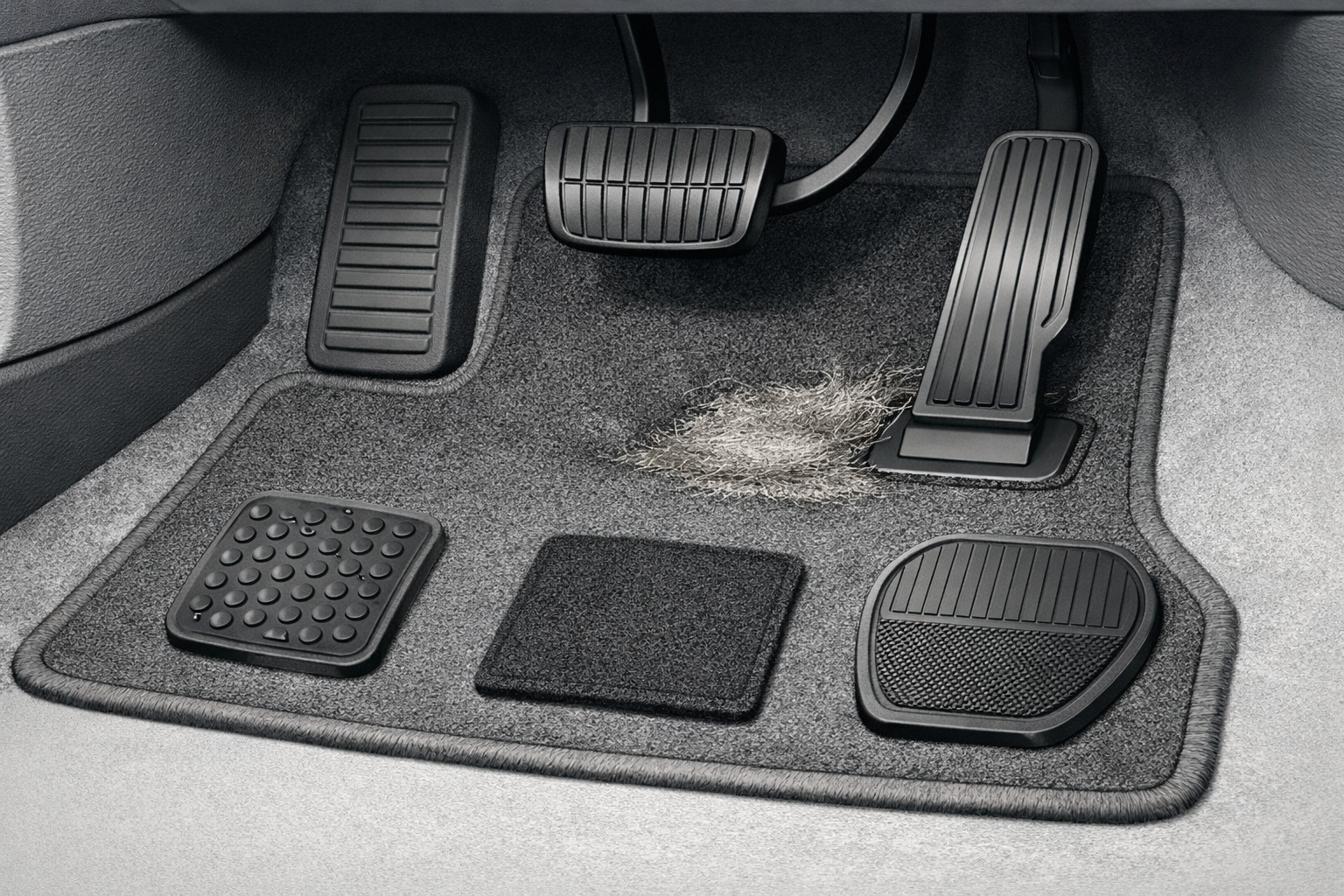
For the Defender 130, the most sensible tuning isn’t decorative, but protective and everyday-use oriented. In a vehicle like this, the floor, cargo area, seatbacks, and places where dirty gear is constantly put wear quickly. That’s why mats, cargo protection, and interior solutions usually make sense first. It’s only important to verify compatibility specifically with the L663 generation and the 130 body, because differences within the Defender family are significant.
The Land Rover Defender 130 (L663) makes sense for those who need more than just a large, expensive SUV — a vehicle with a proper third row, strong pull, durability, and the ability to go far and not only on asphalt. It isn’t universally convenient and it’s definitely not cheap in day-to-day life, but it’s highly convincing in its specific role: a big family, travel, gear, a trailer, bad roads.
If your main priorities are city driving, compactness, and lower running costs, it’s better to honestly look at shorter formats. This material is based on real selection experience, practical knowledge, and real-world use cases, so the main advice is simple: the Defender 130 is worth buying when its size and capabilities will work for you every day, not just look good in photos.
| ✔ | A genuinely useful third row: in the Defender 130, there’s enough room there not only for children, but also for adults on a proper trip. |
| ✔ | Large cargo capacity for its class: 389 l even with the third row and up to 2291 l with the seats folded. |
| ✔ | Strong diesel versions are well suited for long trips, towing, and driving with a load. |
| ✔ | The vehicle combines real off-road capability with comfort on the highway, so it’s suitable for travel and bad roads. |
| ✔ | The cabin is designed practically: it can withstand active use, not just look premium. |
| ✘ | Dimensions of over 5.3 m and a width of over 2 m make parking and maneuvering in the city more difficult. |
| ✘ | Ownership is not cheap: tires, brakes, suspension, and maintenance will all be expensive. |
| ✘ | The longer rear overhang worsens the departure angle, so on difficult terrain the 130 is less convenient than the 90 or 110. |
| ✘ | If all three rows are used, there isn’t as much room for large luggage, and trips with a big group need to be planned. |
Shipping to EU
Wholesale and retail
Own warehouse
Опис продукту
Подарунки не надаються при оформленні покупки у кредит під 0,01% або при покупці частинами.