09.04.2026
2017
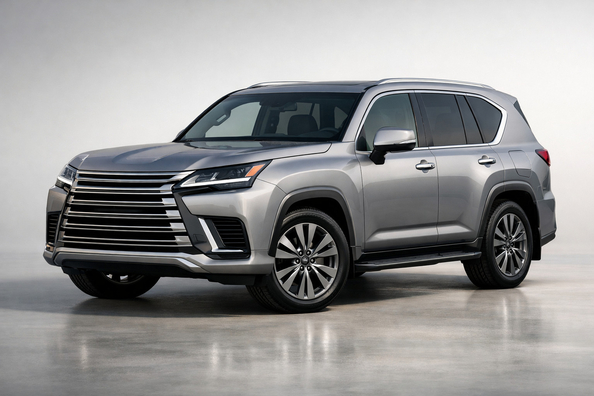
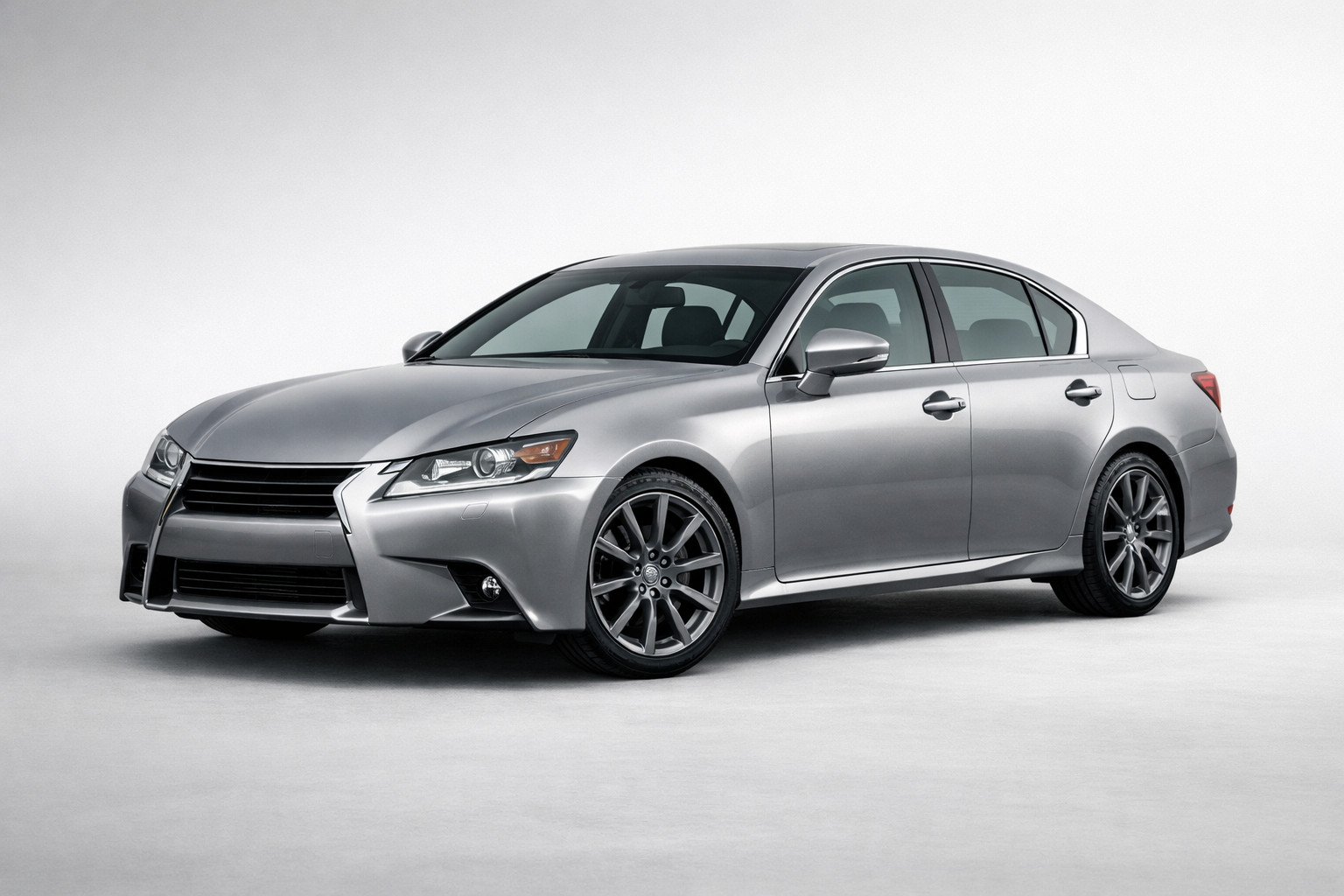
Lexus LX 500d/600 is a large body-on-frame SUV where real premium is felt first and foremost in the pulling power, cabin quietness, trim quality, and off-asphalt durability reserve. But part of the price here doesn’t go into practicality: the third row and the trunk aren’t class-leading, and the flagship feel is often more about status, size, and an expensive interior than about maximum usable space.
If you need a vehicle for long highway runs, towing up to 3500 kg, bad roads, and winter trips with no compromises on full-time 4WD, the LX looks like a logical choice. If your priority is maximum room for a big family, easy parking, and agile handling for this money, the class has more practical alternatives.
The LX is Lexus’s flagship SUV. By format it’s not just a big urban crossover, but a heavy body-on-frame vehicle with full-time four-wheel drive, a low-range transfer case, and serious towing capability. That’s where its value begins: it offers what many road-focused rivals in this segment no longer do.
In the market, the LX sits between pure luxury and real utility. By size and practicality it’s not among the very biggest in the class, but it wins with long-distance ride quality, strong noise comfort, and genuine off-road hardware. So the premium here isn’t about sportiness or record cabin space, but the ability to do hard work in an expensive, quiet, calm way.
The Lexus LX has changed generations infrequently. The model had an early LX 450 in the late 1990s, then the LX 470 from the late 1990s to 2007, then a long LX 570 cycle from 2007 to 2021, and the current LX 500d/600 generation arrived in 2021–2022 depending on the market.
The key change of the new generation is the move away from a naturally aspirated V8 in favor of two twin-turbo V6s: the diesel LX 500d and the gasoline LX 600. The character also shifted: it became more modern in multimedia, quieter, and noticeably more high-tech inside, but it remained big, heavy, and not particularly engaging to drive.
The current LX has two real powertrain options, and both are strong down low and in the mid-range. The diesel LX 500d looks more rational for high mileage, towing a trailer, and frequent highway use. The gasoline LX 600 wins on output, smoothness, and a more expensive feel under acceleration.
| Parameter | LX 500d | LX 600 |
|---|---|---|
| Engine | V6 diesel, twin-turbo, 3346 cm³ | V6 gasoline, twin-turbo, 3445 cm³ |
| Power | 227 kW (309 hp) | 305 kW (409 hp) |
| Torque | 700 N·m | 650 N·m |
| Transmission | 10-speed automatic | 10-speed automatic |
| Drivetrain | Full-time AWD, low range, center differential lock | Full-time AWD, low range, center differential lock |
| Fuel consumption | 8.9 l/100 km | 11.9 l/100 km |
| Towing | 3500 kg | 3500 kg |
| Fuel tank capacity | 80 or 110 l depending on version | 110 l |
Neither version tries to pretend it’s light or sporty. Their point is torque reserve and calm operation under load. In short: the 500d is about rationality and torque, the 600 is about extra power and a more expensive feel from the powertrain.
The LX has a 2850 mm wheelbase, length of 5090–5100 mm, width of 1990 mm, and height of 1885–1895 mm depending on version. Ground clearance is quoted at 203 mm, curb weight is roughly 2630–2690 kg, and gross vehicle weight is 3280 kg. It’s a big vehicle, and in the city it feels big: the width and mass take getting used to, especially in tight parking lots.
As for the chassis, the LX’s main argument isn’t sportiness, but stability on rough surfaces and off-road reserve. There’s a height adjustment system, modes for different surfaces, crawl control, and downhill assist. The confirmed off-road benchmarks are serious too: fording depth up to 700 mm, stable side slope up to 44°, climb up to 45°. On asphalt it’s more of a calm cruiser than a machine for attacking corners.
This is where the word “premium” is felt most in the LX. Strong noise insulation, good materials, substantial seats, and rich equipment depending on trim: heating and ventilation, massage, soft-close doors, digital rearview mirror, head-up display, cooled box. The first and second rows are designed for long-distance driving, where the car should relax you rather than entertain the driver.
But there’s a flip side. The third row isn’t the model’s strong point, and trunk space noticeably depends on configuration. In 5-seat versions, volume can reach 1109 l; in the 7-seat version with the third row folded, 833 l. With the third row up, the space reserve no longer feels flagship-level. Some markets also offer 4-seat versions, where the focus shifts to second-row comfort rather than family versatility.
Safety is at a high level: adaptive cruise control, lane keeping, blind-spot monitoring, 360° camera, obstacle detection, and 10 airbags. The other side is that electronic assistants can sometimes be overly cautious, and not everyone likes that in daily driving.
In everyday life, the LX shows its strengths best not in the city center, but on mixed routes: highway, suburbs, bad roads, trailer, winter trips. The diesel version looks more logical for those who drive a lot and keep an eye on fuel. The gasoline LX 600 is more about smooth power delivery and a more expensive overall feel, but you’ll pay for it at the pump too.
There are practical nuances as well. A 6.0 m turning radius is still acceptable for a body this size, but nearly 2 meters of width still makes you choose parking spots more carefully. If you plan long trips, pay attention to the fuel tank version: depending on spec it’s 80 or 110 l. And separately important for early-model-year LX 600: before buying, it’s worth checking the vehicle by VIN for recall completion related to the risk of unstable operation or engine shutdown.
| Pros | Cons |
|---|---|
| Strong engines with high torque and solid pull under load | Large weight and dimensions you feel every day in the city |
| Quiet, upscale-feeling cabin; good first and second rows | Third row and trunk don’t meet expectations for a flagship class |
| Real off-road hardware: full-time 4WD, low range, off-road systems | Handling is relaxed, not driver-focused; body roll and numb steering remain |
| 3500 kg towing and strong travel potential | High price, part of which goes to status and trim rather than cabin volume |
| Diesel LX 500d looks practical on fuel consumption | For LX 600 2022–2023, checking recall history is especially important |
Who the LX suits: anyone who wants one large vehicle for highway use, towing, bad roads, winter, and long-term ownership without losing the feel of an expensive cabin. Who it doesn’t suit as well: those who regularly carry seven people, value city ease, or want maximum space for every hryvnia spent.
For the LX, the smartest tuning is practical rather than decorative. This model benefits from things that protect the interior and add convenience for travel: mats, trunk protection, roof solutions. On the LX 500d/600 model page, it makes sense to browse specifically for your version so you don’t mix accessories with other Lexus models.
If you look at it realistically, travel and interior-protection accessories bring the most benefit to the LX. Aggressive body kits or big decorative elements only make sense when they matter more than everyday practicality.
The LX 500d/600 truly delivers premium in areas that are hard to fake: silence, interior quality, strong powertrains, real full-time 4WD, and high long-distance comfort. But the surcharge is also noticeable where the utility is lower: in status, size, and an expensive image that isn’t always backed up by third-row space or driving dynamics.
If you need a large, expensive, and tough vehicle for demanding scenarios, the LX makes sense. If you’re counting pure practicality, you have to choose it very consciously. The material is based on real selection experience, hands-on practice, and real-world use cases—from long trips and family routes to towing and everyday operation of a large body-on-frame SUV.
| ✔ | Strong engines with high torque: the LX 500d and LX 600 pull well under load, and the diesel version also looks more practical for high mileage and towing. |
| ✔ | The cabin delivers comfort for long trips very well: quietness, quality materials, large seats, heating and ventilation, massage, and other rich equipment depending on the trim. |
| ✔ | The model has proper off-road hardware: full-time all-wheel drive, low range, a center differential lock, and assist systems for off-road driving. |
| ✔ | The LX is suitable for demanding scenarios — the stated towing capacity of up to 3500 kg, as well as good wading and climbing figures, confirm its reserve of strength off pavement. |
| ✔ | The diesel LX 500d looks more economical in everyday use: fuel consumption of 8,9 l/100 km for such a large body-on-frame SUV is a notable plus. |
| ✘ | The car is large and heavy, so its dimensions are felt every day in the city: narrow parking spaces, a width of almost 2 meters, and its mass take some getting used to. |
| ✘ | The third row and the trunk do not match expectations of a flagship SUV, especially if you really use the seven-seat configuration. |
| ✘ | Handling is calm rather than driver-focused: body roll and the detached steering make the LX not the most enjoyable option for spirited driving. |
| ✘ | Part of the price here goes not into practical space, but into status and an expensive image, so for the money the model does not look maximally rational. |
Shipping to EU
Wholesale and retail
Own warehouse
Опис продукту
Подарунки не надаються при оформленні покупки у кредит під 0,01% або при покупці частинами.