04.05.2026
341
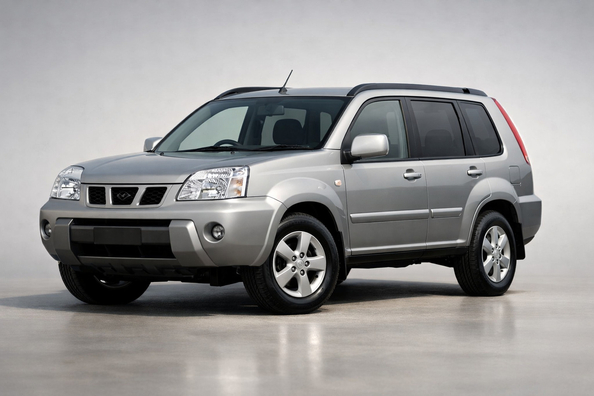
Nissan X-Trail T30 is one of those older crossovers that still makes sense if you need space, a proper trunk, and all-wheel drive without unnecessary electronic complexity. In this topic we’re talking about 2002-2007 cars, although the T30 generation overall was produced from 2000 to 2007. On the used market, it’s not the age on paper that matters, but the real condition of the body, drivetrain, and smaller components.
The strong side of this model is everyday practicality: family use, trips out of town, snow, gravel roads, gear, a dog, a cottage. The weak side is noise, ergonomics that won’t suit every driver, and a typical set of age-related issues. If you need an inexpensive-to-use, old-school crossover, the T30 is still holding on. If you want quietness, modern electronics, and the feel of a newer car, it’s no longer the right fit.
The X-Trail T30 arrived at a time when crossovers hadn’t yet turned into purely urban vehicles. By design it was a useful car for an active lifestyle: a high seating position, five seats, a roomy cabin, a practical trunk, and all-wheel drive for bad roads rather than serious off-road. That’s why its direct rivals were the Honda CR-V, Toyota RAV4, and Land Rover Freelander.
On the used-car market, the T30 is interesting because it doesn’t pretend to be something else. It’s not an “almost SUV” for image, but an old utilitarian machine with good visibility and a straightforward character. It suits best those who drive a mix of conditions: city, highway, unpaved yards, winter outings, trips with luggage. It makes less sense for people looking for dynamics, quietness, and modern options without retrofitting.
The first-generation X-Trail carries the T30 index and was produced from 2000 to 2007. Cars from 2002-2007 are most commonly found in active circulation, so they shape the model’s current reputation. An update happened at the end of 2003: some equipment elements and small convenience details changed, and in 2007 the model was replaced by the T31 generation.
For its time, the T30 stood out not by styling for the sake of styling, but by everyday practicality. It had durable interior materials, and the trunk was designed with dirty gear, outdoor trips, and family use in mind. That’s why this car still holds up today: not because it’s trendy, but because it has a well-assembled set of daily-use functions.
The T30 came with 2.0 and 2.5 petrol engines, as well as a 2.2 diesel in several versions. It’s important not to reduce everything to a single number: output and even some characteristics differed by market. For calm driving the 2.0 is enough, but with an automatic transmission it may feel sluggish. The 2.5 looks the most versatile, and the diesel is appealing for its torque, although on an older car it’s more demanding regarding the condition of the fuel system and auxiliary components.
| Engine | Power | Torque | Practical note |
|---|---|---|---|
| 2.0 petrol, 1998 cm³ | 140 hp, in some markets 150 hp | 192 N·m, in some markets 200 N·m | Depending on the version it was paired with a 5-speed manual or a 4-speed automatic; fine for relaxed driving |
| 2.5 petrol, 2488 cm³ | 165 hp, in some markets up to 177 hp | 230-245 N·m | Feels better under load, on the highway, and with all-wheel drive |
| 2.2 diesel, 2184 cm³ | 114 hp or 136 hp | up to 314 N·m | A torquey option; found with manual gearboxes, including a 6-speed on later versions, but requires careful condition checks |
For all-wheel-drive versions there was a proprietary system with front-wheel-drive mode, automatic rear-axle engagement, and a lock mode with fixed torque distribution at low speeds. In daily use it delivers the main benefit: on slippery roads and dirt surfaces the car feels noticeably more confident, but it shouldn’t be treated as a machine for hardcore off-roading.
By today’s standards the T30 remains compact in size, yet inside it feels more grown-up than many newer city crossovers. There’s also a market-specific note: European and Japanese versions differed slightly in dimensions. On average it’s a body length of about 4.45-4.51 m, with ground clearance around 201-212 mm and a trunk of 410-411 L.
| Technical specification | Value |
|---|---|
| Generation and years of production | T30, 2000-2007; in this article the focus is on 2002-2007 |
| Body style and capacity | 5-door crossover, 5 seats |
| Dimensions | European versions: 4509 × 1760 × 1679 mm; Japanese versions: 4455 × 1765 × 1750 mm |
| Wheelbase | 2619-2625 mm depending on market |
| Ground clearance | Approximately 201-212 mm depending on version |
| Trunk | 410-411 L, with the second row folded up to 1841 L |
| Fuel tank | 60.2 L |
| Drive | Front or all-wheel, depending on modification |
On the move, the T30 behaves like an honest all-round crossover: not stiff, not sporty, but predictable on rough roads. The high seating position and good visibility help in the city, while the geometry and all-wheel drive give you extra margin in snow, ruts, a climb up to a cottage, or wet dirt roads. That’s what the model is valued for, not for razor-sharp steering or quietness at high speed.
The interior is one of the T30’s main arguments in its favor. The seating position is comfortable, there’s enough space, plenty of small storage spots, and the trunk truly works in real life, not just in a brochure. For family trips it’s a strong package: the rear row is suitable for regular use, and the folded bench creates a flat, useful cargo area.
Comfort, however, comes with caveats. Some drivers dislike the centrally mounted gauges, and the sound insulation wasn’t outstanding even by the standards of its time: you can clearly hear the engine, tires, and road. Early cars also lack the conveniences everyone is used to today: cameras, parking sensors, a modern infotainment unit.
In terms of safety, the model looked decent in its day: front airbags, ABS, electronic brake-force distribution, and 4 stars in the Euro NCAP crash test. But when buying, it’s worth checking not only the trim level, but also recall history and the actual condition of belts, airbags, and body metal.
In daily use, the T30 is pleasant because it doesn’t require a complicated adjustment period. For the city, visibility and seating position are convenient; for the highway, there’s a reserve of space; for practical tasks, there’s the trunk and roof rails. Real-world fuel consumption for many owners stays roughly within 8-10 L per 100 km, which looks reasonable for an older crossover of this format. The diesel is more economical, but the cost of risks on an aging car is higher too.
Maintenance overall isn’t exotic, but age sets the rules. Before buying, you need to look at the timing chain and tensioner, sensors, starter, radiator, air conditioner, brake calipers. On the diesel, add typical concerns about the turbo, MAF sensor, and fuel system. If the car was driven regularly and serviced without gaps, the T30 can cover high mileage; if it was penny-pinched for years, the to-do list quickly becomes long.
It’s also important that this isn’t a car for extreme off-road. For snow, sand, forest roads, and mountain trips its capabilities are enough. For deep ruts, heavy mud, and constant shock loads—no. That’s how it should be evaluated, so you don’t demand from the model what it wasn’t designed to do.
| Aspect | Plus | Minus |
|---|---|---|
| Interior and trunk | Spacious, lots of useful room, the trunk is genuinely suitable for family use and trips | Materials and ergonomics feel noticeably outdated, central gauges aren’t for everyone |
| All-wheel drive and seating position | Good visibility, confidence on slippery roads and light off-road | Not suitable for heavy off-road, the system’s age requires checking drivetrain condition |
| Engines | A choice between simpler petrol and torquier diesel | The 2.0 with an automatic may feel weak, the diesel is more sensitive to neglected service |
| Comfort | Comfortable seating position, good everyday versatility | Noisy cabin, especially on poor asphalt and in diesel versions |
| Cost of ownership | In good condition, maintenance can still be reasonably priced | Age-related small issues accumulate: electrics, cooling, brakes, air conditioning, sensors |
From an owner’s perspective, the picture is simple: the T30 is worth buying if you value practicality and are ready to choose a car by its condition. It’s not worth it if you want modern comfort, acoustic quiet, and a “just get in and go” experience without preventative spending. It’s a good old tool, but no longer a one-size-fits-all solution.
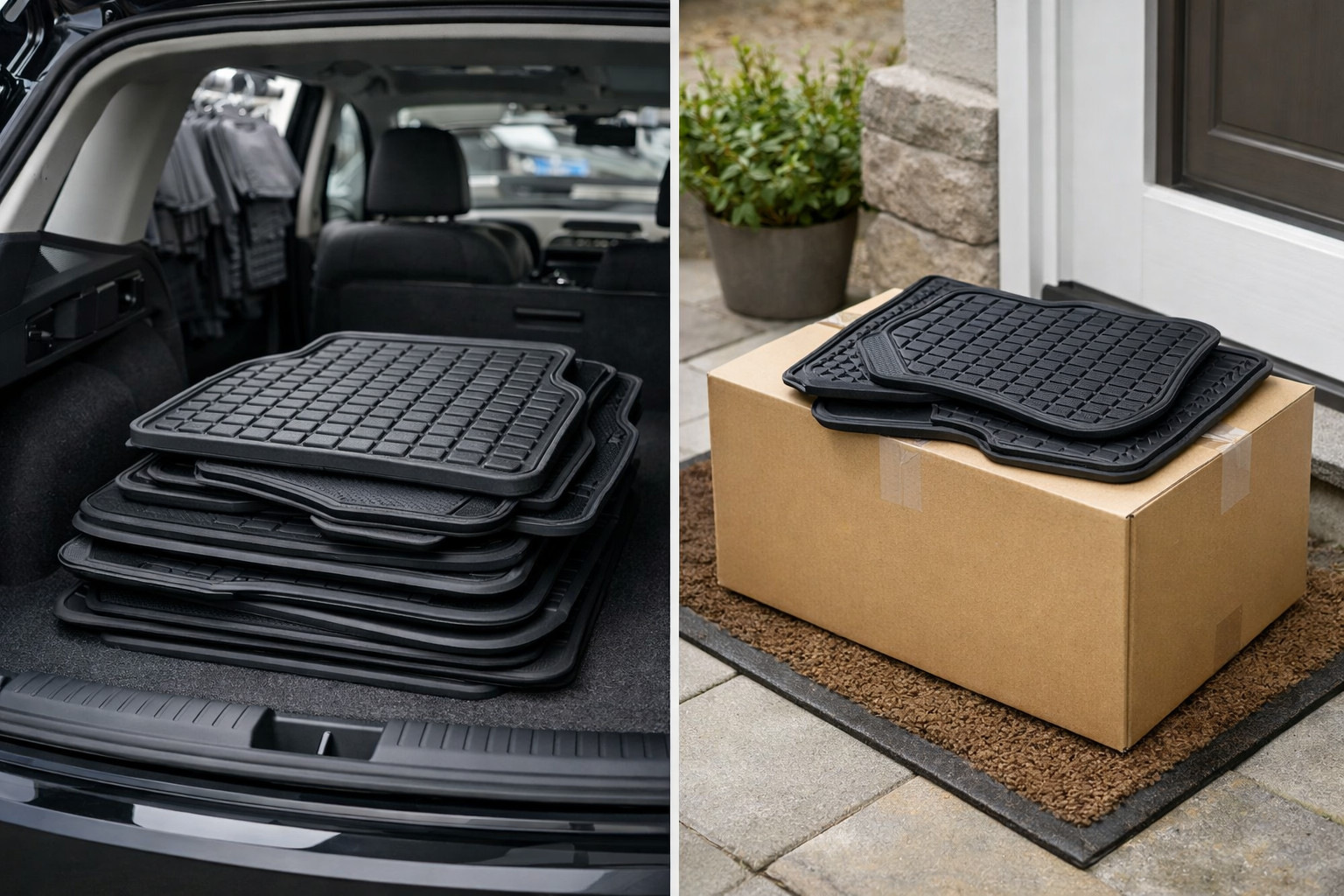
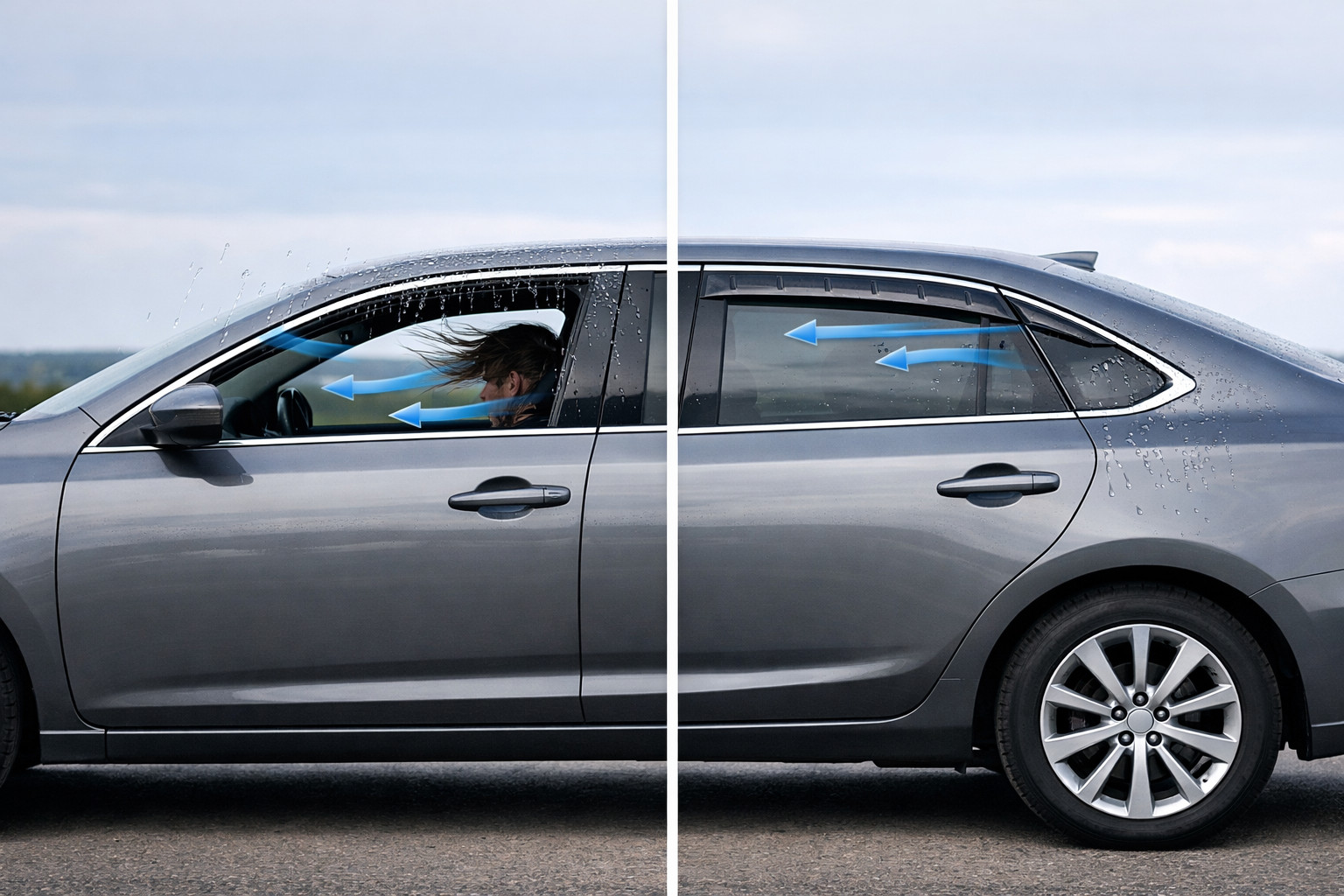
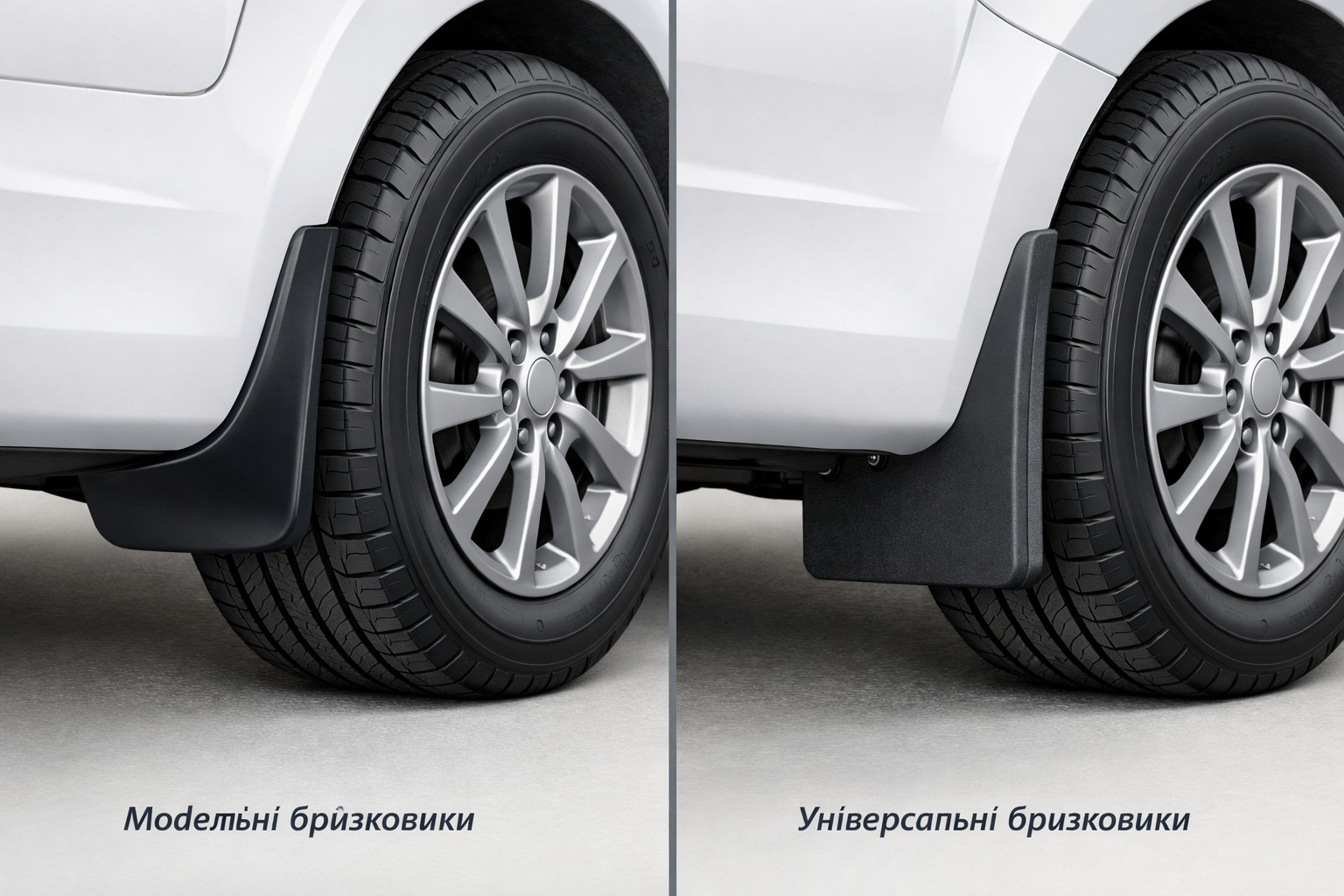
For the X-Trail T30, utilitarian tuning works best rather than decorative upgrades. Given the model’s age, it makes more sense to invest in things that simplify daily use, protect the interior, and add cargo capability. That’s why mats, trunk-area protection, roof cargo systems, and simple body accessories fit this car better than attempts to turn it into a hardcore off-roader.
In short, with the T30 it makes sense to reinforce its strong sides: practicality, interior protection, and carrying stuff. This is a case where the right accessories are felt every day, not only in photos after installation.
Nissan X-Trail T30 2002-2007 is a solid option for those who need an old but still viable crossover with a decent cabin, a useful trunk, and all-wheel drive for everyday life. The most interesting examples are in good mechanical condition, without fatigue being hidden by cosmetics. If the car hasn’t been neglected, it can still honestly handle family and practical duties today.
The weak points are obvious too: noise, age, varying condition from car to car, and the need to check every component without romance. But that’s exactly why the T30 reads well at the selection stage: it’s either a well-kept practical vehicle, or a source of constant small expenses. This material is based on real selection experience, practice, and real-world usage scenarios, so the main takeaway is simple: you shouldn’t buy “any X-Trail T30”—only one that’s genuinely sound and honest in condition.
| ✔ | Spacious cabin and trunk: the article emphasizes that the rear seat is suitable for regular use, and the folded rear bench creates a flat cargo floor. This is convenient for family use, out-of-town trips, and hauling items. |
| ✔ | All-wheel drive and high ground clearance help on slippery roads, snow, dirt roads, and in unpaved yards. For everyday winter and countryside trips, this provides a noticeable extra sense of confidence. |
| ✔ | There is a practical engine choice: the 2.0 gasoline for calm driving, the 2.5 gasoline as a more versatile option, and a diesel with good pulling power. This makes it possible to choose a version for your needs instead of taking just one configuration. |
| ✔ | Visibility and a high driving position make the car convenient in the city and during maneuvering. For an older crossover, this is an important advantage in daily use. |
| ✔ | In good condition and with regular maintenance, the T30 can cover high mileages without exotic servicing. The article directly notes that the model does not require complicated adaptation in everyday use. |
| ✘ | Sound insulation is weak: the cabin lets in engine, tire, and road noise clearly, especially on poor asphalt. For those expecting quiet at speed, this will be a noticeable drawback. |
| ✘ | The ergonomics do not suit everyone, and many are annoyed by the centrally placed instruments. On top of that come outdated interior materials, which already noticeably reveal the model’s age. |
| ✘ | The 2.0 gasoline with an automatic transmission can feel sluggish, so it is not the best choice for more dynamic driving. If you often drive with a load or on the highway, this version may not be suitable. |
| ✘ | The diesel is more demanding in terms of the fuel system, turbocharger, and auxiliary equipment condition, so the risks are higher on an older car. On neglected examples, costs can rise quickly due to minor and not-so-minor issues. |
| ✘ | The model is not intended for heavy off-road use: deep mud, rough ruts, and constant impact loads are already too much for it. In other words, its capabilities are limited to light off-road conditions and winter use. |
Shipping to EU
Wholesale and retail
Own warehouse
Опис продукту
Подарунки не надаються при оформленні покупки у кредит під 0,01% або при покупці частинами.