
21.06.2026
277
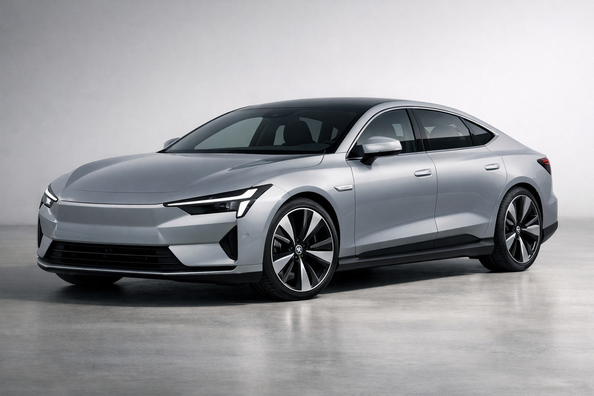
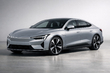
Volvo ES90 with the V551 index is a large electric liftback sedan that enters the upper segment from 2025 not as just another sedan, but as a blended format between a classic four-door, a liftback, and a slightly raised grand tourer. For the buyer, this matters: the ES90 is for those who want a quiet long-distance EV without the seating position of a crossover, but with a more practical body than a conventional sedan.
It won’t suit everyone equally. If you need maximum cargo volume, very high ground clearance, or the lowest entry price into EVs, it makes more sense to look elsewhere. But if you want a large, modern, tech-forward car for highway driving, city use, and everyday life, the ES90 looks noticeably more interesting than some traditional business sedans.
The ES90 sits at the intersection of classes. In size and status it rivals large premium EVs like the BMW i5, Mercedes-Benz EQE, or Audi A6 e-tron, but in its approach Volvo bets not on sportiness, but on a calm ride, technology, and a practical body. The liftback layout is exactly what makes the model closer to real daily use than many formally similar sedans.
The core idea of the ES90 is that it answers the need for one big family-and-business car: a spacious cabin, a quiet electric platform, proper access to the trunk, and a high level of electronics. It’s not a crossover replacement for bad roads, but it’s also not a low, old-format classic sedan.
The ES90 currently has just one generation: V551, with series production starting in 2025. There were no previous generations under this name. The model appeared as Volvo’s new electric flagship and is not a direct mirror continuation of the S90, because it differs in platform, body type, and the very logic of how it’s used.
Historically, the ES90 is also important because it shows how Volvo is moving away from the split between a “sedan for status” and a “crossover for practicality.” Here those roles are partially combined into one car: a long wheelbase, a higher roofline at the rear, a large trunk opening, and a new-generation electric architecture.
At launch, only electric powertrains are announced for the ES90. That means engine displacement as a parameter doesn’t apply: no gasoline, diesel, or hybrid versions are listed for the model. There is effectively one transmission—a single-speed reduction gear—and the differences between trims come down to the number of electric motors, the drivetrain, and the battery.
| Version | Displacement | Power | Drive | Battery |
|---|---|---|---|---|
| Single Motor | not applicable | 245 kW | rear | 92 kWh |
| Twin Motor | not applicable | 330 kW | all-wheel | 106 kWh |
| Twin Motor Performance | not applicable | 500 kW | all-wheel | 106 kWh |
In practice, this means a straightforward choice. The rear-wheel-drive version is for those who want less complexity and sufficient pull without overpaying. All-wheel drive is for regular highway driving, winter use, and those for whom traction reserve matters more than savings.
The key difference of the ES90 is the body. It’s not a classic sedan with a narrow trunk lid, but a liftback with wider access to the cargo area. For a large electric car, this is very appropriate: it’s easier to load suitcases, boxes, kids’ items, and charging cables.
| Parameter | Value |
|---|---|
| Years of production | from 2025 |
| Generation | V551 |
| Body type | electric liftback sedan |
| Length | 5000 mm |
| Width | 1942 mm |
| Height | 1546 mm |
| Wheelbase | 3102 mm |
| Ground clearance | about 180 mm; depending on version and wheels, it’s worth checking separately |
| Trunk volume | 424 l |
| Front trunk | 22 l |
On the road, you should expect two things from this layout: good straight-line stability thanks to the long wheelbase and low center of gravity, but also noticeable mass, like in most large EVs. In other words, the ES90 should be convincing on the highway, but it doesn’t look like a car for spirited driving on broken asphalt.
The ES90’s cabin is built around space and a digital architecture. The long wheelbase provides plenty of room in the second row, and the higher rear roofline makes getting in less of a compromise than in many low sedans. That’s a plus for those who often travel with four people or use the car as the main family vehicle.
In terms of comfort, Volvo’s strengths are quietness, calm ergonomics, and a solid set of driver assists. From a practicality standpoint, something else matters: in a car of this class, many functions are tied to screens and software logic, so conservative drivers who prefer more physical buttons will need time to get used to the ES90.
In daily use, the ES90 looks more convenient than a classic business sedan thanks to the liftback and a higher seating position, but it’s not as versatile as a wagon or a crossover. In the city it’s a quiet big car with good ride comfort, and on the highway it’s an EV where the battery version, wheel size, and driving pace make the difference.
A practical point for the owner is simple: real-world range will strongly depend on the season, speed, and configuration. On the other hand, the modern high-voltage architecture makes fast charging on the road worthwhile, and the rear-wheel-drive version looks the most rational for those who aren’t chasing maximum power.
The ES90 is strong where the buyer wants one large car without compromise on quietness, technology, and body convenience. The weak points are typical of an expensive EV: high mass, dependence on charging infrastructure, and an inevitable premium for a new tech platform.
| Strengths | Weaknesses |
|---|---|
| The liftback is more practical than a regular sedan | Entry price and option costs will be high |
| Long wheelbase and roomy second row | The car’s weight will be felt on bumps and in maneuvers |
| Modern EV versions with a strong traction reserve | Real-world range depends heavily on conditions |
| A quiet premium format for highway and city | Not everyone will like controlling functions via screens |
From an owner’s perspective, the main plus is that the ES90 doesn’t force you to choose between a status car and a convenient daily driver. The main minus is that it’s still a big, expensive EV that truly makes sense only when there’s a clear charging routine at home or along your route.
For the ES90, it makes sense to start not with decorative tuning, but with things that really work in everyday life. If you want to first double-check the model’s specifics, it’s convenient to keep the ES90 review at hand, and then choose basic protection for the cabin and trunk.
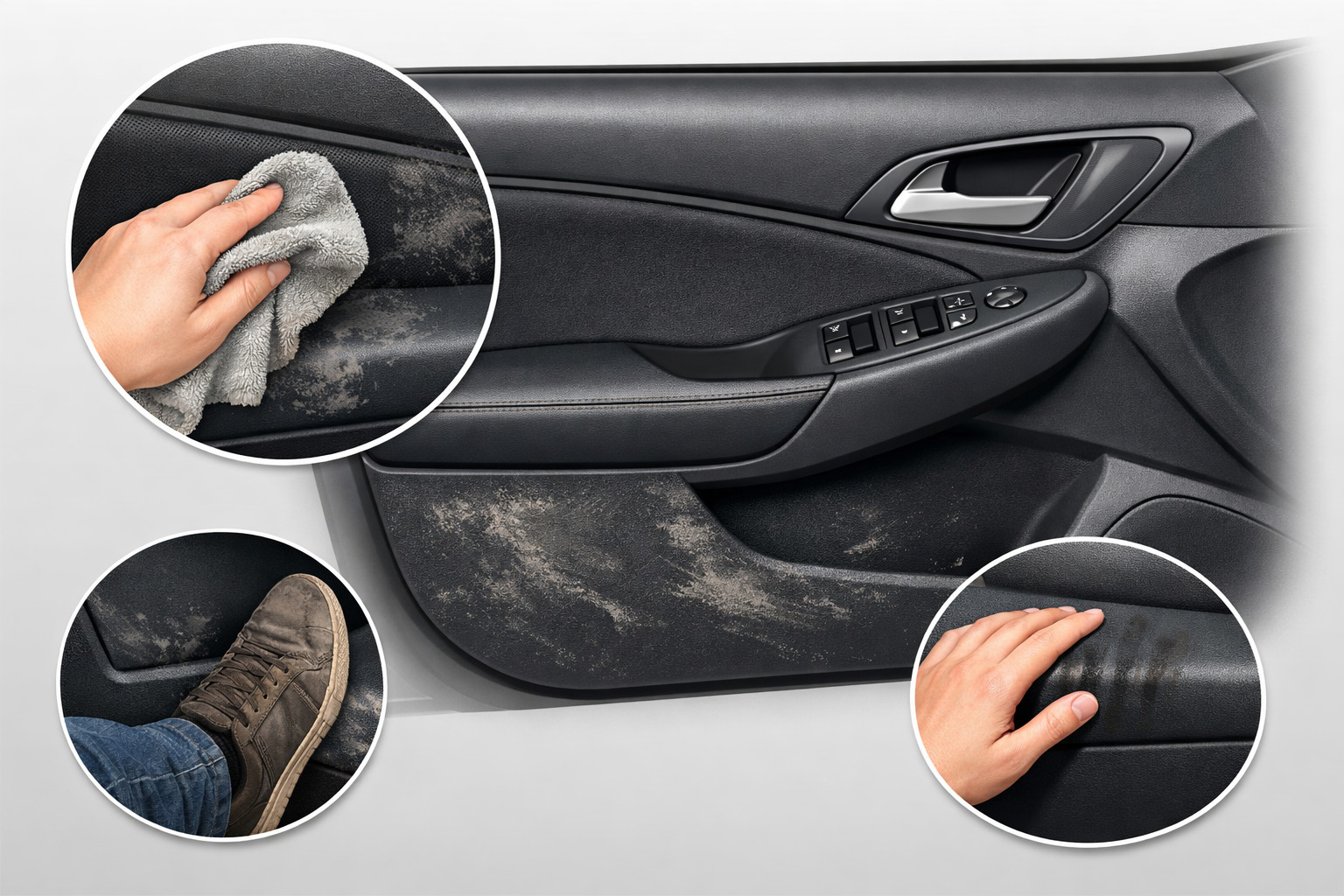
In a large EV, dirt, moisture, shoe marks, and scuffs from cables and bags become noticeable quickly. That’s why the smartest accessories to start with are those that protect the cabin floor and cargo area, not those that simply change the appearance.
The Volvo ES90 is not just another large EV, but a successful attempt to combine the sedan format, the practicality of a liftback, and the comfort of a flagship car. It will suit best those who drive a lot, value quietness, want a modern electric platform, and don’t need a crossover body.
If you need a максимально universal car for bad roads or your main criterion is price, the ES90 won’t be the simplest option. But as a calm, large new-format EV, the model looks very strong, and this material is based on real selection experience, real-world practice, and real usage scenarios—not decorative descriptions.
| ✔ | The 424 L trunk for such a large car does not seem record-breaking, so maximum practicality is limited. |
| ✔ | The weight of a large electric car will be noticeable over bumps and in maneuvers, especially in everyday city driving. |
| ✔ | The real range depends heavily on the season, speed, and trim level, so the driving range cannot be judged by the official figures alone. |
| ✔ | Controlling some functions through screens may not appeal to those who are used to more physical buttons. |
| ✔ | This is an expensive next-generation electric car, so the entry price and option costs will be high, and it works best with convenient charging at home or along the route. |
| ✘ | The liftback body is more practical than a regular sedan: wider access to the trunk makes it easier to load suitcases, boxes, and charging cables. |
| ✘ | The long wheelbase and high roofline at the rear provide a spacious second row and more comfortable seating for passengers. |
| ✘ | The model comes only in electric versions with a simple choice: rear-wheel drive for less complexity or all-wheel drive for better traction and winter driving. |
| ✘ | ES90 looks like a strong option for highway and city driving thanks to its quiet ride, calm ergonomics, and driver-assist features. |
| ✘ | The 22 L front trunk adds a bit of useful space for small items, which is convenient in an electric car. |
Shipping to EU
Wholesale and retail
Own warehouse
Опис продукту
Подарунки не надаються при оформленні покупки у кредит під 0,01% або при покупці частинами.