19.08.2026
714
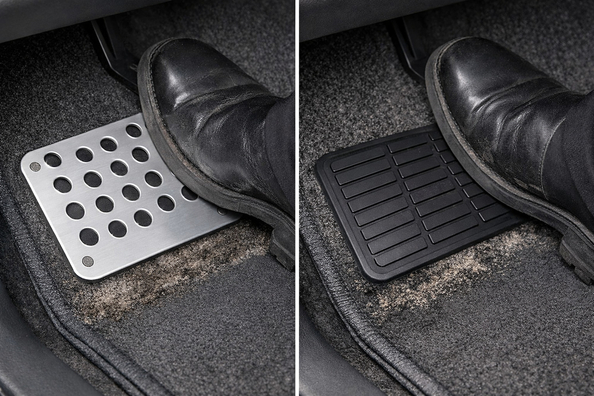
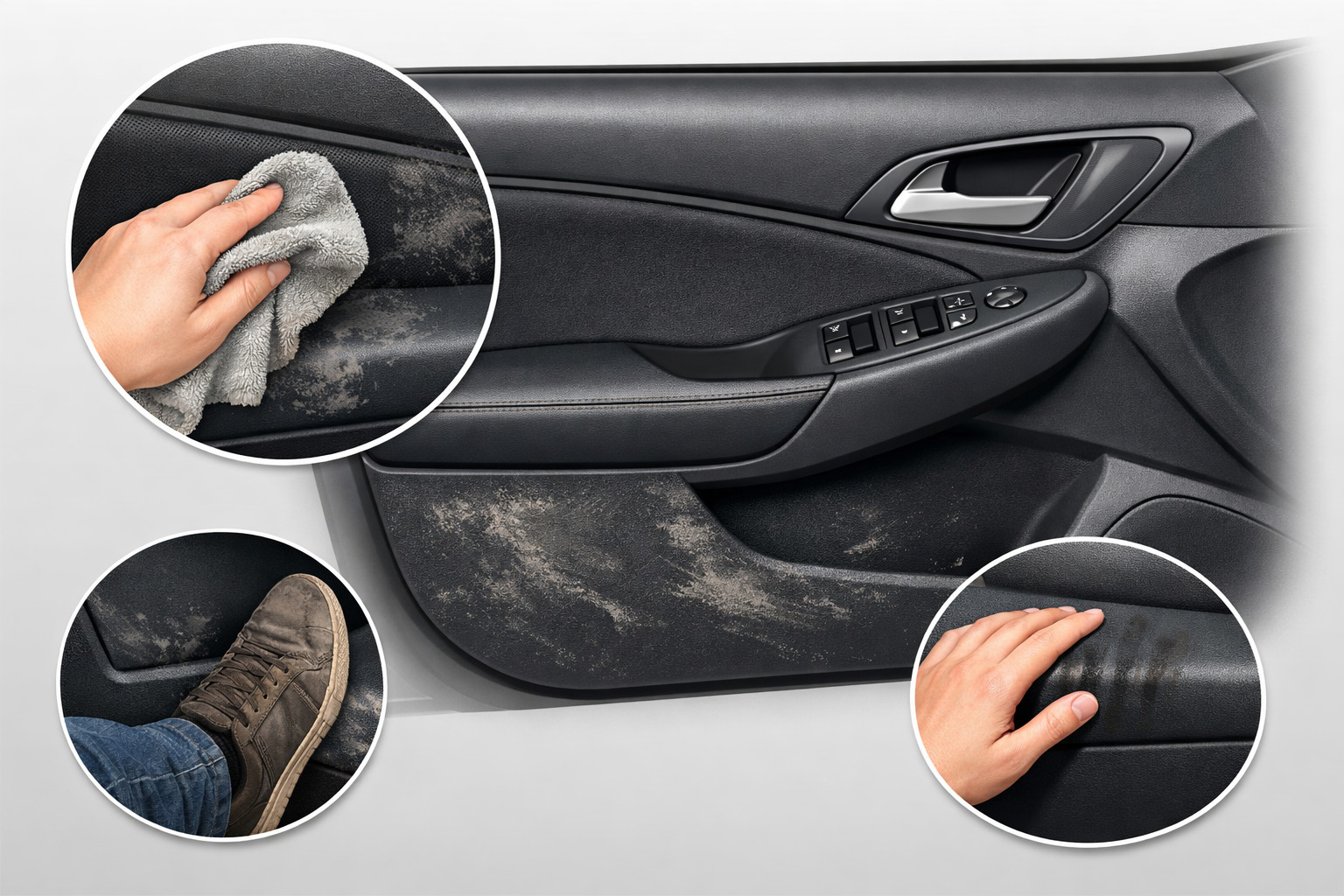
If you need practical heel-area protection on a daily basis, in most cases a rubber heel pad wins: it’s cheaper, quieter on the move, and handles wet shoes and winter more calmly. Aluminum should be seen not as an automatically better option, but as a stiffer and more expensive solution for very intensive wear or when a neater look matters.
The key mistake is looking only at the material on top. The real result depends on the size of the pad, the mounting method, the thickness of the metal, the quality of the rubber, and whether the holes in the mat are sealed after installation.
The essence is simple: rubber covers everyday needs better, while aluminum offers a bigger wear reserve. But metal alone won’t save you if the pad is thin, the fastening is weak, or it’s installed outside the heel’s actual contact zone.
For city driving, short trips, winter slush, and frequent getting in and out, it matters more that the heel doesn’t slip, there are no extra noises, and the fasteners don’t corrode. For high mileage, stiff footwear, or an already problematic worn area, aluminum can make sense—but only if it’s made and installed properly.
| Option | Strengths | Weaknesses | Who it suits |
|---|---|---|---|
| Rubber heel pad | Quieter, cheaper, good grip underfoot, works calmly in rain and winter, no corrosion risk | Looks simpler, cheap versions may smell or peel off, wear reserve is lower than metal | For daily city driving, winter conditions, EVA mats, and a rational budget |
| Aluminum heel pad | Highest wear reserve, rigid protection for a problem area, looks more premium | More expensive, more demanding on thickness and fastening, possible marks from fasteners, potential slipperiness or corrosion in weaker designs | For high mileage, heavy heel wear, and those ready to pay extra for longevity and appearance |
DD Tuning expert comment: Most often, people choose a heel pad by photos rather than by the mounting method and the real heel contact zone. Because of this, even an expensive metal option starts to wobble or ends up not where it should be. The second typical mistake is drilling the mat without sealing the holes—after that, moisture gets into the base and wear only accelerates.
Rubber is the most rational everyday choice for most cars. It handles wet shoes better, doesn’t create the feel of a hard plate underfoot, and usually doesn’t annoy with extra noise. With mechanical fastening and rubber that isn’t too soft, this option covers the typical task well: stopping heel-area wear without unnecessary expense.
The rubber option has weak points too. Cheap adhesive-backed solutions often fall off, and sometimes a hard PVC is sold as “rubber,” which can smell in heat or tolerate мороз worse. Another point: if you install the pad through holes without sealing them, water will get under the surface regardless of the top material.
Aluminum makes sense where the heel area wears very quickly or you already have experience regularly replacing mats. Metal provides the greatest reserve against abrasive wear, and a well-made version really does look neater. But it’s important to understand that under the name “aluminum,” hybrid designs like aluminum plus plastic are often sold, so you need to check the composition of the specific product.
For the more expensive solution, thickness and installation are critical. A good benchmark for proper metal is about 1.2–1.5 mm; thinner plates can feel weak or bend. If the fastening uses simple screws without thread-lock, they can loosen from vibrations after a few months. In weaker designs, you may also see corrosion of the hardware, marks on light-colored soles, and worse winter behavior.
For daily city use, short routes, and winter slush, the logic is simple: a rubber heel pad is more practical. It’s cheaper, quieter, and less irritating in real use. That’s why for most typical scenarios it protects the mat better—not in theory, but in everyday operation.
Aluminum wins when the problem is truly very fast wear and the mat has already gone through several repairs or replacements. For highway driving, the choice depends on priority: if you want quiet and a calmer feel underfoot, rubber is better; if it’s more important to rigidly cover the heel area, then metal is worth considering. On EVA mats, a rubber option often feels more natural, while metal requires more careful installation.
| Scenario | What’s better to choose | Why |
|---|---|---|
| Daily city driving | Rubber heel pad | Less noise, lower price, sufficient protection for typical wear |
| Winter, rain, wet shoes | Rubber heel pad | Performs better in wet conditions, no corrosion risk |
| Very high mileage or stiff footwear | Aluminum heel pad | Provides the greatest wear reserve if it has proper thickness and fastening |
| EVA mats | More often a rubber heel pad | Better grip and a calmer feel underfoot; metal is possible, but more demanding to install |
| Tight budget | Rubber heel pad | The price difference is noticeable, and for daily use this is often enough |
| Focus on appearance and longevity | Aluminum heel pad | Has stiffer protection and looks more premium visually |
Paying extra for aluminum is justified not when you simply want a shiny pad, but when you truly have high mileage, an expensive set of mats, or a history of fast heel-area wear. In that case, it makes sense to pay not for the material name, but for the metal thickness, a proper coating, and reliable fastening. If the task is simple—stopping typical city wear—a rubber heel pad usually offers a better balance of cost and benefit.
To compare designs, it’s worth looking at heel pads for car mats. If you drive with honeycomb mats and want a softer contact under the heel, it makes sense to consider an EVA heel pad. And when the old mat is already tired across the whole area, not just under the heel, it’s more practical to look at EVA mats right away.
From a customer’s experience: the owner of a city car with an EVA mat initially wanted aluminum because the old heel area wore out quickly. After selection, it turned out the main issue wasn’t the material itself, but the small area of the old pad and weak fastening. In the end, he chose a larger rubber heel pad with mechanical fixation, because he drives daily in winter and often gets in with wet shoes; for his scenario this proved to be a calmer solution.
If we answer briefly, then for most everyday scenarios rubber heel pads preserve mats better: they’re quieter, more practical in wet weather, and noticeably more affordable. Aluminum is worth choosing when you need maximum wear reserve and you’re ready to pay close attention to metal thickness, coating, and fastening.
The material is based on real fitting experience, practice, and real usage scenarios: in the end, what matters isn’t a loud material name, but the right size, proper installation, and the conditions in which the mat works every day.
| ✔ | A rubber heel pad is better suited for everyday city driving: it is quieter, softer underfoot, and does not create unnecessary noise while driving. |
| ✔ | In wet conditions and in winter, rubber is more practical because it handles wet shoes more calmly and carries no risk of corrosion of the fasteners or the pad itself. |
| ✔ | A rubber version is usually noticeably cheaper, so for typical heel wear it offers a good balance of cost and protection. |
| ✔ | An aluminum heel pad has the greatest wear resistance and may be suitable for very high mileage or heavy footwear. |
| ✔ | The metal version looks neater and can better cover an already problematic area if it is thick enough and securely fastened. |
| ✘ | Aluminum heel pads are more expensive, and the extra cost itself brings no benefit if you only need ordinary protection for daily trips. |
| ✘ | Metal is demanding when it comes to installation: thin plates, weak fastening, or poor placement quickly cancel out its advantages. |
| ✘ | In lower-quality versions, the aluminum option may create problems with slipperiness, marks from the fasteners, or corrosion of the hardware. |
| ✘ | Cheap rubber heel pads also have drawbacks: adhesive models can come off, and hard PVC is sometimes sold as rubber, which performs worse in frost and can have an odor in hot weather. |
Shipping to EU
Wholesale and retail
Own warehouse
Опис продукту
Подарунки не надаються при оформленні покупки у кредит під 0,01% або при покупці частинами.