06.06.2026
242
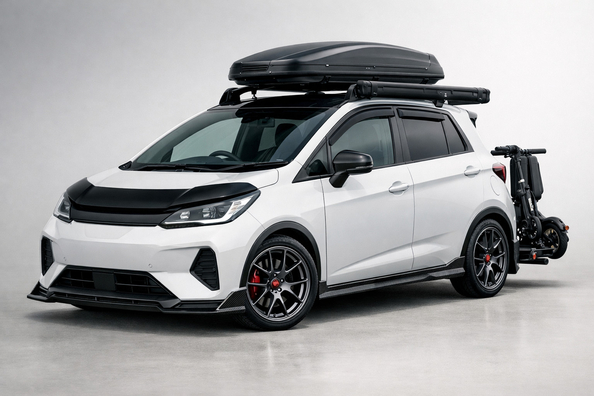
BYD Seagull, which in some markets is sold as the Dolphin Mini, and in certain announcements and local lineups appears as Atto 1, is a compact city electric hatchback with a straightforward use case: short to medium daily trips, easy parking, and low running costs. It’s not a car for long highway hauls and not a family wagon, but for the city the format is spot on.
For this model, it’s important to account for market differences right away. The name, battery, equipment, seating capacity, and certain interior details may vary, even though the vehicle’s base is the same. That’s why practical tuning here starts not with decorative trim, but with things that genuinely make everyday use easier.
Seagull sits at the lower end of BYD’s EV lineup and covers the demand for an affordable city electric car. Essentially, it’s an alternative to a “get in and go” gasoline hatchback, only without an ICE and with a quieter, simpler drivetrain. For the owner, that means less mechanical complexity, but also clearer limits on range and use cases.
Who it suits: those who drive around the city every day, don’t carry a lot of luggage, and value a compact body. Who it doesn’t suit as much: those who regularly do highway runs at higher speeds, often travel with four to five people and gear, or want all-around versatility for every situation.
The model debuted in 2023, and as of now we’re talking about the first generation. For the Chinese market, the base name is Seagull. For export, BYD started using other names, the best known being Dolphin Mini; the name Atto 1 appears as export positioning in certain markets.
An important nuance for accessory buyers: under different names, it’s usually the same compact hatchback, but trim levels can differ. So when choosing floor mats, cargo solutions, or small add-ons, it’s better to look not only at the name, but also at the exact body, year, and destination market.
This model has no gasoline or diesel engines, so engine displacement doesn’t apply here. The base powertrain is a single front electric motor rated at 55 kW, i.e., 75 hp, paired with a single-speed reduction gear. This is the configuration most commonly found in Seagull and Dolphin Mini.
For batteries, two options are most common: 30,08 and 38,88 kWh. The stated range under the Chinese cycle can be up to 305 or 405 km depending on the version, but these figures shouldn’t be carried over one-to-one into real life or to another market, because measurement methods differ, as do the trims themselves.
| Parameter | Practical reference |
|---|---|
| Production years | From 2023 |
| Generation | First |
| Powertrain type | Electric vehicle, one front electric motor |
| Engine displacement | Not applicable, no ICE |
| Power | 55 kW, 75 hp |
| Transmission | Single-speed reduction gear |
| Battery | 30,08 or 38,88 kWh depending on version |
| Range | Up to 305 or 405 km under the CLTC cycle, depending on the battery |
| Drive | Front-wheel drive |
In size, it’s truly a city car: length 3780 mm, width 1715 mm, height 1540 mm, wheelbase 2500 mm. That’s why Seagull is easy to fit into tight spots, doesn’t wear you out in dense traffic, and doesn’t require a long adjustment after larger cars.
The trunk is modest—about 230 L—so large suitcases or kids’ gear in normal use already require compromises. Ground clearance comes with a nuance: in public specs for different markets, this figure isn’t always presented consistently, so it’s better to treat the car as a low city hatchback without extra margin for poor dirt roads. The suspension is tuned for asphalt and short city maneuvers, and the short wheelbase adds agility, but doesn’t make the car softer over harsh joints.
| Dimension or component | What it means in practice |
|---|---|
| 3780 mm length | Easy parking and convenience in narrow courtyards |
| 1715 mm width | Easier to maneuver, but don’t compare the cabin to larger classes |
| 1540 mm height | Normal seating position for a city hatchback |
| 2500 mm wheelbase | Enough for the city, but doesn’t give a “big car” feel in the rear |
| Trunk about 230 L | Daily shopping fits; a big touring scenario comes with limits |
| Ground clearance depends on the market | Curbs, potholes, and winter ruts require attention |
The Seagull’s interior is built without unnecessary complexity: everything is geared toward city use rather than trying to look “more expensive than it is.” There’s enough space up front; the second row is more for short to medium trips. If your main pattern is a driver plus one passenger, there will be fewer complaints than for a family that’s constantly fully loaded.
Comfort and safety depend heavily on trim level and country of sale. In some markets, the equipment is more generous; in others, it’s simpler, so the number of airbags, driver assists, and even small finishing details should be checked on the specific car. Overall the logic is simple: for this city format it’s sufficient, but don’t expect a higher-class level.
In the city, the model shows its strengths best. Low weight, compact dimensions, and a simple electric layout make it convenient for daily “home — work — shop — school” routes. If your daily mileage is moderate and you have decent access to charging, Seagull makes sense.
The limitations are also predictable. On the highway, range drops faster than in the city, especially in winter, with A/C on, or with a full cabin. Add the small trunk, and it becomes clear why this model works better as a primary city car or a second car in the family, rather than a one-size-fits-all vehicle for every role at once.
Seagull’s strengths are most visible in the city: it’s compact, simple in design, and doesn’t force the driver to adapt to a large body. The weaknesses are also typical for the format: space and trip range aren’t unlimited, and the body’s capabilities are directly tied to its size.
| Pros | Cons |
|---|---|
| Compact body and easy parking | Modest trunk for long trips |
| Simple electric drivetrain without an ICE and a conventional gearbox | Essentially no choice of power versions for those who want more performance |
| A convenient format for daily city routes | Highway use isn’t its main role |
| Small dimensions make life easier in dense traffic | Short wheelbase reacts more sharply to rough imperfections |
| Good practicality for one or two people | For family use with luggage, it’s already at the limit |
For Seagull, practical tuning makes sense when it actually protects the interior and simplifies day-to-day use. This isn’t a model where you should start with decorative elements or try to turn it into something it isn’t. The smartest investments are protection for the cabin floor and trunk, plus accessories that don’t get in the way of the charging cable, bags, and typical city dirt.
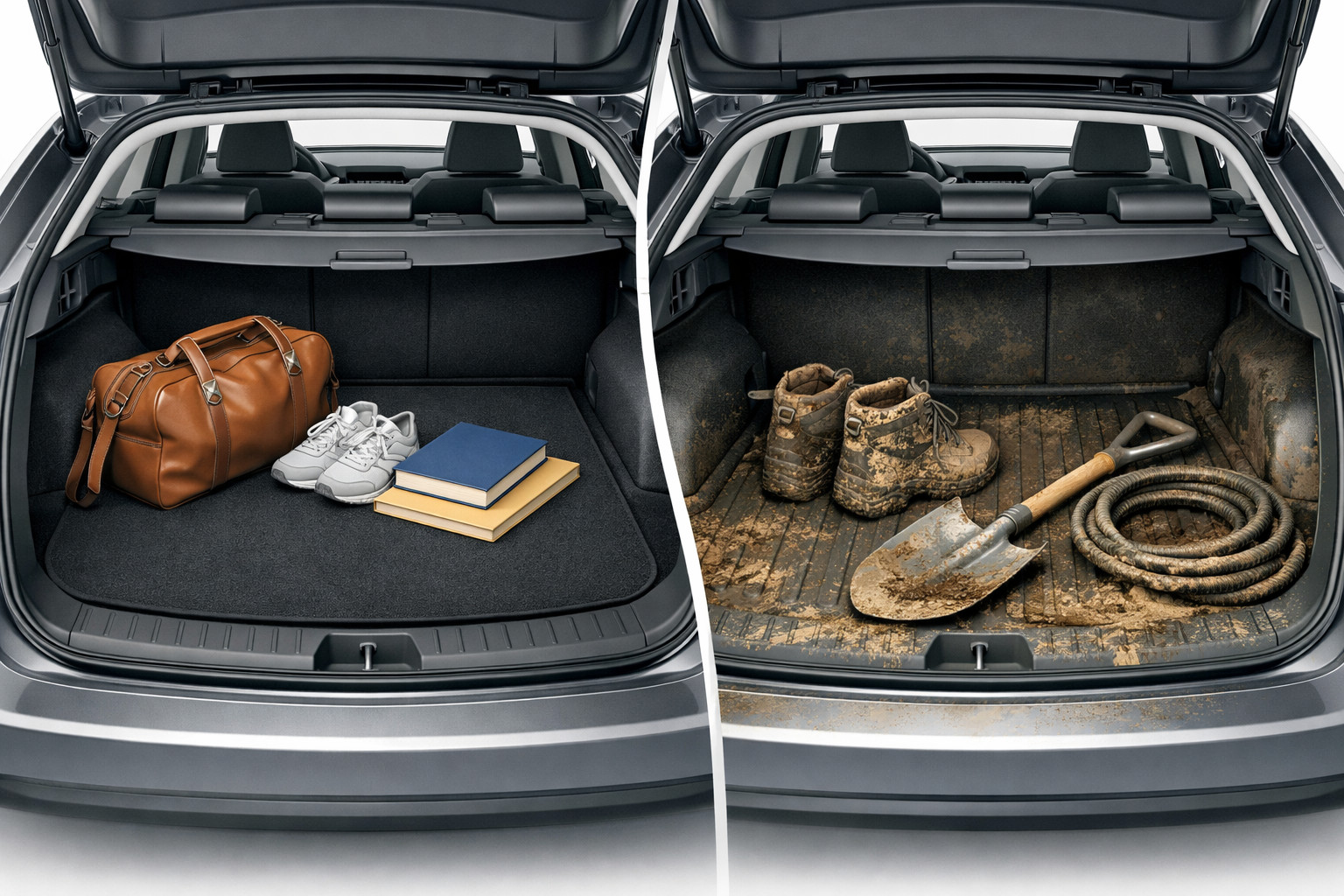
Because of the small trunk and urban use case, mats with precise geometry are especially relevant here. They help keep water and sand from spreading through the cabin, and in the trunk they protect the floor from the charging cable, boxes, and small cargo that constantly slides around in a compact compartment.
BYD Seagull, Dolphin Mini, or Atto 1 is a city electric hatchback with a clear specialization: short to medium daily routes, low costs, and ease of use. If you need a compact city car, the model looks rational; if you need an all-rounder for highway driving, family trips, and large luggage, its format will quickly show its limits.
When it comes to accessories, the value here isn’t in “pretty add-ons,” but in protecting the cabin and trunk and in items that work every day. The material is based on real selection experience, practice, and real use cases, so the main takeaway is simple: it’s worth judging this model not by the loudness of its name, but by how well its format matches your daily route.
| ✔ | Compact dimensions and a short wheelbase make the car convenient for everyday city driving and easy parking in tight courtyards. |
| ✔ | The electric powertrain with no ICE or conventional gearbox simplifies the design and is well suited to regular short trips around town. |
| ✔ | For urban use, there is enough front-seat space, and the car is a good fit for a "driver plus one passenger" setup. |
| ✔ | The small trunk and city use justify practical upgrades: EVA floor mats and a rubber trunk mat really help protect the cabin from dirt and small cargo. |
| ✔ | The model has several market names and versions, but the platform is the same, so compatible accessories can be found on the market for a specific body and model year. |
| ✘ | The trunk of around 230 l limits everyday practicality if you often carry large suitcases, kids' items, or lots of shopping. |
| ✘ | Highway driving is not this model's main strength: range at speed drops faster, especially in winter, with the air conditioning on, or with a full cabin. |
| ✘ | The second row and overall cabin capacity are better suited to short or medium trips rather than regularly carrying five people with luggage. |
| ✘ | The short wheelbase and city-oriented suspension mean comfort over rough bumps and joints will be average, with no reserve for bad roads. |
Shipping to EU
Wholesale and retail
Own warehouse
Опис продукту
Подарунки не надаються при оформленні покупки у кредит під 0,01% або при покупці частинами.