08.07.2026
207
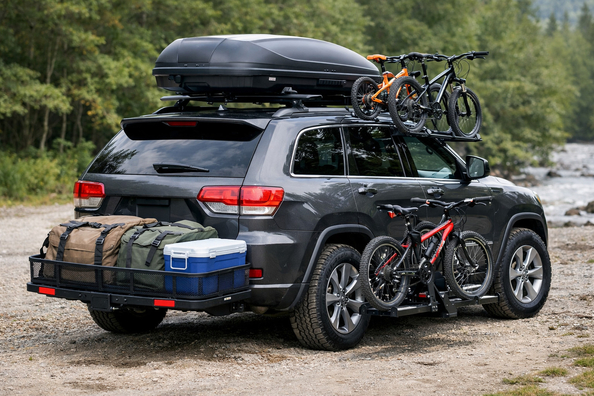
This upgrade plan is for a Jeep Grand Cherokee WK2 owner who carries the family, kids’ stuff, a stroller, suitcases, groceries, and from time to time heavy cargo. The goal isn’t to “armor up” the vehicle, but to preserve the interior, organize cargo properly, and add volume only where the stock space truly isn’t enough.
The WK2 has a large trunk as it is: with the second row up, it’s already practical for everyday trips. But payload varies by version, so with a full cabin of people and a full tank, you reach the weight limit faster than it seems. That’s why the right order here is: protection and organization first, then extra volume, and only after that comfort or decorative items.
For a family WK2, the upgrade should cover three problems. First: dirt, moisture, and scuffs from daily loading. Second: securing items so heavy bags, grocery sacks, or gear don’t slide around the trunk. Third: lack of volume on long trips, when the cabin is full of people and the trunk is packed to the roof.
It’s important not to mix scenarios. If you simply lack order, you don’t need to jump straight into a roof system. If you really plan a trailer or a rear platform, then a tow hitch and wiring matter more than any roof box. And if a specific WK2 has a different year, different rails, or no towing prep, selection must be done for that exact trim—not “based on a forum.”
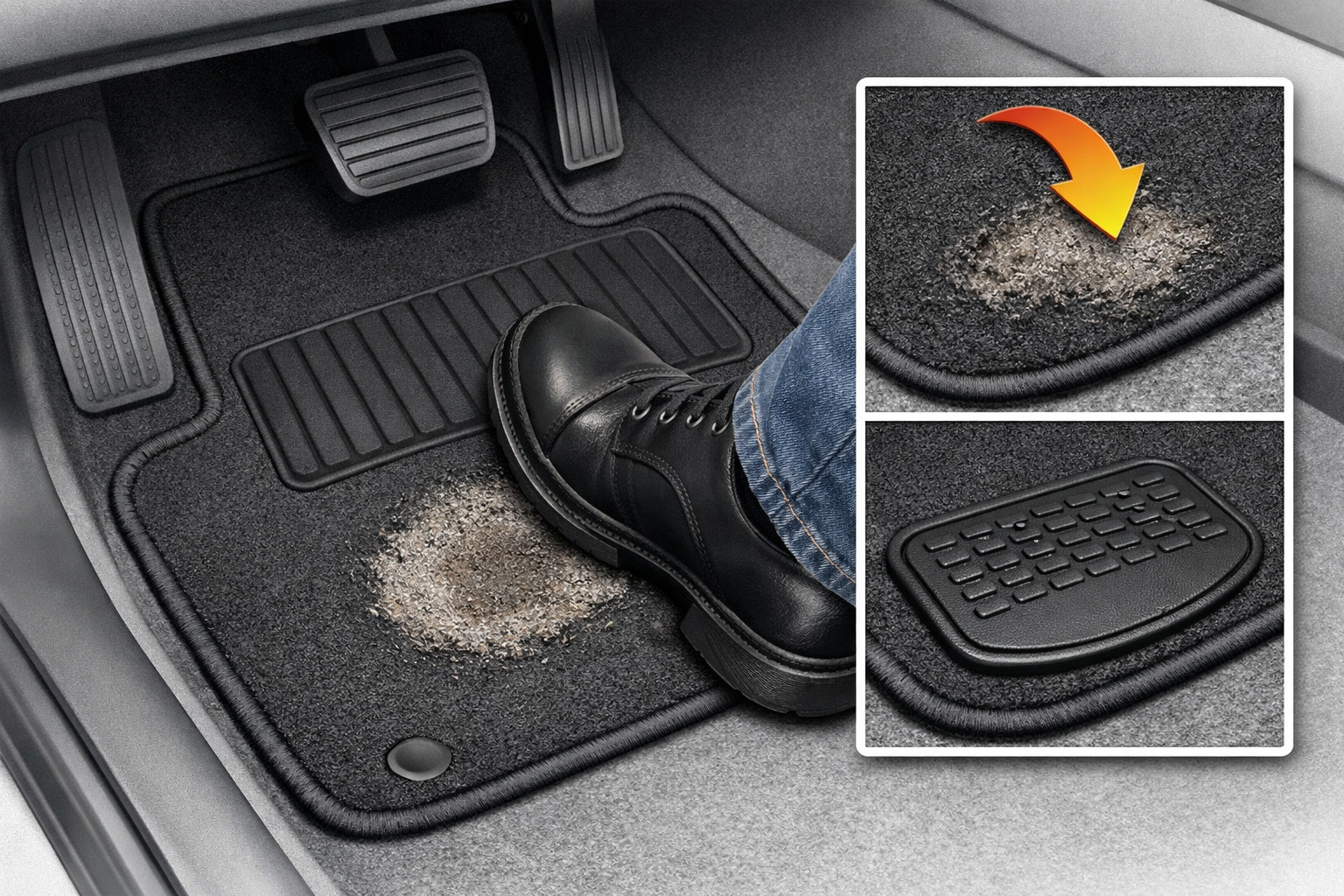
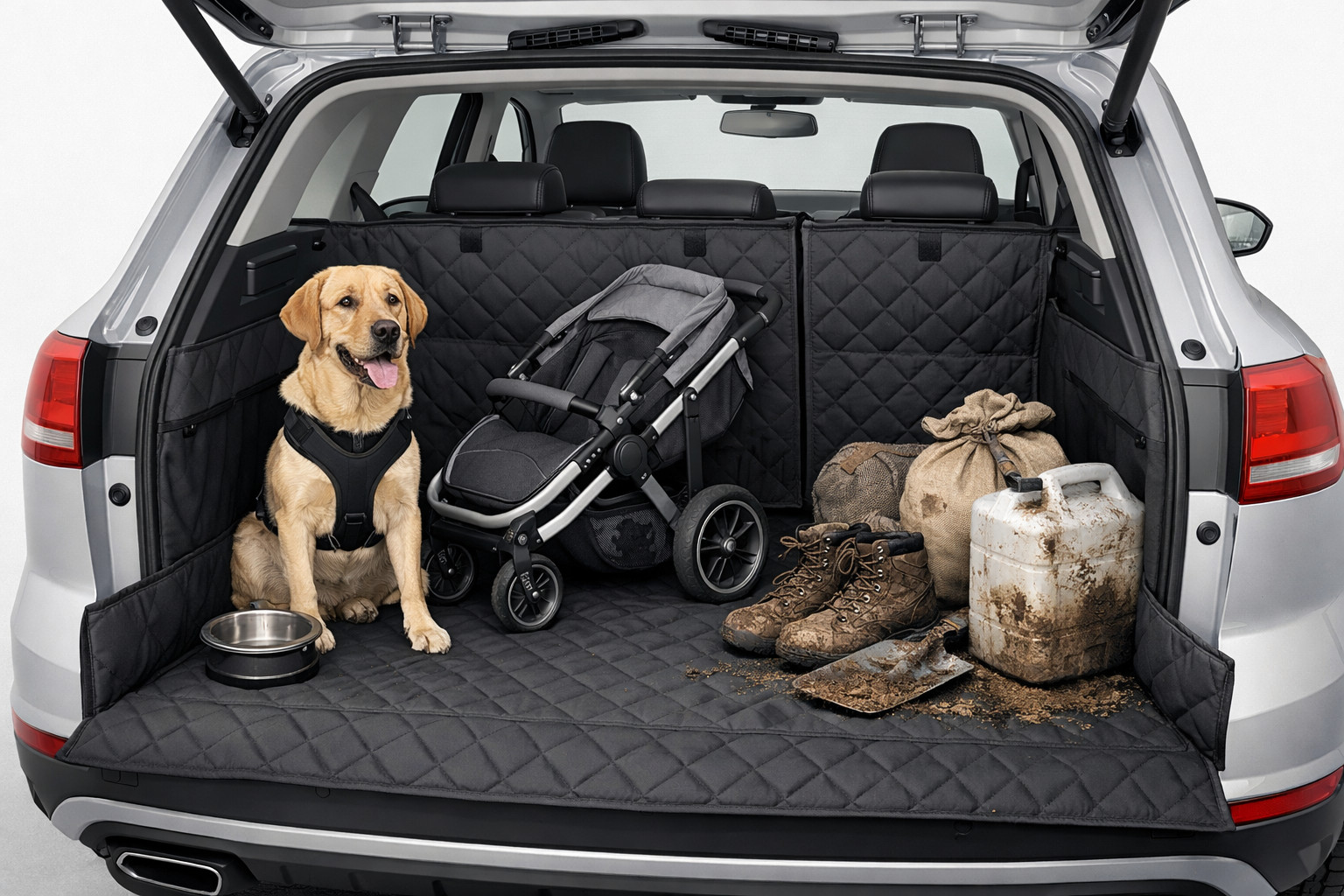
The first stage for this scenario is almost always the same: all-weather floor mats, a molded trunk liner, rear seatback protection, and basic cargo organization. It’s the best value for money, because these items work every day—not twice a year before a vacation.
For a family, this is critical: wet shoes, snow, stroller wheels, sand after the playground, grocery bags, washer fluid jugs, tools, or gear quickly destroy the feeling of a “fresh” interior. A molded tray in the trunk is more important than decorative trim, because it takes the dirt, water, and scratches from heavy items.
If the rear row is folded often, seatback protection should also be considered a first-stage item, not a “later” option. Another practical small thing is a cargo net or organizer: heavy cargo should sit lower and closer to the second-row seatbacks, and small items need to be secured separately so they don’t fly around the trunk during braking.
| Upgrade | Why it’s needed | Who it really benefits |
|---|---|---|
| Rubber floor mats | Catch water, snow, dirt, and small debris | Families with kids, anyone who often drives in rain, snow, or to a country house |
| Molded trunk mat or tray | Protects the trunk floor from stroller wheels, suitcases, stains, and moisture | Pretty much all WK2 owners in this scenario |
| Rear seatback protection | Prevents scratching the seatbacks when the row is folded for long or heavy items | Those who often carry big purchases, scooters, boxes |
| Cargo net or trunk organizer | Secures small cargo and prevents items from sliding around | Families who constantly have small bags, household items, a first-aid kit in the trunk |
| Crossbars and a closed roof box | Add volume for trips when the stock trunk isn’t enough | Those who go on vacations and carry lots of bulky but not very heavy items |
| Tow hitch and wiring | Enable towing a trailer or using a rear platform | Those whose scenario is truly about towing, not just suitcases |
| Side steps | Make roof access and entry easier for some passengers | Those who regularly use a roof box or are shorter |
DD Tuning expert comment: On the WK2 people often make the same mistake: they buy crossbars or a basket before understanding their real cargo format. If a family carries suitcases, a stroller, and soft bags, you should first solve trunk protection, and only then measure the rails, vehicle height, and calculate weight together with passengers. Otherwise the budget goes into metal, while the daily mess in the cabin remains.
The second stage starts when protection and order are already in place, but there still isn’t enough space for a trip. For a family scenario, a closed roof box is more logical than an open basket. A box protects items better from rain, dust, and prying eyes, and it’s best to pack things in soft bags, because they fill the volume more efficiently than hard suitcases.
If the task isn’t extra volume but a trailer or a rear platform, then the second stage should be a tow hitch with the correct wiring. For the WK2 this is especially important: first you need to understand whether your version has the required preparation, and only then buy the hardware. A mistake here is expensive: people sometimes install a roof system even though what they actually need is a trailer for heavy loads.
At this stage, you can’t ignore total weight. With a full family load, payload gets eaten up by passengers, fuel, and suitcases very quickly. Extra volume doesn’t mean you can add kilograms without control.
Comfort upgrades for this scenario include side steps, wind deflectors, seat covers, and solutions for easier trunk access. They can be useful, but they don’t solve the core task of transporting a family and heavy cargo directly. If the trunk is dirty, items aren’t secured, and space is tight, such purchases won’t fix the problem.
Side steps make sense when you regularly use the roof and need to reach the box without acrobatics. If a roof box isn’t planned, steps become a secondary purchase. The same applies to a power tailgate: it’s convenient, especially when your hands are full, but it comes after protection, organization, and solving the volume issue.
If your WK2 already has air suspension, it’s worth using its capabilities for entry and loading, rather than trying to compensate with accessories. Often it’s better to fully leverage the factory functionality of the vehicle than to immediately buy secondary items.
The most common unnecessary purchase for this scenario is an open roof basket. It looks “off-road,” but for family trips with suitcases and kids’ items it usually loses to a closed roof box. You have to additionally pack items, protect them from weather, and access is less convenient.
The second typical mistake is big wheels, heavy off-road styling, or chrome instead of functional items. For a family they provide almost no everyday benefit, but they easily take budget away from mats, a trunk tray, proper crossbars, or a tow hitch. Another small but frequent mistake is universal organizers and mats that fit poorly and don’t keep dirt where it should be.
| What to install first | What you can postpone | What isn’t required | Why |
|---|---|---|---|
| Cabin mats and trunk protection | Crossbars and a roof box | Chrome and decorative trim | Dirt, water, and scratches appear every day, while extra volume isn’t always needed |
| Seatback protection and securing small cargo | Side steps | An open roof basket | First you need to bring order inside, not add exterior elements |
| Tow hitch with wiring, if a trailer is planned | Power tailgate | Big wheels and a heavy decorative body kit | Towing is a separate scenario that must be solved technically, not visually |
| Repair the tailgate opening mechanism if it already works inconsistently | Seat covers and wind deflectors | Any “for looks” tuning | Normal access to the trunk in a family vehicle is more important than cosmetics |
A more expensive solution is justified when it truly saves you time and preserves the interior every day. That’s why for a family WK2 it’s often worth skipping a universal tray and looking at a model-specific rubber trunk mat: it holds water and dirt better and doesn’t slide under load.
If extra volume is needed regularly, not once a season, it makes sense not to skimp on the mounting system and to consider roof racks and crossbars for your specific rail type. A cheap kit brings noise, play, and frustration—an especially bad trade-off for a family trip.
A separate case is access to the trunk. If the tailgate already opens inconsistently or you have to fight the opening mechanism every day while loading, it’s better to first solve it through the tailgate opening mechanism, and only then think about secondary accessories. It doesn’t add liters, but it very noticeably removes everyday irritation.
From a customer’s experience: a WK2 owner initially planned a roof basket because a stroller, suitcases, and kids’ items didn’t fit on trips. After selection, he started with mats and a trunk tray, and only at the second stage added a closed roof box; as a result, the car became cleaner every day, and extra volume appeared exactly when it was needed. Separately, it turned out that the “small trunk” problem was partly not about liters, but about small items simply lying around without organization.
For a Jeep Grand Cherokee WK2 for family use and heavy luggage, the logic is simple: first protect the cabin and trunk, then organize cargo, then add volume via a roof system or solve towing if that scenario truly applies to you. Everything after that is either about comfort or looks, not real utility.
The material is based on real selection experience, hands-on practice, and real use cases: that’s why there are no random “just in case” purchases here—only a sequence that works for a family WK2 in everyday life and on trips.
| ✔ | First, it’s recommended to protect the cabin and cargo area: all-weather mats, a molded cargo tray, and seat-back protection really reduce signs of dirt, moisture, and scratches in everyday use. |
| ✔ | A cargo net or organizer helps secure small items so they don’t roll around during braking and create chaos in the cabin. |
| ✔ | For trips where the factory space is no longer enough, a roof cargo box provides extra room and protects belongings from rain and dust better than an open basket. |
| ✔ | A tow hitch with the correct wiring is useful exactly when you need a trailer or rear platform, so it covers a specific practical scenario rather than just adding a “checkmark” to the upgrade list. |
| ✔ | The upgrade plan is built step by step: first basic protection and order, then extra space, and only after that comfort items, which reduces the risk of spending the budget on secondary purchases. |
| ✘ | If you go straight for a roof system or an open basket, the clutter problem in the trunk will still remain, because without a tray, seat-back protection, and cargo securing, the load will continue to damage the cabin. |
| ✘ | Extra volume does not mean you can ignore weight: in a full cabin, payload runs out quickly because of passengers, fuel, and luggage. |
| ✘ | Careful selection is needed for a specific WK2 configuration — the model year, roof rails, tow prep, and allowable load must be checked by VIN, otherwise you may buy an incompatible solution. |
| ✘ | Some popular purchases here are of little help in everyday use: large wheels, decorative body kits, chrome, or an open roof basket take up budget but do not solve the main task of family transport. |
Shipping to EU
Wholesale and retail
Own warehouse
Опис продукту
Подарунки не надаються при оформленні покупки у кредит під 0,01% або при покупці частинами.