03.07.2026
1092
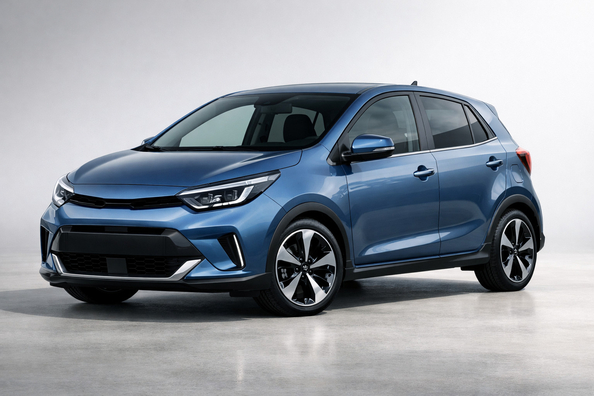
Kia Picanto in 2026-2027 is not a new generation, but an updated third-generation city hatchback following the major 2024-2025 refresh. The idea is simple: a short body, easy parking, moderate fuel consumption, and equipment that no longer feels stripped-down for the class.
The key nuance is that the Picanto is highly market-dependent. In Europe, the focus is on the 1.0-liter three-cylinder engine; in Australia, on the 1.2-liter naturally aspirated unit, and the official dimensions even differ by 10 mm in length. So you should look at this model not in the abstract, but through the specific version for your country.
The Picanto remains one of the few classic small hatchbacks where the priority is not a crossover image but urban functionality. It competes with similarly compact models, but wins by not trying to look bigger than it is: in narrow courtyards, tight parking lots, and daily short trips, that’s a real advantage.
This car suits those who drive mainly in the city, are looking for a second family car, or simply don’t want to overpay for extra size. It’s not a great fit for those who often drive on the highway with a full load, expect lively acceleration, or want a spacious cabin for four adults on a long trip.
The Picanto shows clear evolution without sharp leaps. For 2026-2027, what matters is this: there is still no separate confirmed all-new generation, and current cars in some markets are sold as MY27—meaning another iteration of the familiar third generation.
For Europe, the current option is the 1.0 GDI with 998 cm³, 68 hp, and 96 N·m. It comes with either a 5-speed manual or a 5-speed AMT automated manual. This isn’t a car for quick overtakes: 0-100 km/h in the European spec takes 14.6 s with the manual and 17.2 s with the AMT.
In other markets, including Australia, the Picanto can have the 1.2 MPI with 1 248 cm³, 84 hp, and 122 N·m. There you can choose a 5-speed manual or a 4-speed automatic. This version makes more sense for those who want to feel a bit more relaxed outside the city, but it’s still a compact naturally aspirated hatchback, not a punchy small-displacement sports car.
The practical takeaway is simple: if you want maximum economy and city use, the 1.0 is the natural choice. If you want a less strained response to the throttle, look at local versions with the 1.2. Power tuning makes little sense here, because the model’s concept is different.
The Picanto keeps the 5-door, five-seat front-wheel-drive hatchback format. The architecture is simple and proven: MacPherson struts up front and a torsion beam at the rear. For the city, it’s a solid recipe: the car is easy to maneuver, and the small turning circle noticeably simplifies life in dense urban areas.
| Parameter | Current data | What matters |
|---|---|---|
| Body | 5-door hatchback, 5 seats | Classic city format without crossover add-ons |
| Drive | Front | Simple, predictable setup for urban use |
| Engines | Europe: 1.0 GDI, 998 cm³, 68 hp, 96 N·m; Australia: 1.2 MPI, 1 248 cm³, 84 hp, 122 N·m | The lineup depends on the country |
| Gearboxes | Europe: 5-MT or 5-AMT; Australia: 5-MT or 4-AT | AMT and a traditional automatic feel very different |
| Dimensions | 3 595-3 605 × 1 595 × 1 485 mm | Official length differs by market |
| Wheelbase | 2 400 mm | Typical for the class, without extra room for long trips |
| Ground clearance | 141 mm | Enough for the city, with little margin for rough roads |
| Trunk | 255 L, with the second row folded — 1 010 L | Convenient for shopping and daily items; tight for a big vacation |
| Fuel tank | 35 L | Fine for an economical city hatchback |
| Official fuel consumption | About 5.3-5.8 L/100 km in Europe and 5.4-6.0 L/100 km in Australia | Real figures depend on traffic, A/C use, and the gearbox |
| 0-100 km/h acceleration | 14.6 s for 1.0 MT, 17.2 s for 1.0 AMT | The 1.0 version is about economy, not pace |
| Top speed | 159-161 km/h for European 1.0s | Enough for the class, but the highway isn’t its favorite mode |
| Turning circle | 9.4 m | One of the model’s nicest city strengths |
| Suspension | MacPherson front, torsion beam rear | A simple layout focused on everyday practicality |
After the update, the Picanto looks more modern inside than you’d typically expect. Depending on trim, you can get 8-inch navigation, a 4.2-inch display in the instrument cluster, a rear-view camera, parking sensors, Kia Connect, and remote updates for navigation functions. For a city car, this is no longer a bare-bones setup but a perfectly normal level of daily comfort.
There’s also noticeable progress in safety: available features include lane keeping assist, lane following assist, automatic braking, blind-spot monitoring, rear cross-traffic alert, and other aids. But class realities still apply: at higher speeds the cabin isn’t as quiet, and taller drivers and passengers may miss an ideal seating position and extra space.
In the city, the Picanto is strong in the little things: it fits into short parking spots, doesn’t tire you out with its footprint, warms up quickly, and doesn’t ask for much fuel. Official consumption for most versions sits around 5.3-6.0 L/100 km, and in real calm driving you often see similar numbers. For daily home-work-store routes, it’s a very on-point format.
In practice, the limits are also clear. The 255 L trunk is enough for weekly shopping, a few bags, or everyday kids’ items, but not for being the only family car for long trips. According to owner feedback, older cars sometimes draw complaints about the clutch, gearbox, electrics, brakes, and tire noise—so when buying used, what matters more than pretty photos is service history and a proper inspection.
The Picanto’s essence is best seen not in marketing slogans but in daily life: it’s very convenient where bigger cars only create hassle. But as soon as your use case shifts to long highway runs or regular full loads, the compromises become obvious.
| Strength | Weak spot | What it means for the owner |
|---|---|---|
| Compact size and 9.4 m turning circle | Modest 141 mm ground clearance | Very convenient in the city, but curbs and rough yards require care |
| Fuel-efficient engines | Base versions aren’t impressive in pull | Enough for traffic, limited reserve for quick overtakes |
| Decent equipment for the class | Smartphone connection is mostly wired | Plenty of features, but without some conveniences you get used to in higher classes |
| Practical 255 L trunk | No big space reserve in the second row | Great day to day; as the main family car — questionable |
| Generally solid reliability reputation and a long warranty on new cars | Complaints about the gearbox, clutch, minor electrics, and noise | A new Picanto looks like a low-stress choice, but a used one needs careful checking |
In short, the Picanto is worth choosing for those who honestly recognize their use case: city driving, short trips, light loads, and a desire for a simple, inexpensive car to live with. If you need one universal car for everything, it’s better to look a class higher right away.
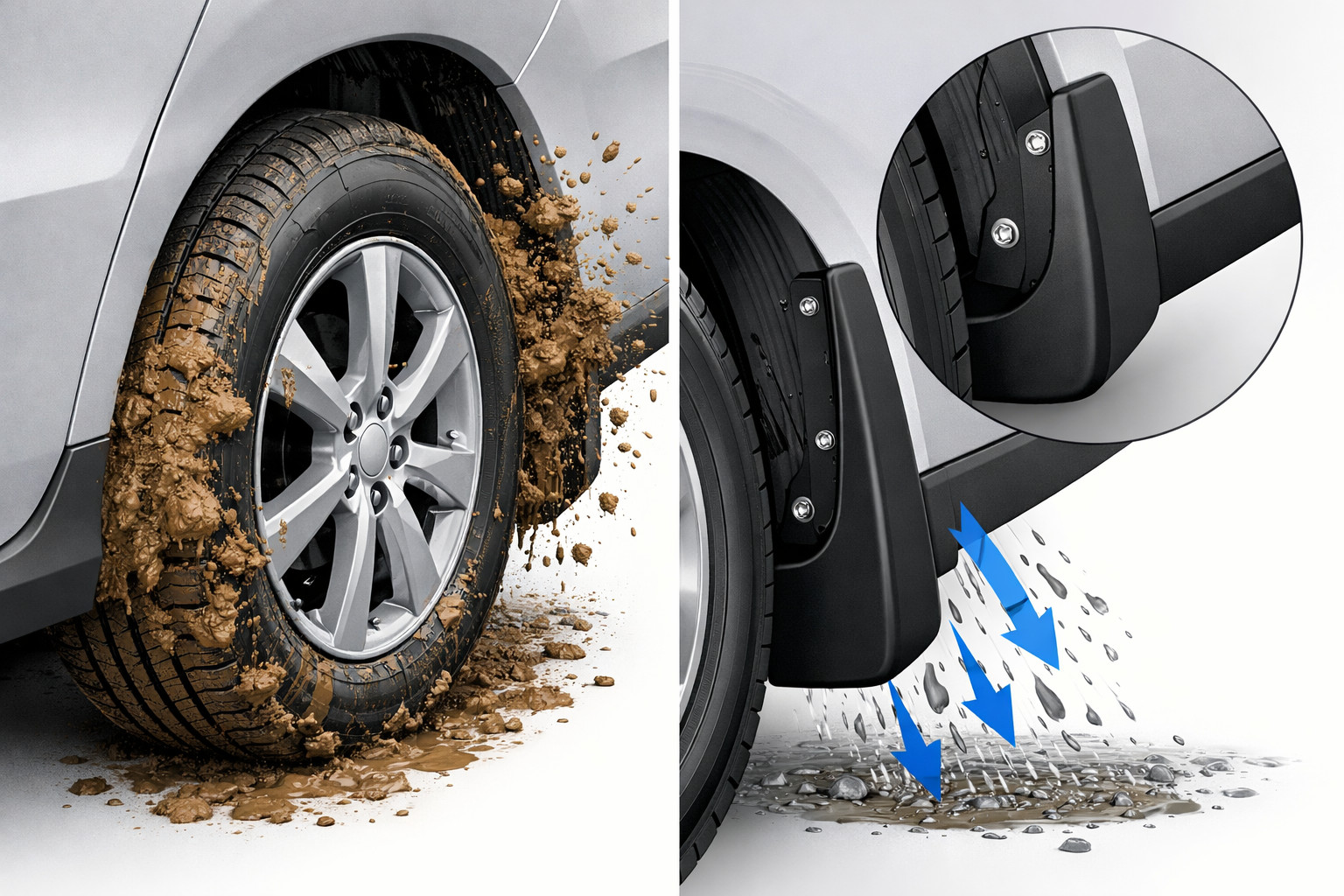
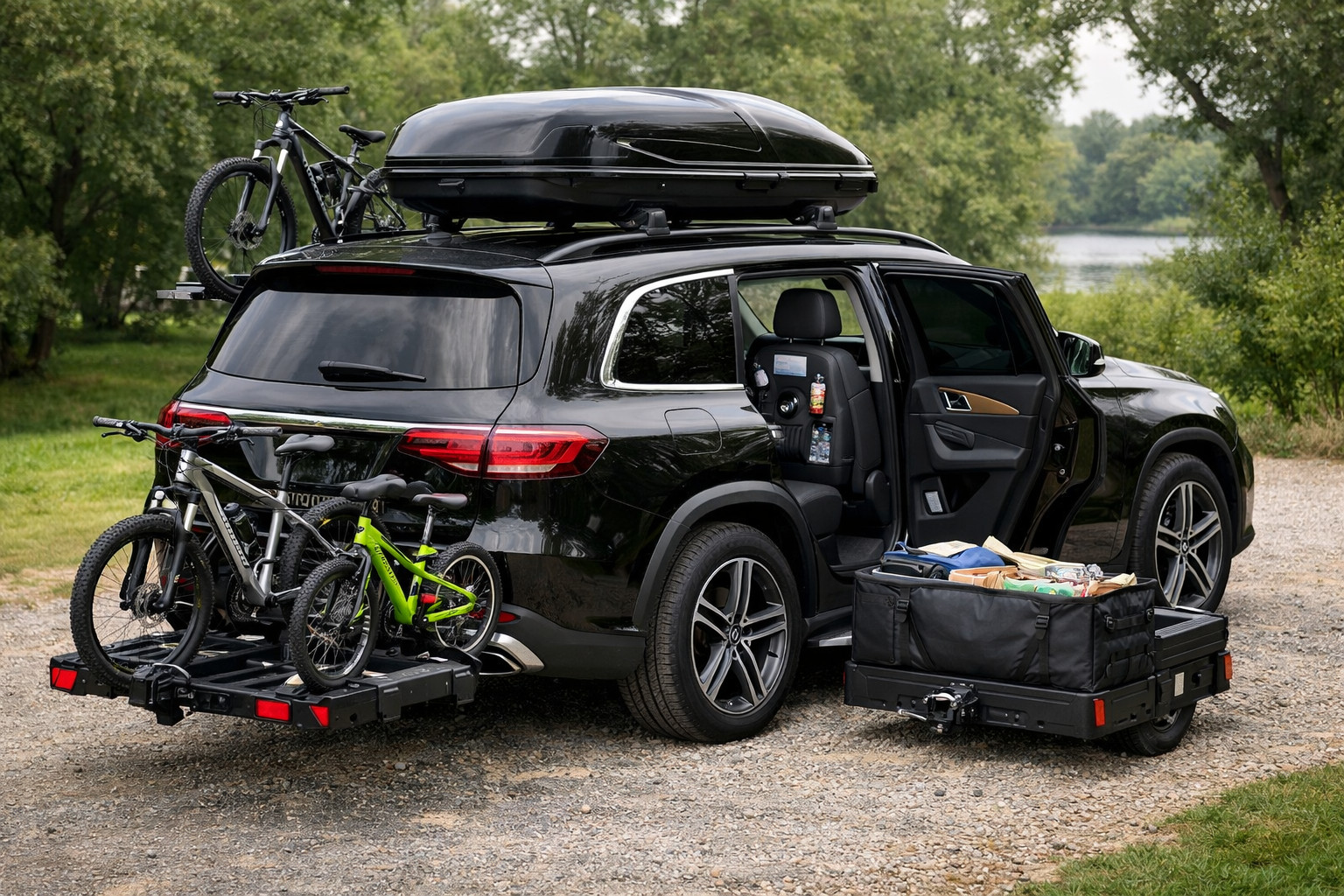
Smart tuning for the Picanto isn’t about power—it’s about convenience and protection. In this kind of car, floor mats, trunk liners, window deflectors, mud flaps, and neat exterior styling pieces really make sense. But attempts to turn a small city hatchback into something significantly faster usually bring little benefit and eat a lot of budget.
Another practical point: this model has several generations and different market versions, so when choosing accessories you should check not only the model name, but also the year, interior shape, and mounting points. It makes sense to start with the basics that genuinely affect everyday use.
Kia Picanto 2026-2027 is a mature small hatchback for those who need not showmanship, but simple urban efficiency. The key is not to misjudge expectations: in the city it fits perfectly, while on the highway and as the only family car its format becomes noticeably restrictive.
If you look at the model realistically, it performs best in versions with solid city equipment and practical accessories, not through attempts to make it something it isn’t. This material is based on real selection experience, hands-on practice, and real-world usage scenarios, so the main conclusion is simple: the Picanto is worth buying for a clearly urban pace of life—and then it really hits its target.
| ✔ | The small body and 9.4 m turning circle make the Picanto very convenient for dense city driving: it’s easy to park, turn around, and maneuver in narrow courtyards. This practically removes part of the everyday urban hassle. |
| ✔ | A 255 l trunk is a strong fit for this class, and with the rear seats folded the capacity grows to 1010 l. So the car is suitable not only for shopping but also for carrying larger items. |
| ✔ | The latest versions come with useful everyday equipment: a rear-view camera, parking sensors, multimedia, smartphone integration, and cruise control. For a small city hatchback, these are not just decorative extras, but things that genuinely make it easier to use. |
| ✔ | Simple gasoline mechanics without complex solutions have a clear character and do not seem overly complicated in design. This is a plus for those who want an inexpensive and predictable city car. |
| ✔ | Official fuel consumption stays within 5.4-6.0 l/100 km depending on the version. For daily city and mixed driving, this helps keep fuel costs down. |
| ✘ | The base engine has modest output: 68 hp and 96 Nm for the European-British version. With a full cabin and during overtaking, you’ll need to work the gearbox more often, without a noticeable reserve of pull. |
| ✘ | The rear row in the Picanto is rather cramped, and the author directly notes that it is really more comfortable to travel with four people rather than five. Three adults in the back is already an obvious compromise. |
| ✘ | At speed, wind and road noise become noticeable, so the model is not the best choice for frequent long-distance highway trips. This limits it as an all-purpose car for every situation. |
| ✘ | If you choose the version with an automated manual gearbox, it feels less smooth in stop-and-go traffic than a classic automatic. In heavy city traffic, this can be annoying. |
| ✘ | Passive safety does not look like one of the model’s strong points: the author notes that older crash-test ratings do not make the Picanto a class leader. In other words, it is a well-equipped small car, but not a benchmark for protection. |
Shipping to EU
Wholesale and retail
Own warehouse
Опис продукту
Подарунки не надаються при оформленні покупки у кредит під 0,01% або при покупці частинами.