19.07.2026
365
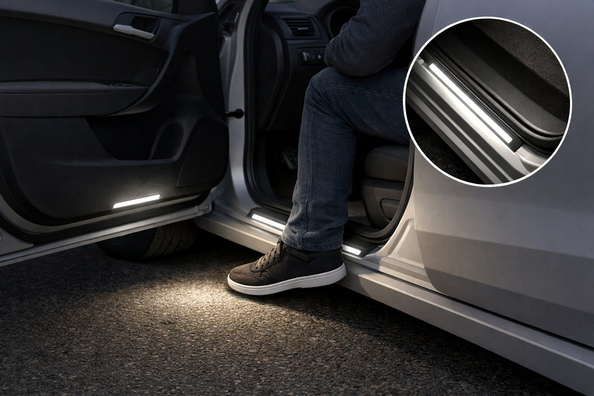
At night, getting into the car is inconvenient not because there’s no light in the cabin at all, but because the working area stays dark: the edge of the sill, the lower door edge, and the ground near your foot. The overhead dome light often illuminates the seat and center console, but it doesn’t show where you’re actually placing your foot.
Because of this, your shoe catches the sill, your foot lands in a puddle, mud, or ice, and getting in turns into a feeling-your-way movement. If the problem is local darkness, the fix isn’t simply a brighter cabin light, but illumination for the door sills, footwell, and the area by the door.
The entry area is low and to the side, while most factory light sources are high and centered. That’s why a dark zone forms between the open door, the sill, and the ground—one that even a fully working interior dome light doesn’t cover.
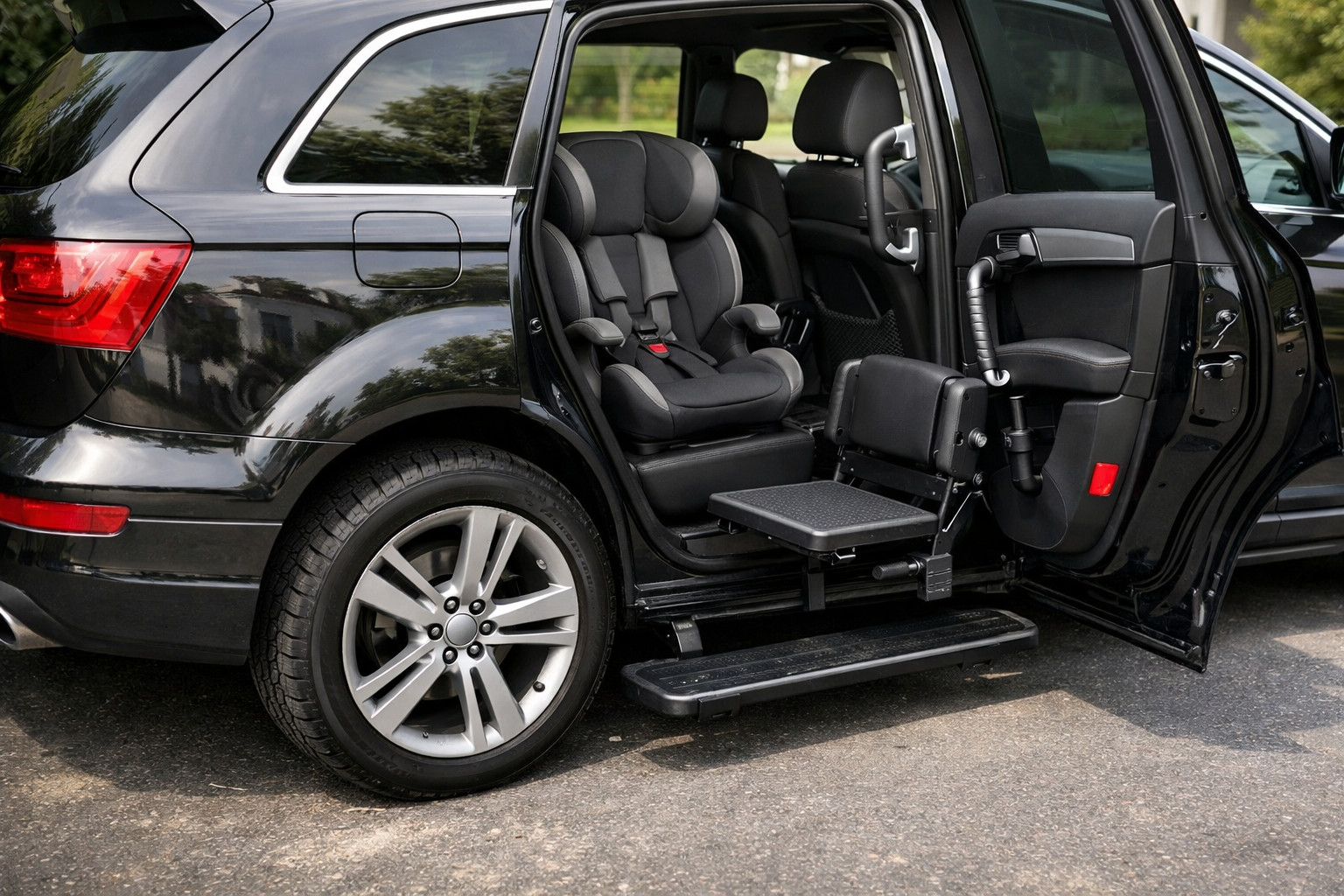
The issue is more noticeable on crossovers and minivans with a high sill, in tight courtyards, in unlit parking areas, and in winter, when there’s water, snow, or ice on the ground. Another factor is dark interior trim and black moldings where the sill edge is barely visible.
DD Tuning expert comment: The most common mistake is expecting an illuminated door-sill logo to replace ground illumination near the door. For comfortable entry, it’s important to see the sill edge and the spot where your foot lands. The second common mistake is buying a kit before checking the interior lighting mode and door gap, then looking for the problem where it isn’t—in the accessory itself.
| Symptom | Likely cause | What to do |
|---|---|---|
| You can see the seat, but not the sill and the ground | Light is only from above, with no local entry lighting | Add sill lighting, footwell lighting, or lighting for the area by the door |
| The lighting doesn’t turn on when the door opens | Door-triggered lighting mode is disabled or the dome light is set incorrectly | Check the dome light mode, lighting menu settings, and shut-off delay |
| Only the front is lit; the rear is dark | By design, only the front sills or front cabin area is illuminated | Don’t expect the same effect for all doors; address the rear separately |
| The light flickers or works intermittently | Installation, contact, activation, or door-position issue | Check mounting, wiring, sensors or activation elements instead of replacing everything at once |
| The sill lights up, but stepping in is still inconvenient | The lighting is decorative and doesn’t illuminate the working area | Add light in the footwell or under the door, not only on the trim itself |
A combination of two or three light points works best. Sill lighting shows the body edge and at the same time reduces the risk of new scuffs. Footwell lighting puts light where you shift your weight as you get in. And a lamp that illuminates the ground by the door helps you avoid stepping into water, mud, or onto a curb.
A practical solution is one that turns on automatically when the door opens and requires no extra actions. A configured shut-off delay can also be useful: when the light doesn’t go out instantly after the door closes, but gives you a few seconds for a normal entry or exit.
Simply installing a brighter central dome light rarely solves the problem on its own: it adds general light but doesn’t eliminate the dark zone by the sill. A decorative illuminated insert helps just as little if it doesn’t provide proper downward illumination.
An unreliable option is random standalone strips without a clear link to the doors—they quickly lose brightness or work inconsistently. A phone flashlight isn’t a solution either: it can help once, but it doesn’t remove the cause and is inconvenient when your hands are busy with bags or a child seat.
Accessories make sense when the factory light works, but by design doesn’t illuminate the entry area. If the car often sits in a dark courtyard, if the sills are already getting scuffed by shoes, or if the family includes children and elderly passengers, local illumination provides a practical—not cosmetic—effect.
Replacing components is also justified when lighting already exists but is actually faulty. But if it’s simply set to the wrong mode or doesn’t illuminate the needed area due to design specifics, you can waste money without diagnostics.
| Solution | When it works | When it’s not worth spending money |
|---|---|---|
| Door sill lighting | When you need to see the sill edge and reduce scuffs at the same time | When it provides only a glowing effect without real light in the foot area |
| Footwell lighting | When the main problem is you can’t see where to place your foot inside the cabin | When the inconvenience happens before stepping into the cabin—i.e., it’s dark on the ground next to the car |
| Lighting for the area by the door | When you often park in dark places, near puddles, snow, or curbs | When the car is almost always on a well-lit parking lot and there are no surface issues |
| Replacing the central dome light with a brighter one | When the cabin is genuinely dark overall and lacks ambient light | When the lower entry area stays dark; then the problem isn’t the dome light |
| Repairing the factory activation system | When lighting should work but flickers or turns on intermittently | When the system is functional, but by design isn’t meant to illuminate the needed area |
From a customer’s experience: The person wasn’t looking for a decorative effect, but a way to stop catching the sill with their shoes on a tall crossover parked in a dark courtyard. After selecting the right setup, it turned out that one illuminated element on the sill wasn’t enough, so the solution became local entry-area lighting plus edge protection. As a result, the sill edge became visible, and new scuffs stopped appearing so quickly.
Night-time inconvenience when getting into the car is almost always caused not by a lack of light in general, but by the right point staying dark—the sill, the lower edge of the door, and the ground by the entry. That’s why it’s not abstract “brighter bulbs” that work, but local solutions that illuminate the entry zone itself.
Before buying, it’s worth distinguishing decorative lighting from practical lighting, checking the door-triggered operating mode, and understanding exactly where light is lacking. If the issue is structural, accessories really help; if the cause is settings or unstable operation of the existing system, diagnostics should come first. This material is based on real selection experience, hands-on practice, and real-world use cases.
Shipping to EU
Wholesale and retail
Own warehouse
Опис продукту
Подарунки не надаються при оформленні покупки у кредит під 0,01% або при покупці частинами.