01.04.2026
551
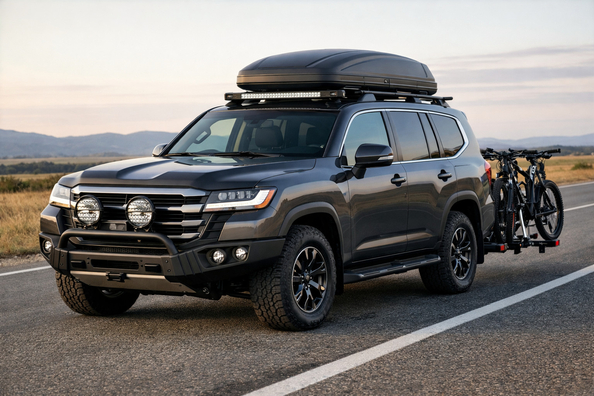
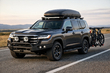
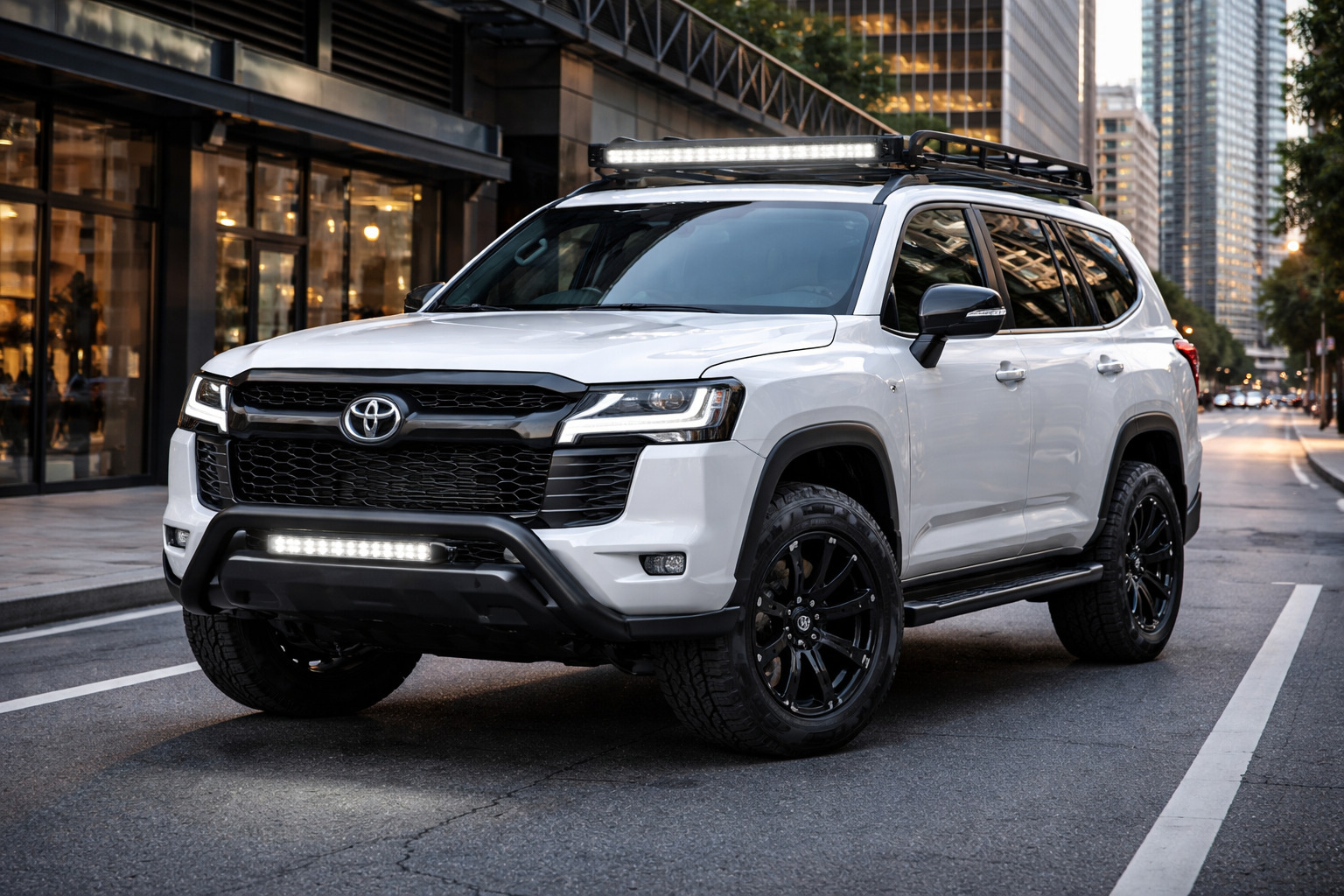
If you need a Toyota Land Cruiser 300 specifically for highway use (frequent long trips, overtakes, traveling with the whole family, sometimes a trailer and luggage “packed to the limit”), the upgrade should cover three things: safety in disputed situations, handling and stability at speed, and practical space organization for travel.
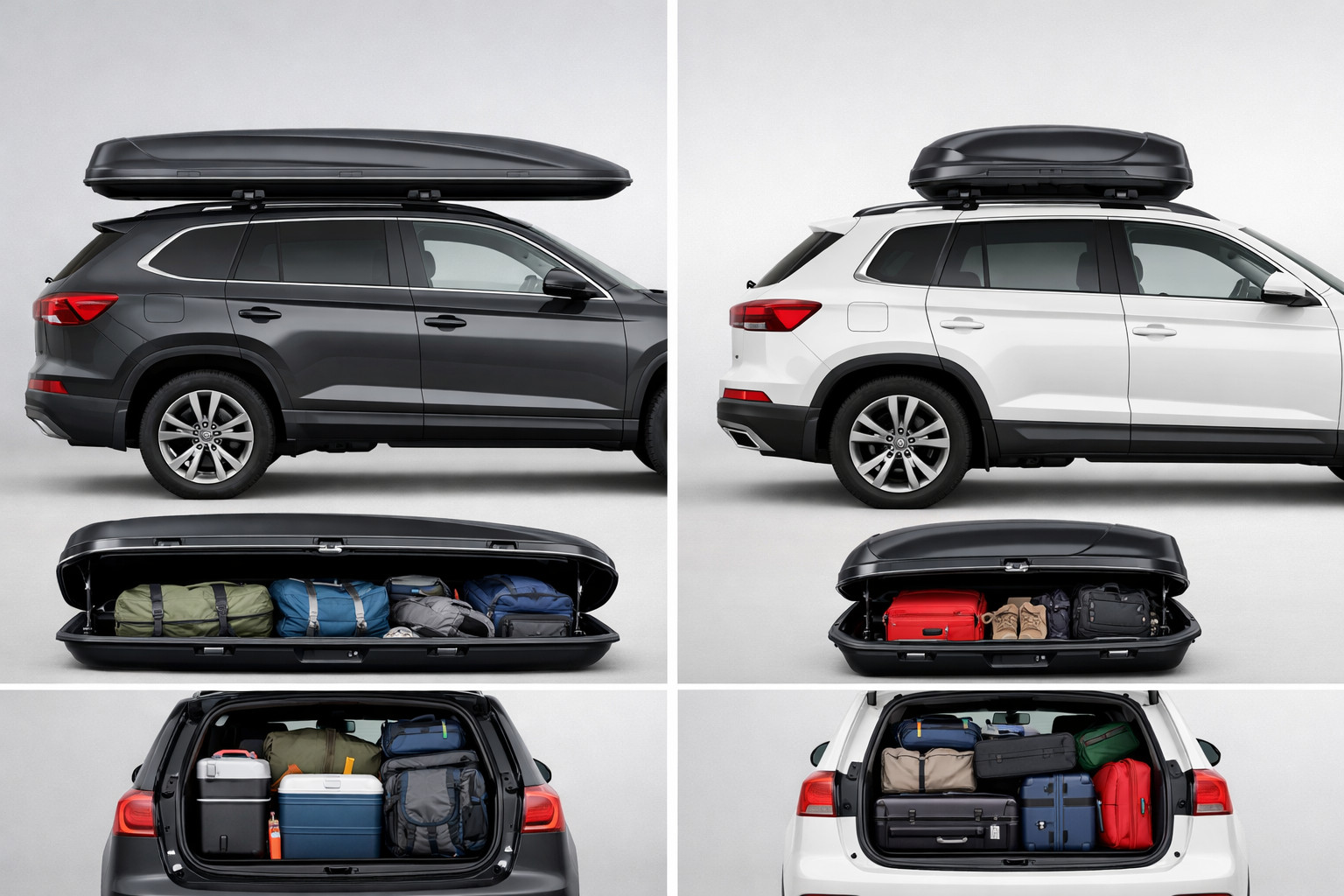
The most meaningful upgrades are the ones that work every day: dash cam recording, the right tires for your route and climate, interior and cargo protection/organizing, and on the “roof” — only platforms with confirmed load limits and well-thought-out aerodynamics.
Highway driving for an LC300 usually means load not only on the engine and brakes, but also on the small things that add up into problems: delays caused by minor inconveniences, unsecured cargo shifting around, discomfort from noise/vibrations, and accident risks where video often decides everything.
That’s why the upgrade should be built as a sequence: first what reduces accident consequences and increases vehicle control, then comfort and practicality, and only after that — what “adds load” or looks.
1) Dash cam (front/rear) with loop recording. On the highway it’s useful not “for show”, but for documenting facts in disputed situations. As an example for the LC300: Thinkware with a 2K quad front camera, 1080P full HD rear camera, and loop overwrite. If you take one step — take it here.
2) Tires for your scenario. For a large SUV this directly affects road contact: noise, predictability in rain, stability during maneuvers and overtakes. Stick to OEM sizes listed in the brochure (for example, 245/75R17; 265/65R18; 265/55R20), and don’t choose “something similar” without checking the manual or by VIN/door sticker.
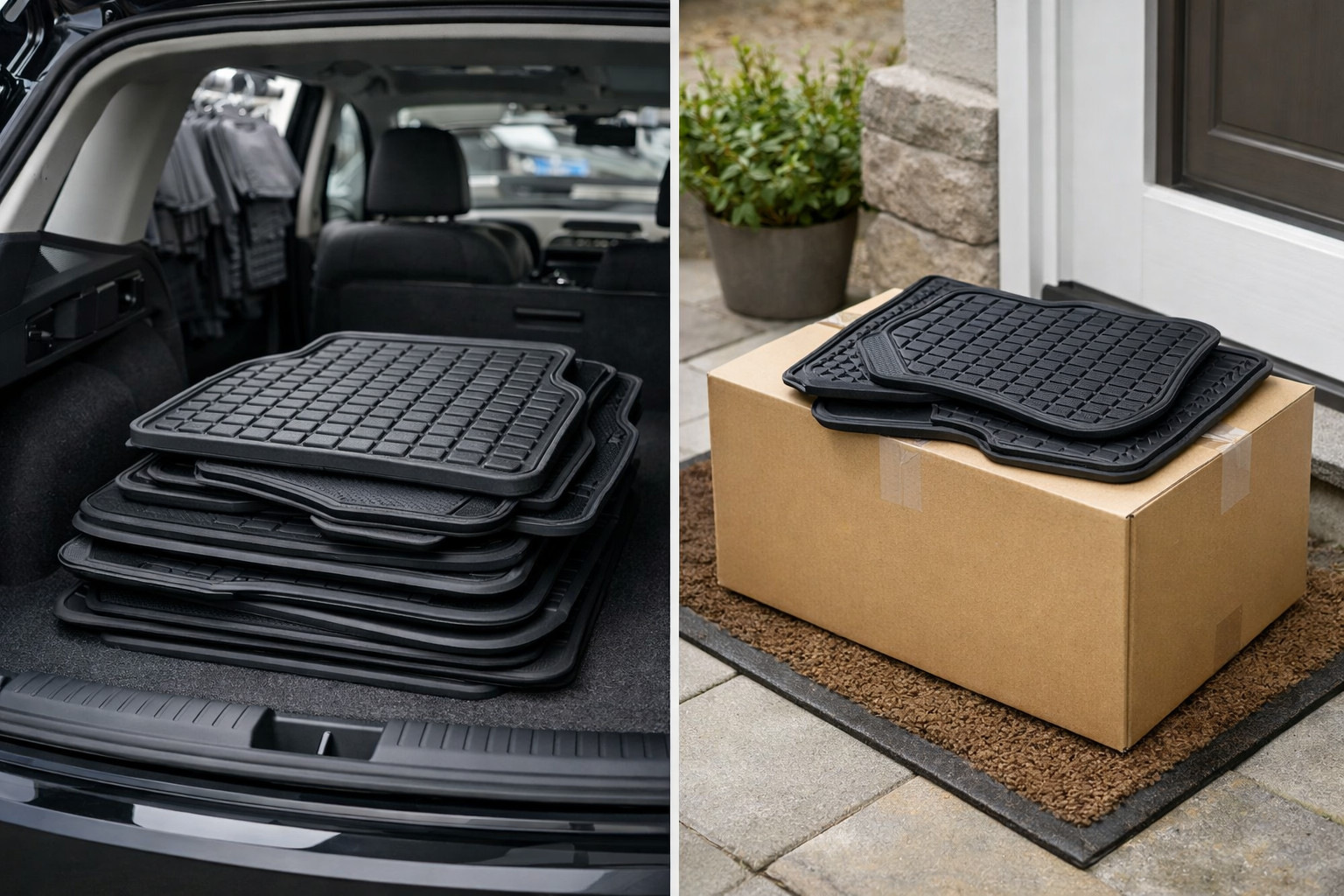
3) Interior/cargo organization. Floor mats, securing small items, and dirt protection aren’t just about cleanliness. On the highway, items that roll around can interfere with driving (especially in corners/braking) and create fatigue from constantly “slowing down” the disorder.
| Upgrade | Why it’s needed | Who it really benefits |
|---|---|---|
| Dash cam (front + rear, loop recording) | Event recording in accidents/disputes; less time spent “proving” you’re right | Those who drive intercity routes, overtake, and often end up in dense traffic |
| Tires matched to route and climate | Stable handling and predictability in rain/on wet roads, less noise and vibration | Those who drive many km/month and are sensitive to fatigue from noise or “floatiness” at speed |
| Floor mats + protection and organization for interior/cargo area | Less dirt/moisture in the cabin and control of small items so they don’t roll around | Families, travelers, and those who often carry tools/bags/gear |
| Roof rack/platform with confirmed load limits and aerodynamics | Extra cargo without DIY risk on load ratings and without excessive whistling | Those who regularly carry items on the roof: travel, long trips, seasonal gear |
The second stage is what increases convenience on the road and makes logistics easier. If you’ve already installed a dash cam and chosen tires, the next logical things to look at are:
MAXTRAX (recovery tracks) make sense when you actually drive off asphalt, not only on it: a mounting kit can carry 2 or 4 recovery boards — useful as “insurance” when there’s no service nearby.
It’s easy to overpay here: comfort/appearance has an effect, but it’s less noticeable if the basic safety and handling items aren’t covered first. A reasonable order is: practical solutions first, then what simply makes trips more pleasant.
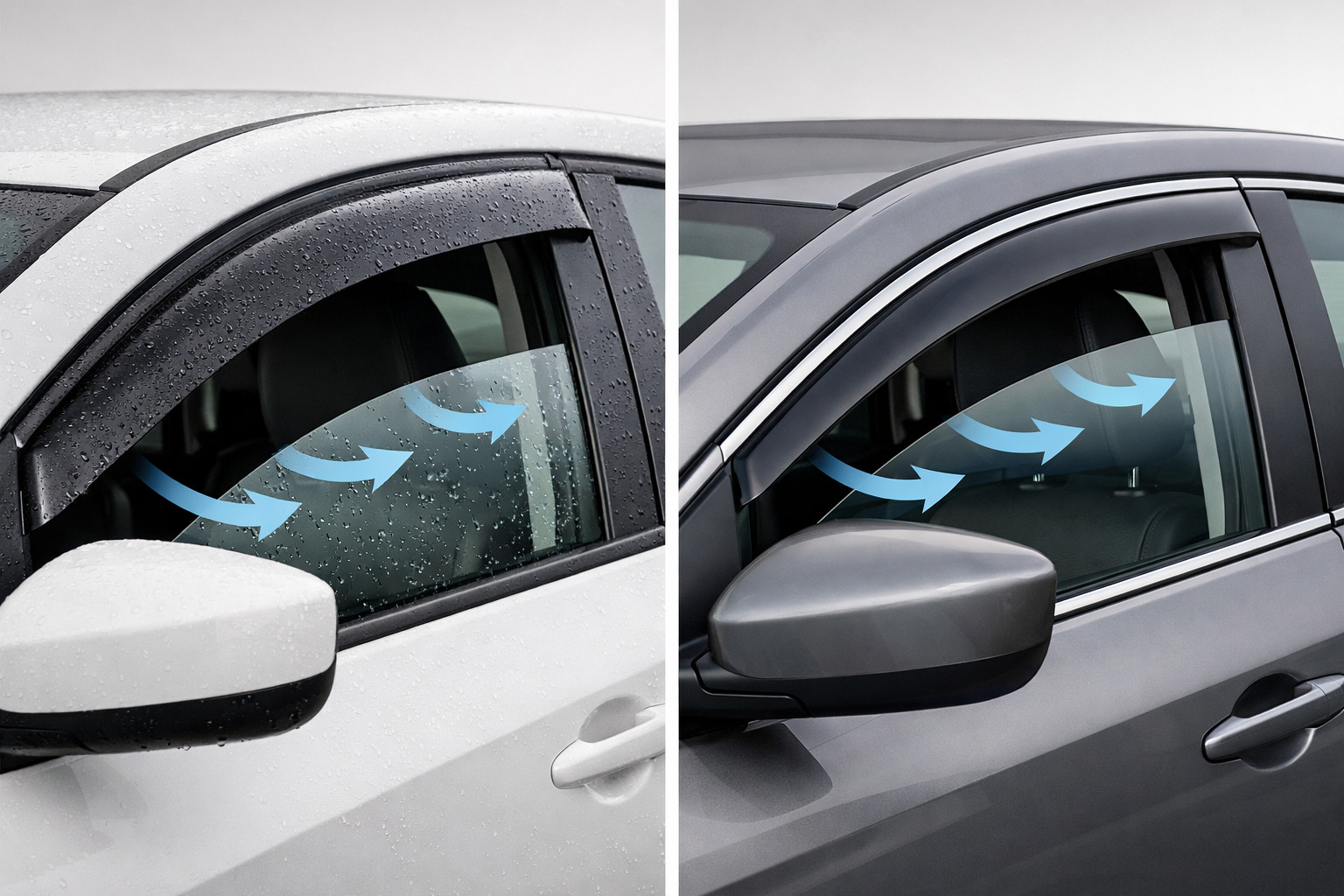
As an example from the “roof”: some racks not only look better, they also create extra wind noise. So when choosing a platform, look for well-thought-out aerodynamics (for example, elements like “air dams” in certain designs), not just color/material.
If you want pure aesthetics (lighting, decorative trims, body kit elements), it’s more logical to plan this after you’ve sorted the highway “technical base.”
| First | Can be postponed | Not required |
|---|---|---|
| Dash cam (front + rear) | Small cargo organizers “to taste” | Decorative exterior elements |
| Tires for your route/climate (within OEM sizes) | Additional interior accessories that don’t affect safety | “Universal” solutions without confirmed compatibility |
| Floor mats and interior/cargo protection | Items that improve tidiness but aren’t critical for trips | Tuning that provides no measurable highway benefit |
| A roof/cargo plan (if you actually need it) | Roof accessories “for vibe” if you haven’t decided on the load yet | Wind “hairdos” without checking their impact on noise |
More expensive solutions make sense when you get not a “better look”, but an answer to a specific highway problem. The most common cases:
If you want to put everything together into a logical kit, start by reviewing solutions specifically for the LC300: Toyota Land Cruiser 300 tuning.
For a Toyota Land Cruiser 300 “for highway” the priority is simple: dash cam, tires for your route, floor mats and interior/cargo organization. Next — if needed — roof platforms with confirmed limits and real wind-noise control, and only then comfort and visual extras.
Practical verdict: if an upgrade doesn’t affect safety, handling, or travel practicality, it’s better to postpone it or reconsider it — because on the highway, “small mistakes” add up to the most fatigue and risk.
| ✔ | A front-and-rear dash cam with loop recording genuinely covers the need for evidence in disputed situations on the road, reducing the time spent “proving” you were right. |
| ✔ | Tires suited to your route and climate improve handling stability and predictability in the rain, and also reduce noise and vibrations at speed. |
| ✔ | Floor mats and organization in the cabin/trunk reduce clutter from small items and help prevent objects from rolling around or getting in the way in corners or during braking. |
| ✔ | Roof platforms with verified limits and thoughtful aerodynamics let you add cargo without ignoring load risks and with less chance of extra wind noise. |
| ✘ | If you install only a front camera or do not ensure full coverage, the rear area may remain “blind,” which reduces the value of video recording on the road. |
| ✘ | Choosing tires “because you like them” or outside the factory sizes can affect system operation and reading accuracy, and also worsen the car’s behavior at speed. |
| ✘ | Roof accessories chosen only for design without checking the vehicle’s limits can create improper load, because the car’s load-carrying parameters take priority. |
| ✘ | If you do soundproofing or small comfort upgrades without basic changes (tires, wind/aerodynamics effects, order in the cabin), the expected effect may be less than the cost. |
Shipping to EU
Wholesale and retail
Own warehouse
Опис продукту
Подарунки не надаються при оформленні покупки у кредит під 0,01% або при покупці частинами.