21.06.2026
361
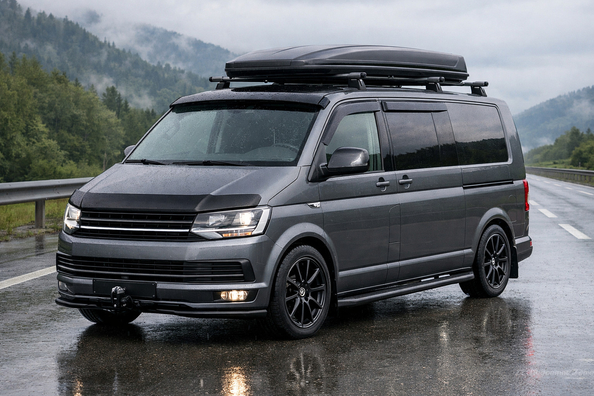
This upgrade plan is for a Volkswagen T6 or T6.1 owner who spends most of the time on the highway, often gets caught in rain, and wants to strengthen visibility, braking, and stability first—only then spending money on secondary things. If the van works in delivery, takes the family on long trips, or regularly runs loaded, the priorities here are not about decorative tuning at all.
For this scenario, a simple logic works best: first, what truly affects contact with the road and visibility; then items for everyday convenience in the rain; and only at the end—appearance. It’s also important to verify compatibility by VIN, because on T6 and T6.1, as well as short and long wheelbase versions, the set of parts and the benefit you get from them can differ.
In the “highway + rain” scenario, the vehicle must brake confidently on wet surfaces, not wander in ruts, clear the windshield properly without jerks, and not turn every door opening or micro-ventilation into a shower for the cabin. On the T6 this is especially noticeable because the body is large, side wind sensitivity is significant, and on a long wheelbase with cargo the suspension demands are even higher.
So the goal of the upgrade is not to “decorate the van,” but to make it predictable in the rain at 90–120 km/h, reduce driver fatigue, and remove small inconveniences that start to annoy the most on long trips.
Top priority is tires with strong wet grip, correct pressure, and a healthy remaining tread depth. That’s where the biggest safety gain is hidden—not in trim pieces or unknown-origin LED “bulbs.” The second step is new wiper blades in the correct size; for T6/T6.1 a 600/600 mm setup is common, but it’s better to confirm the kit for your specific vehicle before buying. The third item is diagnostics of shock absorbers, springs, and the front suspension: if the van is rocking or reacts nervously to wet ruts, no accessory will fix it.
If the vehicle is already technically sound, then the first wave of upgrades can also include practical rain items: window deflectors or a rain gutter by the doors. They don’t shorten braking distance, but they sharply improve convenience in real-world use.
| Upgrade | Why it’s needed | Who really benefits |
|---|---|---|
| Quality tires with strong wet grip | Better braking, lower risk of aquaplaning, more stable highway behavior | Everyone without exception, especially those who drive daily and do highway runs in the rain |
| New wiper blades | A clear field of view without streaks and chatter | Those who drive at night, in rain, and on intercity routes |
| Check or refresh shock absorbers and springs | Less rocking, better tire contact with the road, calmer reaction to bumps and ruts | Owners of LWB vans, loaded vans, and those who drive on poor roads |
| Window deflectors or a rain gutter | Let you ventilate the cabin in the rain and reduce water entering when opening the doors | Those who spend a lot of time in the vehicle, wait in it, travel, or carry passengers |
| Mud flaps | Less dirt on the sides, doors, and rear of the vehicle; slightly less fine abrasive spray | Those who often drive wet highways, dirt access roads, or behind trucks |
DD Tuning expert comment: the most common mistake on the Volkswagen T6 is buying deflectors, lamps, and trim for a vehicle with tired tires and suspension. The second typical issue is choosing without a VIN check: on T6 and T6.1, short and long wheelbase versions, and versions with different rear doors, compatibility can differ. If the use case is highway driving in the rain, close the gaps in visibility and grip first—not the looks.
Once the basics are covered, the second stage should focus on things that reduce fatigue on the road. For a highway-focused T6, that’s first of all cruise control if you don’t have it, as well as a rear-view camera or parking aids—because the large body in wet weather quickly collects grime and rear visibility gets worse. For those who regularly drive at dusk and in the rain, better OE-compatible lighting solutions make sense, but not random bulbs in the factory halogen optics.
If the vehicle is often loaded, this is exactly the stage where better shock absorbers or springs matched to your weight and roads are justified. For an empty short-wheelbase van it’s not always the first necessity, but for a long wheelbase or a working panel van the difference is noticeable very quickly.
This is the compromise zone. A hood deflector, mud flaps, floor mats, side steps, curtains, or visors can be useful, but they don’t replace the basics. For example, a hood deflector makes sense for those who drive a lot on the highway in traffic and want less fine sandblasting on the leading edge, while curtains and steps are more about everyday comfort than the vehicle’s behavior in the rain.
Spoilers, chrome, grille trims, decorative elements for mirrors or bumpers—this is already about looks. If the budget is limited, and the tires are average and the wipers smear, it’s better to postpone such purchases without regret.
Most often, people waste money on items that don’t fit the scenario. For rainy highway driving, that’s universal cheap deflectors installed however, random LED bulbs in stock halogen headlights, lowering for a “nicer stance,” and large decorative wheels that only worsen comfort on wet, uneven roads.
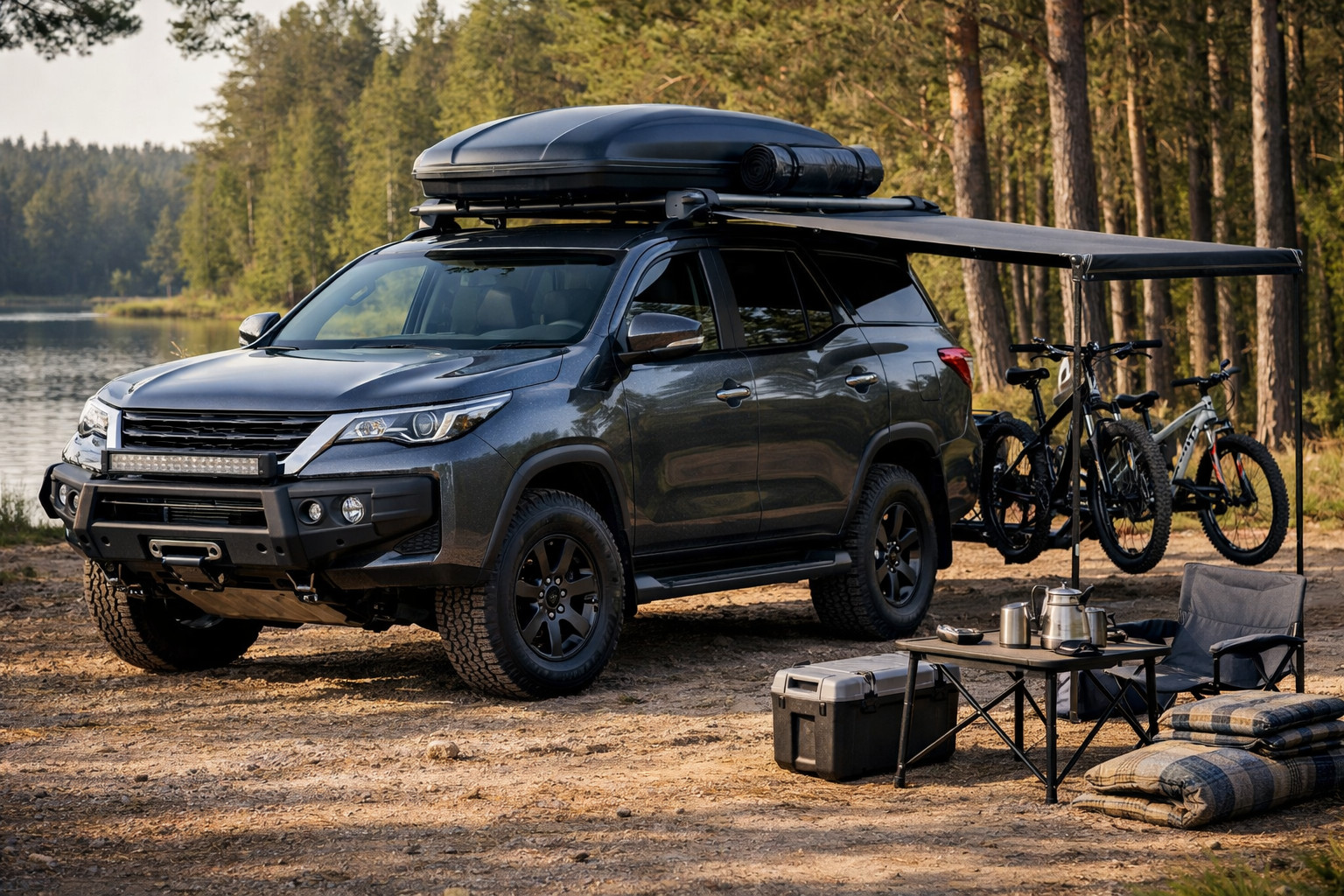
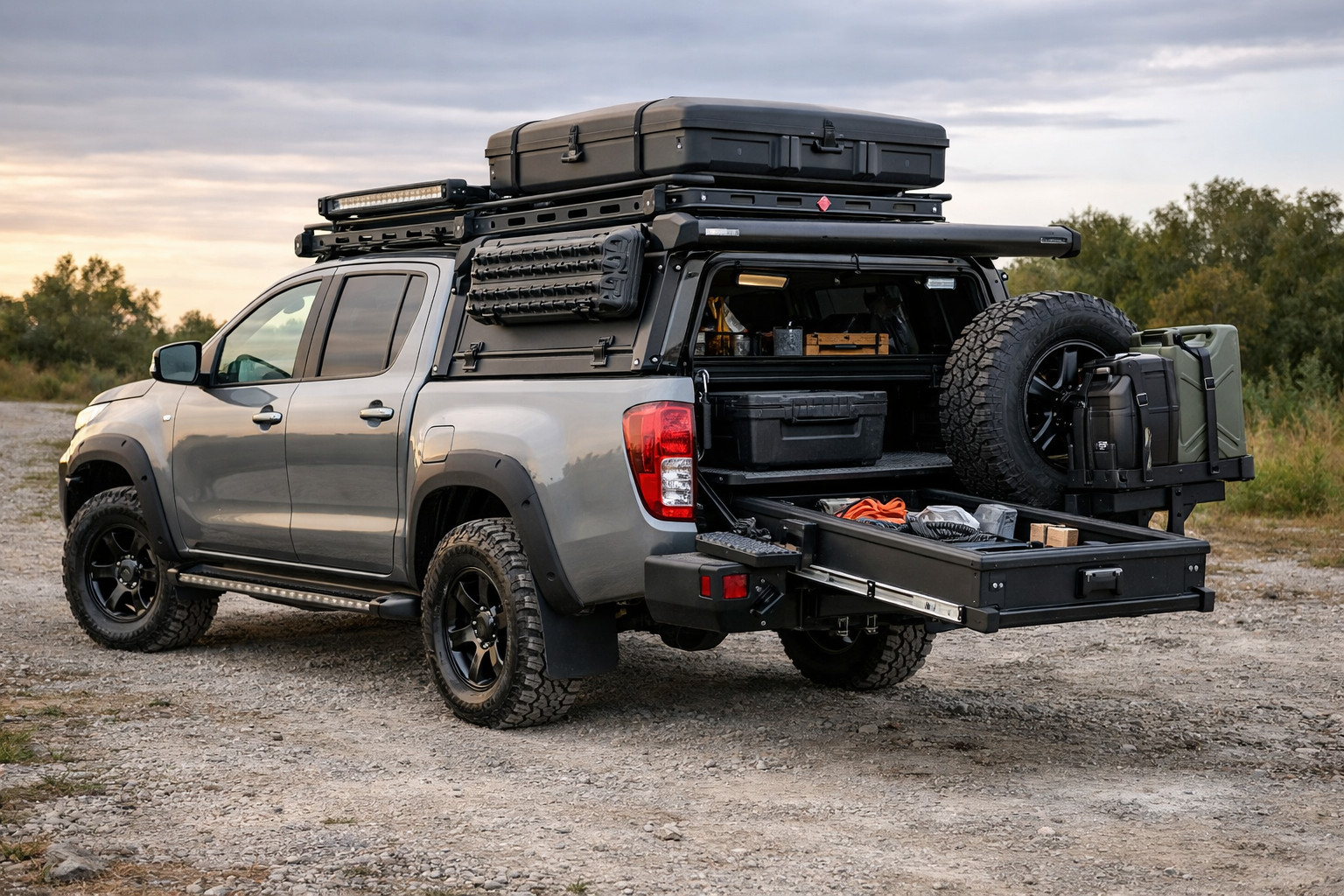
A separate category of mistakes is camping or interior trinkets that look interesting in a catalog but don’t solve any of your real tasks. If the van isn’t used as a camper, an awning, inverter, or other lifestyle accessories should not take budget away from tires, wipers, and suspension.
| What to install first | What can be postponed | What is not required |
|---|---|---|
|
|
|
More expensive solutions make sense when the basics are already covered and you clearly understand your task. If you need proper cabin ventilation in the rain without water on the door cards, it’s worth looking at vehicle-specific window deflectors rather than universal stick-ons. If the vehicle spends a lot of time on the highway behind traffic and you want to slightly protect the leading edge of the hood from fine abrasive spray, a neat hood deflector is justified. For wet intercity routes and dirty access roads, original mud flaps can be useful, because they usually fit better than universal kits.
Among truly expensive upgrades, quality load-matched shock absorbers and a proper professional lighting upgrade are justified if you regularly drive at night on the highway. But it’s important not to confuse a proper retrofit with “threw in a bulb and drove off”: if the solution requires modules, wiring, or coding, that’s workshop work, not a quick purchase for effect.
From a customer’s experience: on a long-wheelbase T6.1 for intercity trips, they initially wanted to install exterior trims and a spoiler because the vehicle seemed “empty.” After inspection, it turned out the main problem was the tires, wipers, and tired front shock absorbers. After this basic work and installing window deflectors, the van became calmer on a wet highway, and the benefit from the upgrade turned out to be greater than from any decor.
For the Volkswagen T6 2015–2024 in the “highway and rain” scenario, the right starter upgrade is simple: tires, wipers, suspension health—and only then deflectors, gutters, mud flaps, and other practical small items. This order delivers real gains in braking, visibility, and stability—not just the feeling that you bought something for the vehicle.
In short, useful is always above decorative here, and expensive solutions only make sense after the basic weak points are addressed. This material is based on real selection experience, practical work, and real usage scenarios, so the key advice is one: build the upgrade around your route, vehicle weight, and body style—not around a pretty picture in a catalog.
| ✔ | The greatest practical benefit comes from the basics: tires with good wet grip, proper pressure, and a healthy tread depth. This is what really improves braking, reduces the risk of aquaplaning, and increases stability on the highway. |
| ✔ | New windshield wiper blades immediately solve the problem of streaks and jerking on the glass in rain. For intercity trips and driving in the dark, this directly improves visibility. |
| ✔ | Checking the shock absorbers, springs, and front suspension is important for the large T6, especially on the long wheelbase or under load. It reduces body roll and makes the vehicle’s reactions calmer on wet ruts and road undulations. |
| ✔ | Window deflectors or a rain gutter provide noticeable everyday convenience in the rain. They let you ventilate the cabin and catch less water when opening the doors. |
| ✔ | Mud flaps help keep less dirt on the body and behind the vehicle. This is especially useful for those who often drive on wet highways, behind trucks, or through muddy access roads. |
| ✘ | It is easy to buy some useful things in the wrong order: deflectors, bulbs, or trim pieces do not replace worn tires and tired suspension. Because of this, money can go to minor items with no impact on safety. |
| ✘ | There is a risk of getting the compatibility wrong, because in T6 and T6.1, as well as between the short and long wheelbase, parts may differ. Without checking by VIN, you can buy a kit that will not fit or will work worse than expected. |
| ✘ | Cheap universal solutions often do not deliver proper results in rainy highway use. The article separately notes that random LED bulbs, universal deflectors, or lowering on a work van can even reduce practicality. |
| ✘ | Some upgrades only make sense after basic maintenance, meaning you first need to invest in the vehicle’s condition, not in decoration. This pushes desired but secondary purchases to a later stage. |
Shipping to EU
Wholesale and retail
Own warehouse
Опис продукту
Подарунки не надаються при оформленні покупки у кредит під 0,01% або при покупці частинами.