16.07.2026
201
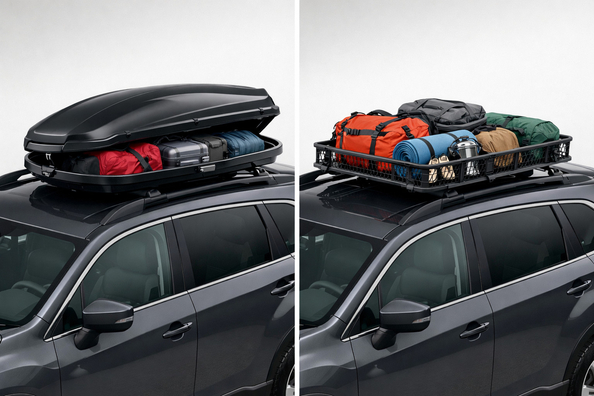
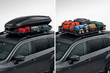
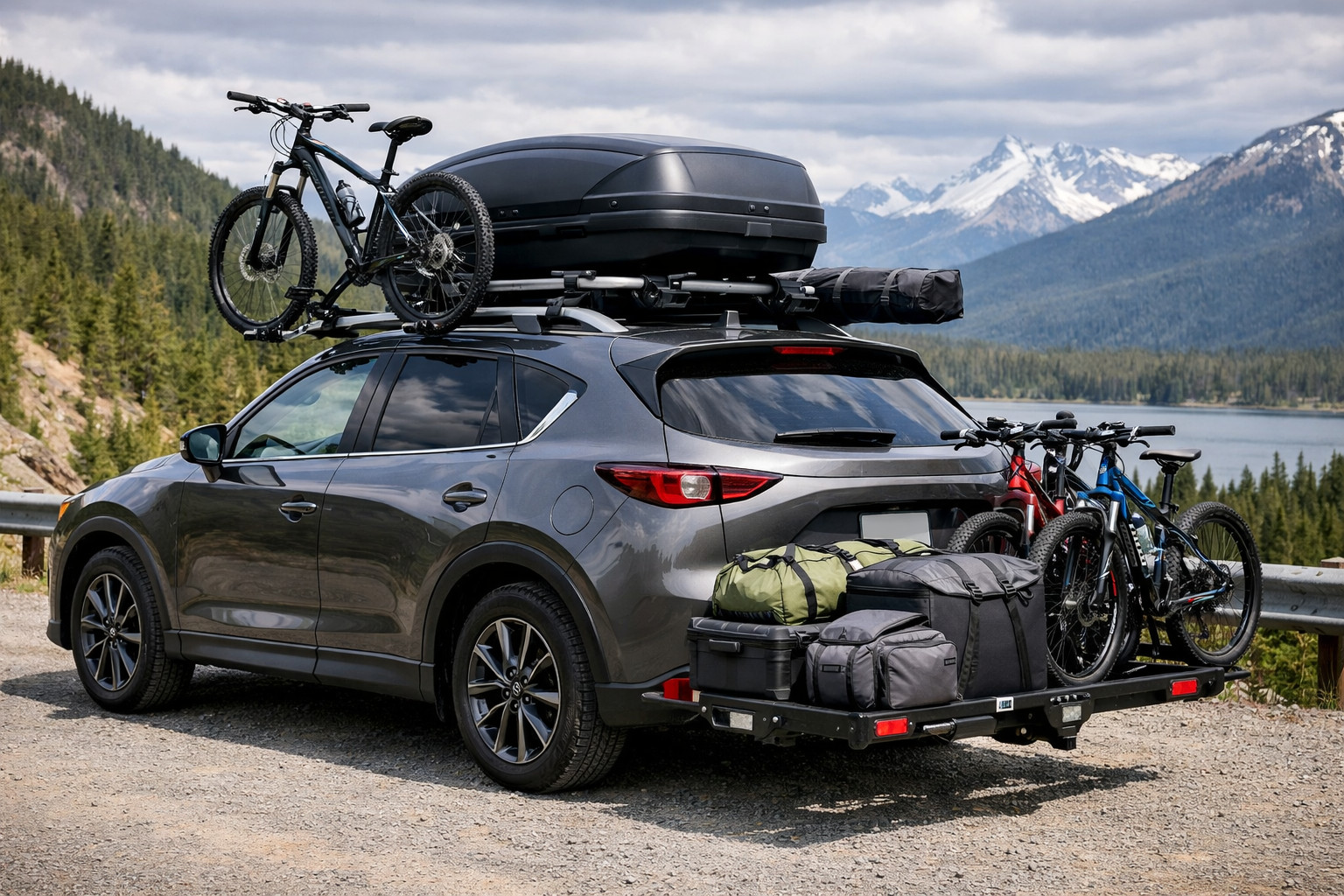
If you need to carry suitcases, clothes, skis, vacation gear and not worry about rain, dust, or unwanted access, a roof box wins more often. If your roof regularly carries jerry cans, crates, dirty tools, wet items, or oddly shaped cargo, a roof basket will be more practical.
The main mistake is simple: people compare only volume or price. In reality, other things decide it: highway noise, vehicle height, ease of installation, the need for straps, load control, and whether you’re ready to live with open cargo.
A roof box is a closed, rigid format for items that need protection. A roof basket is an open platform for large, dirty, or non-standard cargo that you don’t want—or can’t—pack into a hard shell.
Interestingly, in terms of allowable weight the difference between the two types often isn’t dramatic: in a typical pair of models it’s about 74.8 kg for the box versus 68 kg for the basket. So the choice usually isn’t about one “carrying more”, but about what exactly you carry and in what conditions.
| Option | Strengths | Weaknesses | Who it suits |
|---|---|---|---|
| Roof box | Protection from rain, snow, dust; more peace of mind on the highway; convenient for suitcases, clothing, skis, and family luggage; closed access | More expensive; taller; you need to check tailgate clearance and overall vehicle height; takes up storage space | Those who often travel long distances, in winter, or carry items that must stay dry and clean |
| Roof basket | Cheaper; lighter; open format for large and dirty cargo; quick access; length can be extended | Noisier; no weather protection; requires straps and mounting checks; weaker protection from unwanted access | Those who carry tools, jerry cans, crates, wet gear, or don’t want to overpay for rare use |
DD Tuning expert comment: most often, the people who make the wrong choice are those who buy a basket for family highway trips and then fight wind noise and packing every bag when it rains. The second typical mistake is buying a box without checking vehicle height and rear door opening. Before paying, you need to measure not only the roof, but also the use scenario: what exactly will go on top, how often, and in what weather.
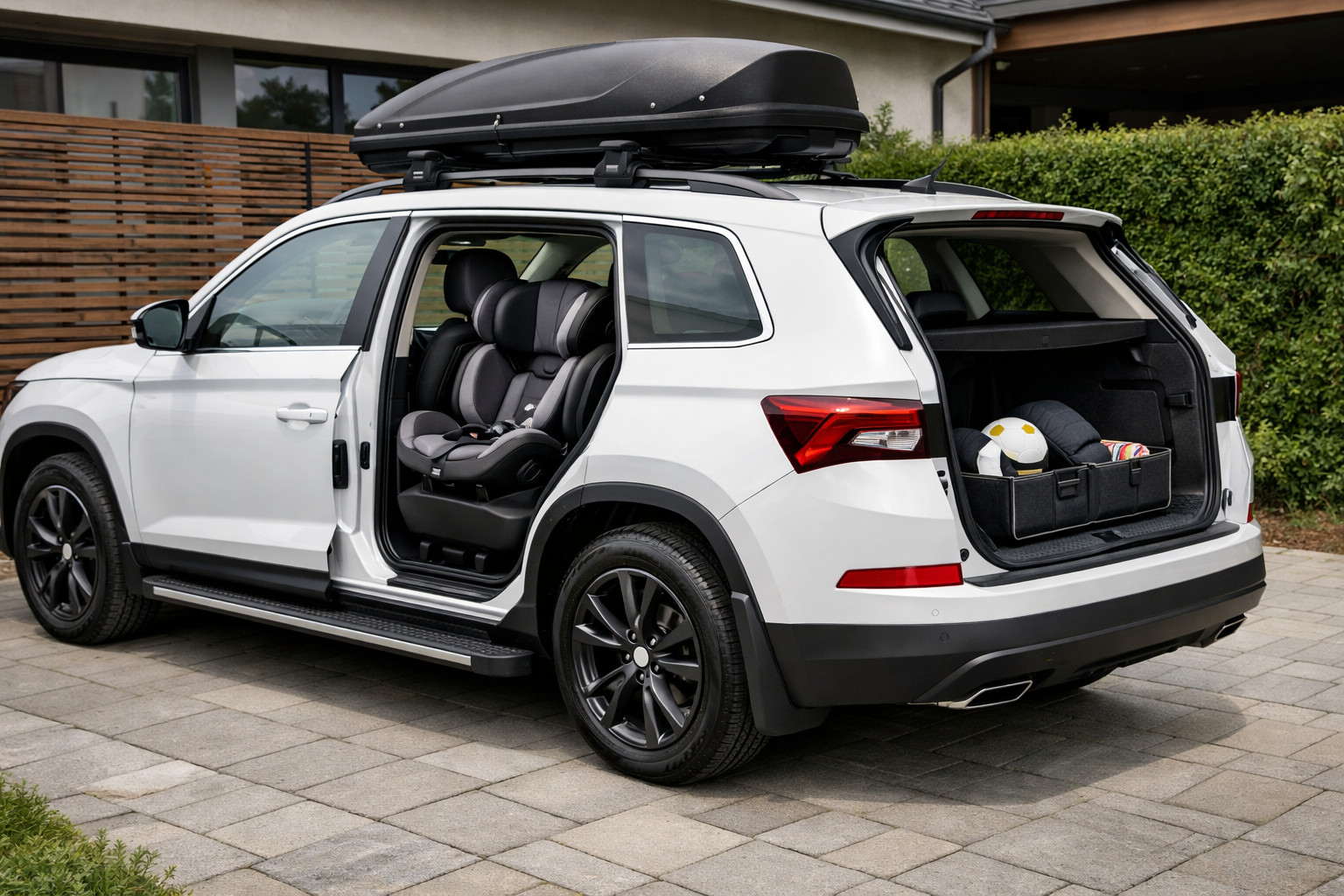
The box’s strong side isn’t just “a lid on top”, but a completely different usage format. In a typical mid-size, it’s about 453 L of usable volume—enough for suitcases, duffel bags, sleeping bags, or winter gear. For ski trips it’s especially logical: the cargo stays dry, clean, and enclosed.
On the highway, a box usually behaves more calmly than a basket, especially if the crossbars aren’t noisy on their own. But there are downsides: a higher profile, greater length, parking issues, and the need to store the box off-season. You also need to check whether it will interfere with opening the rear hatch, especially on hatchbacks and crossovers.
A basket wins where shape matters more than liters. It has a lower profile, less weight of its own, and open access. If you carry jerry cans, crates, folding shovels, wet boots, dirty camping gear, or anything that’s simply inconvenient to stuff into a box, this is often the more honest solution.
But openness has a price. Items must be packed and strapped down separately, noise appears more often at speed, and after bad roads or strong winds it’s advisable to recheck the mounting. For constant highway use with soft luggage, a basket will rarely be more convenient than a box, even if the accessory itself is cheaper.
| Scenario | Best choice | Why |
|---|---|---|
| Summer family trip of 1000+ km | Roof box | Less hassle with packing, better protection of items, and calmer highway behavior |
| Ski weekend | Roof box | Gear doesn’t get wet and doesn’t collect salt and dirt; easier to keep everything in one place |
| Jerry cans, crates, tools | Roof basket | An open format fits rigid and awkward cargo better |
| Wet or dirty gear after a trip | Roof basket | No need to protect the inside of a box, and it’s easier to secure odd-shaped items |
| A few trips per year, minimum budget | Roof basket | Lower entry price if weather protection isn’t critical |
| Regular travel with expensive items | Roof box | An enclosed shell and locking provide more practical value than an open platform |
Overpaying for a box is justified when you regularly drive on the highway, carry family luggage, winter gear, or simply don’t want to think about rain, dust, and packing every time. In that scenario, roof boxes earn their price not with nice words, but with fewer compromises on the road.
If, on the other hand, the roof most often carries jerry cans, tools, or dirty items, it’s more logical not to overpay and to look at roof baskets. And before buying a box, it’s worth separately checking whether your crossbars are even rated for that load and mounting format: for this it’s useful to read the material about crossbars for a roof box.
From a customer’s experience: most often, families come to the choice between a basket and a box because they don’t have enough cabin space for a vacation. In a real scenario, people first look at a basket due to the lower price, but after one or two long rainy trips switch to a box if they regularly carry suitcases, kids’ items, and winter gear. Those who go fishing, to the mountains, or to the country house with dirty cargo usually stay satisfied with a basket, because it’s simpler in everyday practice.
In short: for highway driving, winter, vacations, and anything that must stay dry, clean, and enclosed, a roof box is better. For large, wet, dirty, or non-standard cargo, and for a tighter budget, a roof basket is more often the right choice.
This material is based on real selection experience, hands-on practice, and real use cases. That’s why the choice here isn’t about “what’s cooler”, but about which format will create fewer unnecessary problems on your specific vehicle and in your trips.
| ✔ | An auto box provides excellent protection for luggage from rain, snow, dust, and unauthorized access, so it is suitable for suitcases, clothing, and winter gear. |
| ✔ | On the highway, an auto box usually behaves more quietly than a basket and is less irritating with noise on long trips. |
| ✔ | A roof basket is more convenient for large, dirty, or non-standard cargo — cans, boxes, tools, or wet gear. |
| ✔ | A basket is usually cheaper and lighter, so it can be a practical option for infrequent trips and a limited budget. |
| ✔ | The open design of a basket gives quick access to cargo and allows you to carry items that are inconvenient to pack into a rigid box. |
| ✘ | An auto box is more expensive and taller, and also requires checking whether it will interfere with opening the rear lid and whether it fits within the car’s height. |
| ✘ | A basket is noisier at speed and does not protect items from the weather, so it is less convenient for highway trips with soft luggage. |
| ✘ | In a basket, the load must be secured separately with straps and the mounting checked after bumps, meaning responsibility for securing it lies with the driver. |
| ✘ | Both options worsen aerodynamics, so they can increase fuel consumption, especially if the basket or box is left on the roof all the time. |
Shipping to EU
Wholesale and retail
Own warehouse
Опис продукту
Подарунки не надаються при оформленні покупки у кредит під 0,01% або при покупці частинами.