24.05.2026
512
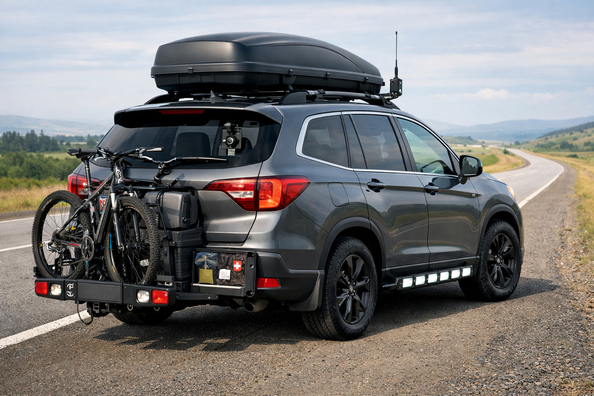
This upgrade plan is for a driver who covers long highway distances and wants not “tuning for the sake of tuning,” but a minimum set of things that genuinely reduce fatigue, add predictability at speed, and don’t let you down in rain or at night. If your route is mostly asphalt, the biggest gains come not from decorative accessories, but from restoring the basics: tires that match your use case, correct pressure, visibility, and small self-help essentials for the road.
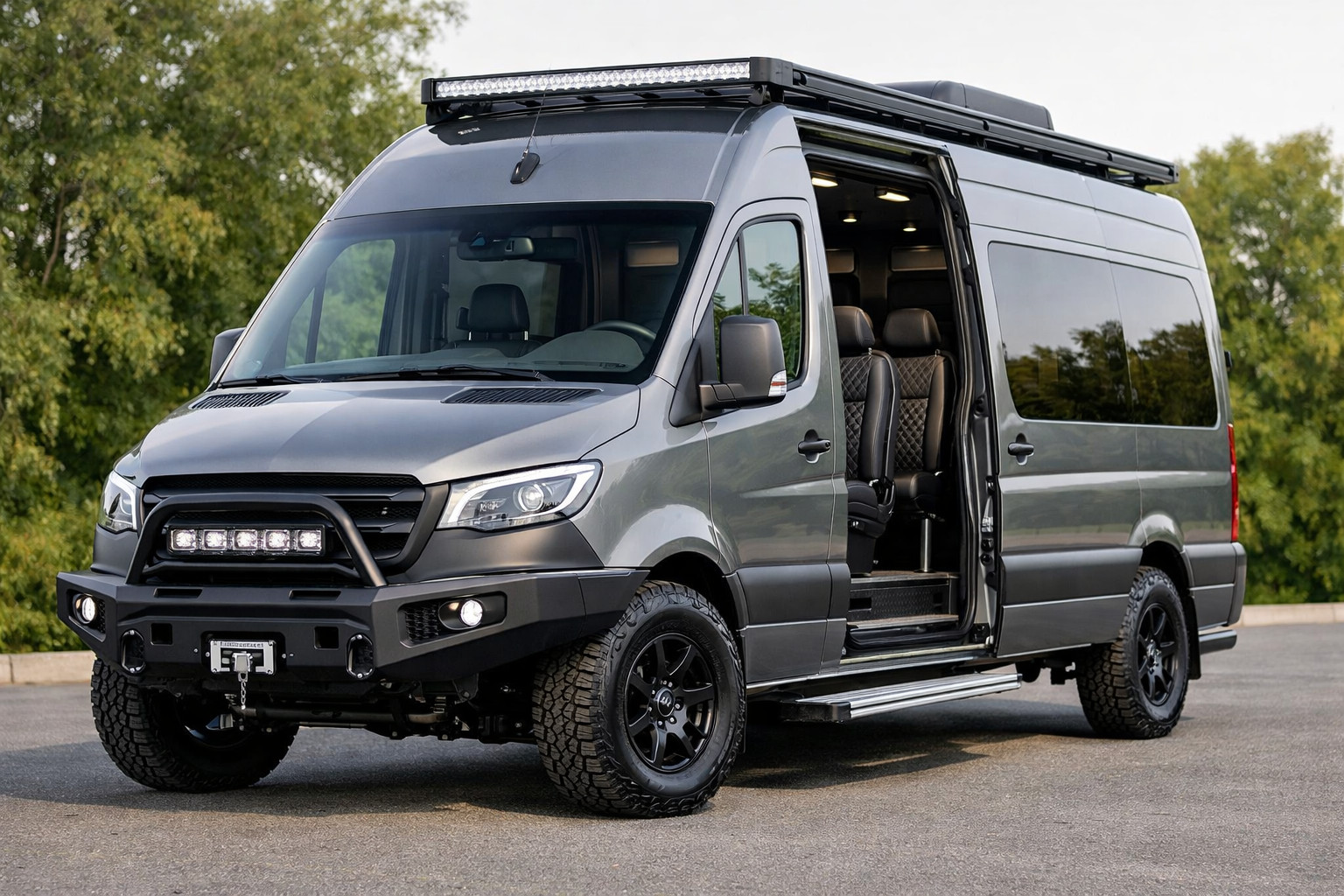
The logic is simple: first, what affects contact with the road and visibility; then, what helps you avoid getting stuck due to a minor breakdown; and only after that—comfort-focused or debatable add-ons. For a sedan, wagon, or hatchback the set is one thing; for a heavier crossover or a pickup with frequent gravel/dirt use it’s different, because tires and loads work differently there.
On long highway trips, an upgrade should solve five specific tasks: keep the car stable at speed, not worsen braking on wet surfaces, provide decent visibility in rain and at night, reduce driver fatigue, and allow you to handle typical small issues on the route on your own.
So the right benchmark is not “what looks more expensive,” but “what noticeably improves the drive after 300–700 km in a day.” If after setting off the car is noisy, feels floaty, pulls to one side, cleans the windshield poorly, or the lights are dim, the issue isn’t a lack of accessories—it’s that the basics haven’t been put in order.
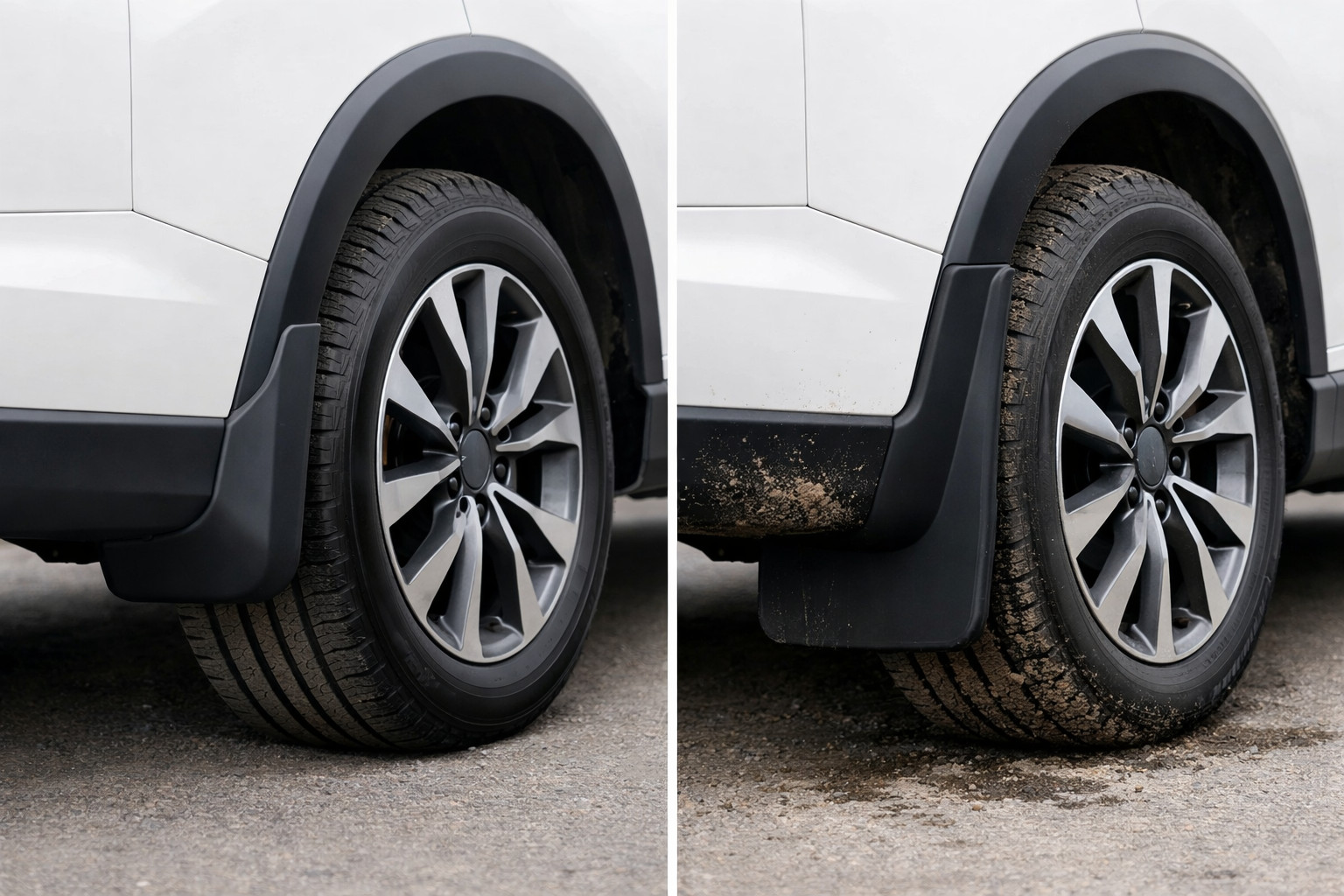
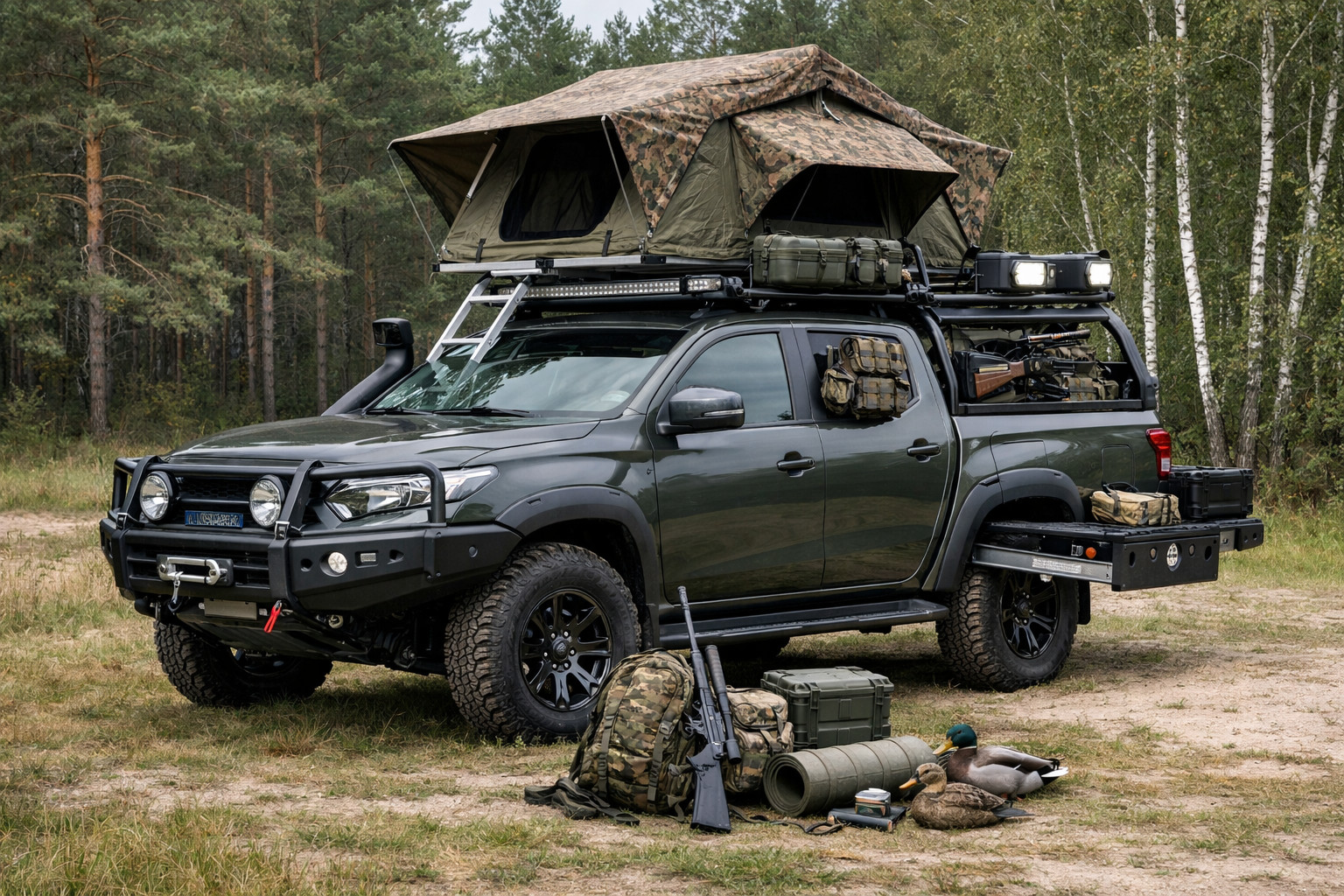
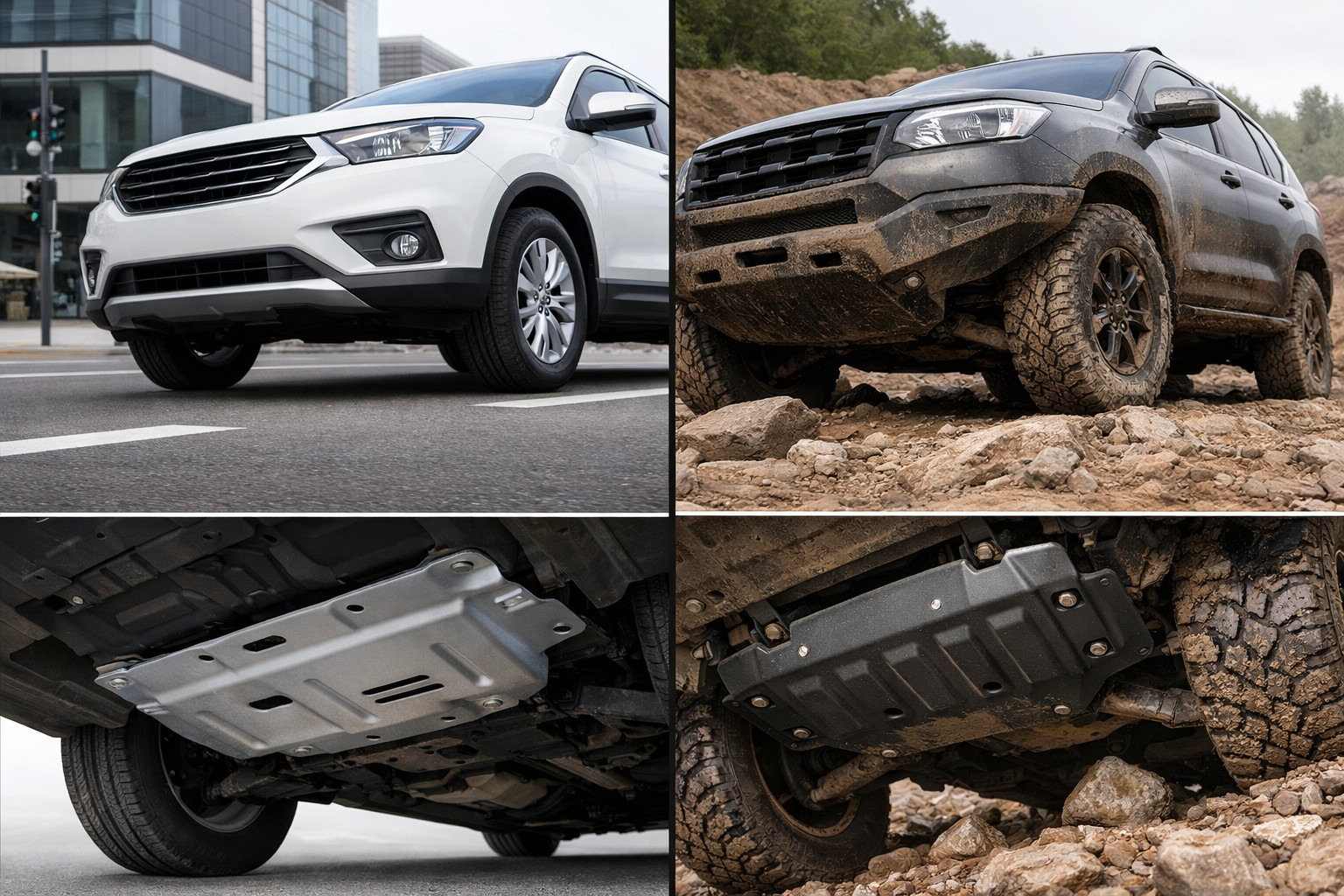
Top priority: tires that match your real route. If 90–95% of your driving is on asphalt, for a passenger car it makes sense to run road tires, and for a crossover—highway tires, not aggressive off-road ones. The latter make sense where you regularly have dirt, rocks, mud, or frequent snow, but on the highway they often add noise and harshness without any tangible benefit.
Second step: cold pressure, wheel balancing, and—if needed—alignment and tire rotation. The factory tire-pressure monitoring system is useful, but it doesn’t replace a gauge: it often alerts only when a tire is already noticeably underinflated. Third step: wipers, washer fluid, and headlight condition. This combo delivers one of the most noticeable effects in rain, on night highways, and in the shoulder seasons.
| Upgrade | Why it’s needed | Who really benefits |
|---|---|---|
| Tires for your route | Improve grip, quietness, steering response, and behavior on wet highways | Anyone who regularly drives long distances; especially those currently running aggressive tires that don’t match their use case |
| Pressure check, balancing, alignment | Reduces vibrations, uneven wear, and “float” at speed | Those whose car pulls to one side, shakes the steering wheel, or wears tires unevenly |
| New wipers and proper washer fluid | Restore visibility in rain, remove streaks and missed spots | Everyone, without exception, if the glass doesn’t clean on the first pass |
| Headlight cleaning or restoration | Brings back night lighting without questionable modifications | Those with cloudy headlights or who often drive in the dark |
| Emergency minimum in the trunk | Lets you avoid stopping the trip over small stuff: inflation, jump-starting, basic assistance | Those who drive outside the city, at night, or with family |
| Phone mount and a prepared route | Less fuss while driving, less temptation to handle the phone | Those who use smartphone navigation |
DD Tuning expert comment: the most common mistake is buying something that looks “off-road,” even though the car almost never leaves asphalt. The second typical story is relying only on the factory tire-pressure monitoring system and not checking the wheels before departure. Another miss is cheap LED swaps in halogen headlights: the driver expects more light but gets a worse beam pattern and extra problems.
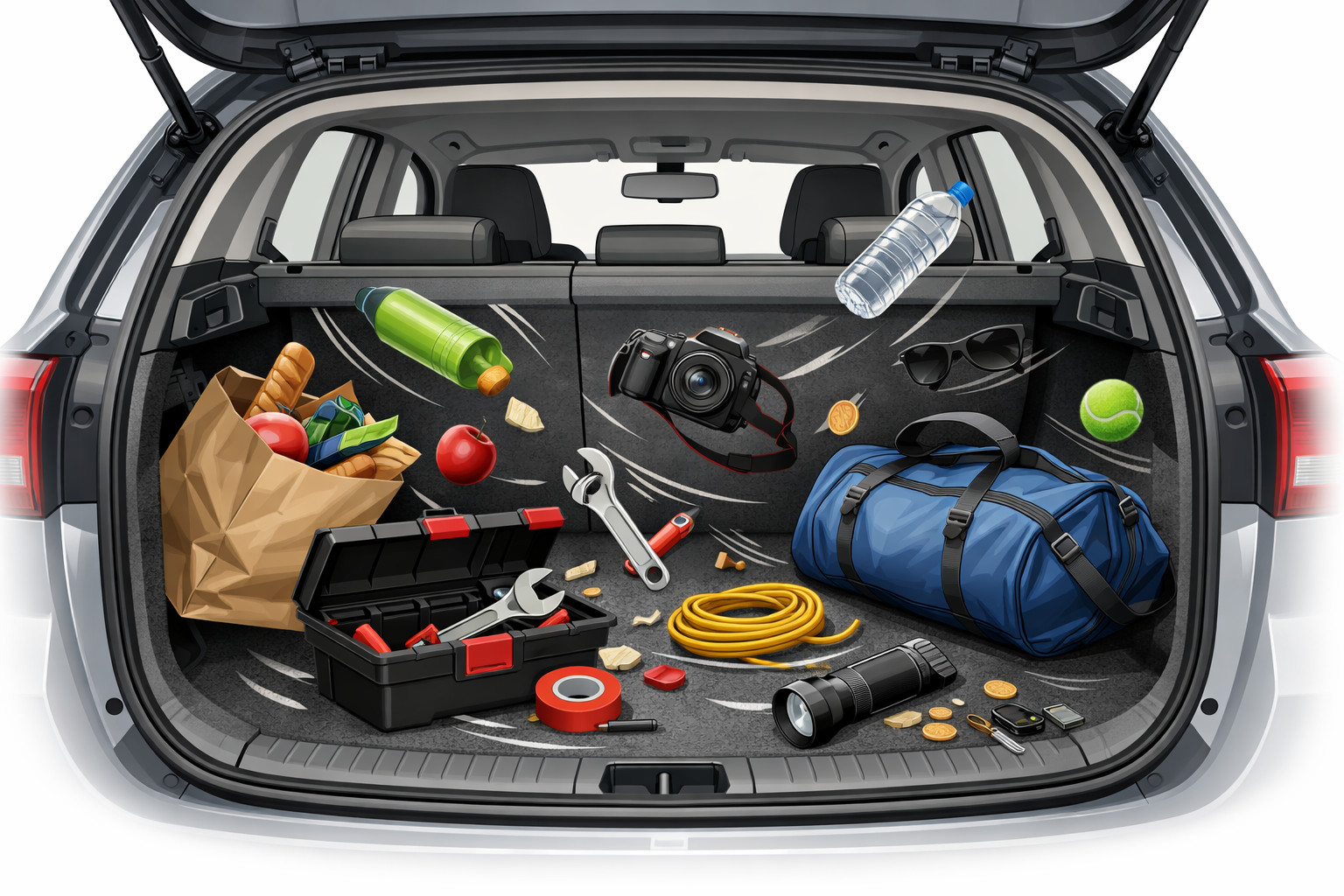
Once the basics are sorted, the second stage logically adds things that don’t make the car safer by themselves, but greatly simplify life on a long route. That’s a compact compressor, a jump starter, a pressure gauge, a basic tire repair kit, a flashlight, and a proper phone charger.
This also includes a simple phone holder if navigation runs from a smartphone, and minimal stop planning. The biggest weakness of a long trip isn’t a lack of accessories—it’s fatigue. So sometimes it’s more useful to plan regular breaks every 1–2 hours than to buy yet another gadget.
In this area there are things that can genuinely help, but not for everyone. If after a few hours your lower back starts to tire, a simpler and smarter upgrade is moderate lumbar support or correcting your seating position—not full seat covers. If you sit too low and read the road worse, you need to fix the seating position, not look for a “magic” accessory.
Everything else—trim pieces, decorative lighting, an aggressive tread pattern where it isn’t needed—is more about looks. For long highway driving, such upgrades make sense only if they don’t interfere with the essentials: visibility, ergonomics, safety-system operation, and proper lighting.
Most often, people waste money on aggressive tires for a car that spends almost all its time on asphalt. The result is more noise, a harsher ride, and higher costs—without getting a highway-specific benefit. The second mistake is overpaying for expensive small items while old wipers, cloudy headlights, or bad alignment go ignored.
Likewise, it’s a bad idea to do cheap LED swaps into stock halogen headlights, use seat covers that may interfere with side airbags, or buy an expensive dash cam that’s always hanging in plain sight. That’s either questionable value or a direct additional risk. On the highway, a boring but properly sorted baseline works better than flashy upgrades with no clear purpose.
| Criterion | Install first | Can be postponed | Not mandatory |
|---|---|---|---|
| What it includes | Tires for your route, correct pressure, balancing or alignment, wipers, washer fluid, clear headlights | Compressor, jump starter, phone mount, lumbar support, tire repair kit | Expensive dash cam, decorative lighting, seat covers, aggressive tires without need |
| When you already need it | Before your first long trip, or if there are vibrations, noise, poor visibility | When long trips become regular and you want less dependence on service shops | Only if there’s a specific task: insurance disputes, difficult parking, frequent dirt roads or snow |
| What it actually delivers | Stability, predictability, better visibility, and less fatigue | Peace of mind on the road and the ability to handle a small issue yourself | Either a narrow benefit or just a look change with no noticeable highway effect |
More expensive solutions are justified where a cheap option either becomes tiring quickly or lets you down on regular trips. For basic visibility, it’s enough to replace wipers on time rather than chase a “premium effect” in small details. A different story is the compressor: if you drive far and often, a weak model starts to annoy you after just a few uses, so it’s worth understanding how to choose a compressor. And a more expensive dash cam makes sense not by itself, but when better night footage or a dual-camera setup matters; the basic criteria are in the article on choosing a dash cam.
Another case where paying extra can be sensible is tires for a car that does a lot of highway driving, is often loaded, or will stay in the same hands for a long time. In that case, lifespan, quietness, and predictability can pay back the higher price. But for wipers, washer fluid, or a road kit, what matters far more is not delaying replacement than buying the most expensive option.
From a customer’s experience: a typical request before a long trip looks like this—a person wants “something to buy for the highway,” but can’t explain what exactly annoys them about the car. After proper selection it turns out the biggest impact comes not from expensive gadgets, but from the right asphalt-oriented tires, new wipers, restored lighting, and a simple compressor in the trunk. After that, the car feels calmer in the rain, quieter at speed, and stops exhausting you on a long haul.
For long highway trips, the minimum that truly works looks like this: tires for your route, proper pressure and alignment, functioning wipers, clear headlights, an emergency minimum, and prepared navigation. This is the order where the first gives an immediate, tangible result, the second adds autonomy, and the third can be chosen to match habits and budget. The material is based on real fitting experience, practical know-how, and real use cases—not on a list of trendy accessories.
| ✔ | Tires matched to mostly asphalt routes really reduce noise, improve steering response, and make the car behave better on wet roads. For a long trip, this delivers a noticeably calmer and more predictable drive. |
| ✔ | Checking cold tire pressure, balancing, and, if needed, wheel alignment help eliminate vibrations, uneven wear, and wandering at speed. It’s a practical step if the car already pulls to one side or shakes the steering wheel. |
| ✔ | New wipers, proper washer fluid, and clean or restored headlights noticeably improve visibility in rain, at night, and in the off-season. This combination has the biggest impact on safety in typical road conditions. |
| ✔ | An emergency minimum in the trunk — a pressure gauge, compressor, booster, flashlight, repair kit, and charger — lets you avoid having a trip ruined by a minor issue. This is especially useful for night or intercity routes. |
| ✔ | Planning stops and setting up navigation reduce fatigue and hassle while driving. For a long highway trip, this can sometimes bring more benefit than extra accessories. |
| ✘ | Aggressive off-road tires on a car that drives on asphalt almost all the time often add noise, harshness, and expenses without any noticeable benefit on the road. In other words, the overpayment may not deliver the expected result. |
| ✘ | Cheap LED replacement bulbs in factory halogen headlights can worsen the light beam and create new problems instead of improving visibility. This is one of the riskiest “upgrades” in the article. |
| ✘ | Some useful items are not a priority and are easy to postpone — for example, a compressor, booster, or phone holder. If you buy them instead of basic maintenance, the effect of the upgrade will be weak. |
| ✘ | Comfort or cosmetic upgrades by themselves do not make a car safer on a long highway trip. If they interfere with visibility, seating position, or airbag operation, the benefit is less than the risk. |
Shipping to EU
Wholesale and retail
Own warehouse
Опис продукту
Подарунки не надаються при оформленні покупки у кредит під 0,01% або при покупці частинами.