31.08.2026
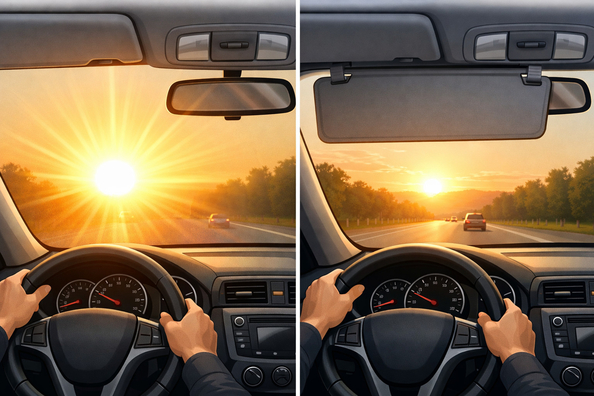

In the morning and in the evening, the sun dazzles not because it’s simply bright, but because it sits low and shines almost along your line of sight. At that moment, contrast drops sharply: lane markings, pedestrians, and the edge of the lane are harder to see, and your reaction to a maneuver becomes slower. The factory sun visor doesn’t always help: it works when you can cut off the beam with its edge, but becomes almost useless when the sun is already hanging right above the horizon.
People often try to solve the problem with a single accessory, even though the cause may be a dirty windshield, an awkward road angle, a gap near the A-pillar, the driver’s seating position, or even changes in vision. So here it’s important not just to “install something,” but first to tell one cause from another.
The strongest glare occurs when the sun is low over the horizon and the road runs directly into—or almost into—the rays. This is especially noticeable on east–west routes, on climbs, and on open stretches without shade. In autumn and winter, the effect often совпides with commuting to and from work, so the issue feels “daily.”
The danger isn’t just discomfort. The driver starts squinting, briefly loses a clear view, notices obstacles later, and judges distance worse. Estimates link sun glare to thousands of crashes every year, and the time margin for a safe maneuver in these conditions is reduced.
DD Tuning expert comment: The most common mistake is buying a larger visor without first checking glass cleanliness and seat height. The second typical story is the A-pillar gap: a person installs an extender, but it blocks the wrong sector and only gets in the way of visibility. What works isn’t the biggest accessory, but the one that blocks the specific beam without sacrificing road visibility.
| Symptom | Likely cause | What to do |
|---|---|---|
| The sun dazzles only on the same route in the morning or evening | The road direction aligns with the low sun | Reduce speed, increase following distance, and if possible change departure time or route |
| It got better after washing the glass | Film, streaks, or dirt on the windshield | Clean the glass regularly on both sides; don’t leave greasy smears |
| The beam hits through the edge near the A-pillar | Short factory visor or a gap in the A-pillar area | Consider an extender or another visor format that covers exactly that zone |
| The visor helps only partly and blocks half the road | The sun is too low or the visor is adjusted poorly | Don’t drop it too low; add sunglasses; adjust speed and following distance |
| It dazzles badly even in a clean car and with glasses | Increased light sensitivity or changes in vision | Check your eyesight, especially if there’s blur, halos, or worse night vision |
| On climbs and hills the effect is sharply worse | The terrain keeps the sun in the field of view longer | Slow down earlier and don’t rely only on the visor |
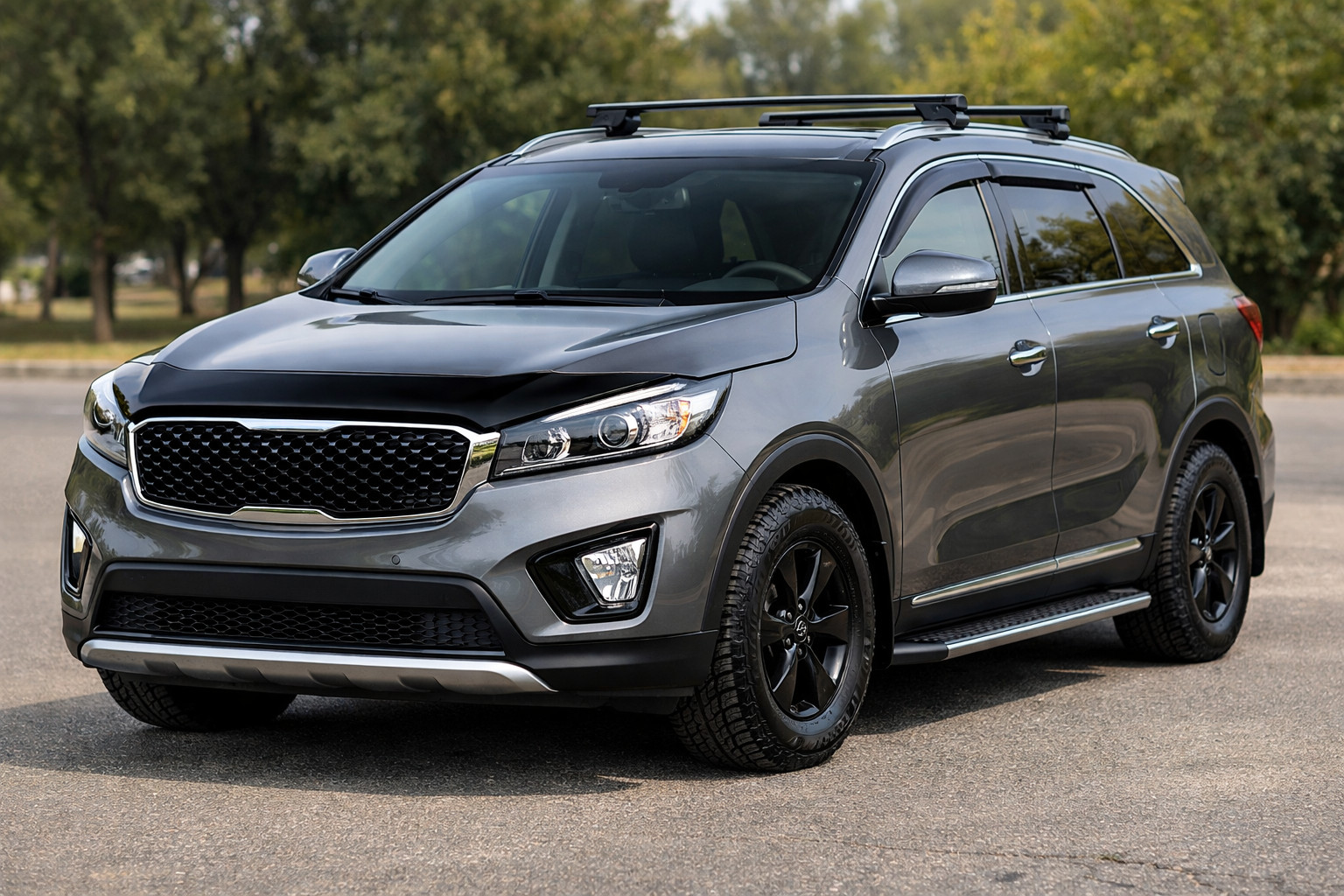
An accessory is justified when the problem repeats in the exact same scenario—for example, the beam consistently enters the upper part of the glass or hits through a gap near the A-pillar. In that case, you can look at car sun visors that cover specifically the upper sector and don’t force you to change your seating position.
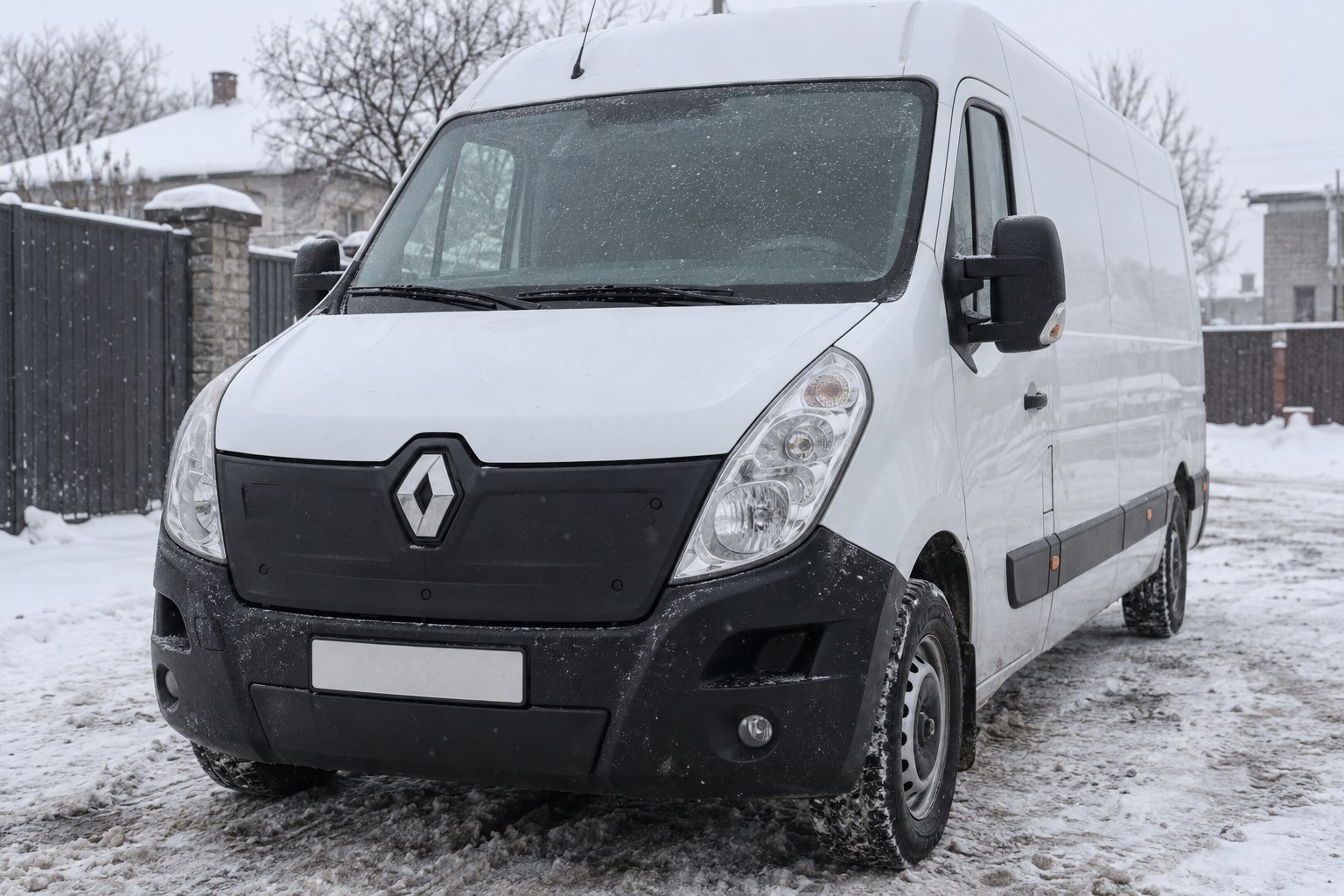
For tall bodies, vans, and vehicles with a large windshield area, a windshield deflector can sometimes be appropriate. If you’re choosing between two formats, it’s worth first checking the comparison of a visor and a deflector and matching it to your route and seating height.
Replacing the factory part also makes sense if the visor sags, won’t hold position, or is simply too short by design. But if the sun is already almost on the horizon and shines straight into your eyes, even a good accessory doesn’t remove the need to slow down and keep extra following distance.
| Solution | When it works | When it’s not worth spending money |
|---|---|---|
| Full windshield cleaning | There are streaks, film, glare from oncoming lights and the sun | If the glass is already clean and the cause is clearly route geometry or vision |
| Adjusting the seat and factory visor | The beam passes above or below the visor edge | If even in the best position the sun remains directly in the field of view |
| Polarized sunglasses | Lots of reflections from glass, the road, the hood, wet pavement | If the light is painful by itself and the problem looks like a vision change |
| Additional visor or extender | There’s a clear gap near the A-pillar or you’re missing a few centimeters of coverage | If you need a very large screen that will inevitably block the road |
| Deflector or external visor | The vehicle is tall, the route is repeatable, and the beam enters the upper windshield zone | If glare comes from the side rather than above, or the issue happens rarely |
| Heavy windshield tinting | There are few practical safe scenarios | Not worth it if it worsens visibility and goes beyond normal light transmission limits |
| Eye exam and new lenses | There are halos, blur, photophobia, a sharp decline in low-light conditions | Don’t delay if a potential eye issue is already obvious |
From a customer’s experience: A driver commuted daily on a road where the morning sun hit exactly through the upper-left corner of the windshield. After proper interior glass cleaning, the problem became smaller, but the gap by the A-pillar remained, so he chose a visor for the upper zone. On his route it worked, but on days when the sun was extremely low, he still reduced speed and didn’t rely only on the accessory.
Morning and evening sun glare is a combination of road geometry, sun height, windshield condition, driver seating position, and sometimes vision. A visor helps when the beam can be blocked by its edge without losing visibility; when the sun is almost on the horizon, the main solutions become clean glass, glasses, lower speed, longer distance, and sometimes changing the route.
So spending money makes sense only after a simple check: where exactly the beam enters, whether there’s an A-pillar gap, whether the glass is clean, and whether your vision has changed. This material is based on real selection experience, practice, and real usage scenarios—not on a universal promise that one accessory will solve everything.
Shipping to EU
Wholesale and retail
Own warehouse
Опис продукту
Подарунки не надаються при оформленні покупки у кредит під 0,01% або при покупці частинами.