29.09.2026
183
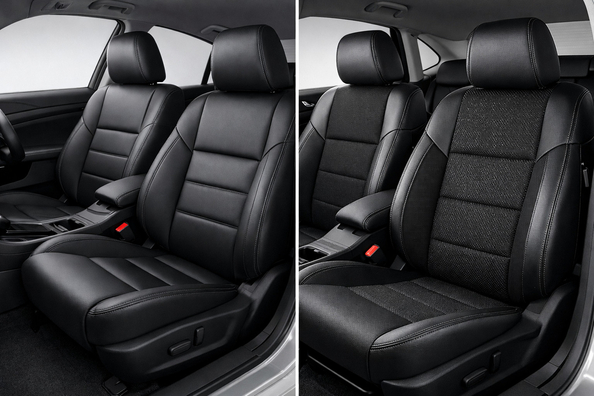
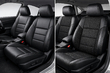
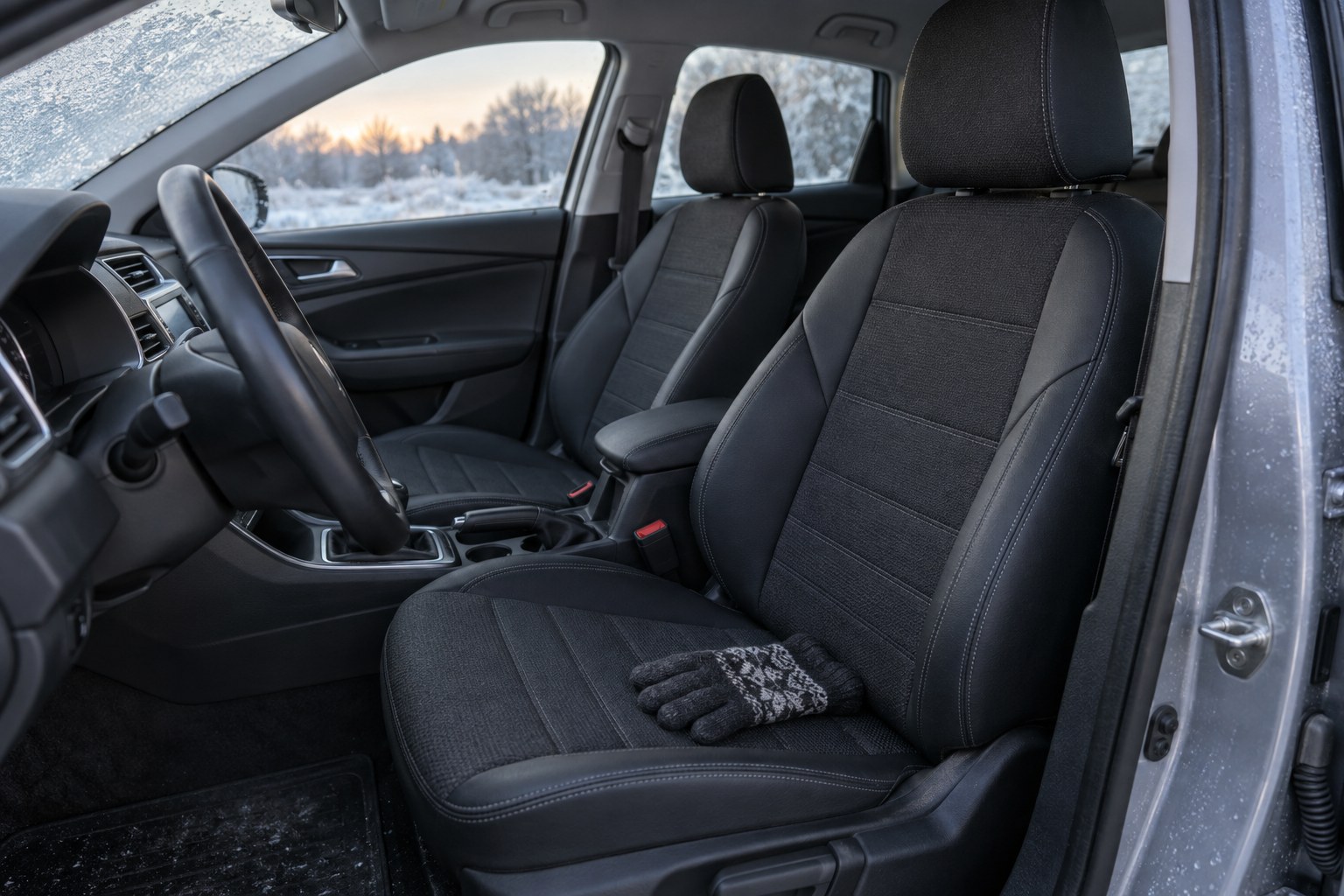
If you need one short rule of thumb, then for most everyday driving the more advantageous compromise is combined covers: eco-leather + fabric. Eco-leather sides are easier to wipe clean from dirt, while a fabric center breathes better in the heat and feels calmer on long distances.
Full eco-leather makes sense where the interior gets dirty often: kids, pets, a work vehicle, taxi, countryside trips. But the material alone doesn’t solve everything: a tight fit, compatibility with side airbags, perforation, a non-slip backing, and proper fastening affect the result no less than the name of the surface.
Here the choice isn’t between a “good” and a “bad” material, but between two different priorities. Full eco-leather wins in cleaning: dust, water, hair, marks from kids’ shoes or work clothes come off faster. The combined option wins in the body-contact zone: fabric or a mesh insert lets air through better and builds up less heat.
So the main question is simple: is it more important for you to quickly wipe the cabin after each trip, or to sit comfortably in the car every day—especially in summer and on the highway. If it’s the second, a combined set is usually more practical in the long run. If it’s the first, full eco-leather is often the more logical choice.
| Option | Strengths | Weaknesses | Who it’s for |
|---|---|---|---|
| Full eco-leather | Fast cleaning, better protection from moisture, dirt and hair, neat look, suitable for intensive use | Can feel hotter in summer and colder in winter; without perforation it’s less comfortable on long trips; sensitive to weak fastening | Families with kids, pet owners, work and commercial vehicles, those who clean the interior often |
| Eco-leather + fabric | Better airflow in the back and seat area, less sweaty, practical side bolsters, often more comfortable for daily driving and highway use | The fabric center is harder to clean, absorbs stains and odors more; the effect depends on fabric and foam quality | Those who drive a lot every day, live in a warm climate, take long trips, or are sensitive to seat overheating |
DD Tuning expert comment: most often people get it wrong not with the material, but with the logic of the choice. They buy full eco-leather for a hot car without perforation, or they buy a universal set for a complex seat and then complain about shifting. First you need to check the pattern, compatibility with side airbags, and the fastening method—and only then look at the texture.
This is the choice for those who care less about a soft feel and more about quick maintenance. Stains, dust, hair, and moisture are easier to remove from it, so in city use with kids, hauling items, or pets it often pays off better. Eco-leather also makes sense for cars that work every day and can’t afford to look dirty after just a few trips.
The weak spot is comfort in temperature extremes. If there’s no perforation or breathable zones, the seat feels hotter in summer and colder in winter. Another nuance is fit: with weak fastening, an eco-leather surface more often creates a sense of sliding, wrinkles, and extra noise—so cutting corners on tailoring here is risky.
In a well-thought-out design, the sides are made of eco-leather, and the central part is fabric, mesh, or a perforated insert. This is a smart format for daily driving: where you contact the seat the most, you get better airflow, while the edges and side bolsters are still easy to clean.
The downside is that the fabric center needs more careful care. If drinks are often spilled in the car, kids ride after workouts, or pets travel, the combined option will be more comfortable but not the easiest to clean. Also, don’t overestimate the mere fact of a fabric insert: without proper foam, a non-slip backing, and correct tension, even a combo won’t deliver the feel you expect.
For short city trips, frequent getting in and out, kids, and pets, full eco-leather is more often the better choice. Here it’s more important to tidy the cabin in a minute than to gain a bit of comfort in the back area. If the car works as a tool rather than a place for long trips, it’s a rational choice.
For a daily commute, highway driving, hot climates, and long trips, the combined option usually offers a better balance. This is especially noticeable when someone spends not 15 minutes behind the wheel, but an hour or more.
For cars with heated or ventilated seats, what matters most is not just the material, but the presence of perforation or a breathable center. And for complex seats with armrests, split backrests, and atypical geometry, it’s more important to choose a precise model-specific pattern than to argue about what’s better—eco-leather or fabric.
| Scenario | What to choose | Why |
|---|---|---|
| Kids, pets, frequent interior dirt | Full eco-leather | Easier daily cleaning, fewer issues with moisture, hair, and clothing marks |
| Daily driving in the city and on the highway | Eco-leather + fabric | More comfortable in body-contact areas, less prone to overheating on longer routes |
| Hot climate or a car without tint | Eco-leather + fabric | A fabric or perforated center handles sun better and feels less sweaty |
| Work or commercial vehicle | Full eco-leather | Maintenance matters more than softness; the interior is restored to a clean look faster |
| Seats with heating or ventilation | Either option, but only with perforation or a breathable center | Here structural compatibility is critical, not the material name |
| Bad roads, active entry/exit, complex seat shapes | Either option, but with better patterning and fastening | If the cover shifts, any material loses |
A more expensive set is justified when you’re paying not for a loud material name, but for specific things: an exact pattern for your seat, correct seams for side airbags, perforation, proper foam, a non-slip base, and adequate fastening. If the car has a complex interior, heating or ventilation, and you drive a lot, the extra cost often pays back in comfort and no need for rework.
If the priority is quick cleaning, it’s worth looking at eco-leather seat covers. If you need a balance between care and everyday comfort, it’s more logical to consider eco-leather and fabric. And if you want to quickly double-check the logic before buying, it’s useful to review the material comparison.
From a customer’s experience: often a person comes in for full eco-leather because they want an interior that’s easy to wipe down, but along the way it turns out the car drives the highway daily and sits in the sun for a long time in summer. In that scenario, a combined set with eco-leather sides and a fabric center usually proves more on point: it’s still not hard to clean, but it’s noticeably more comfortable to sit on. In the end, the greatest satisfaction comes not from the material itself, but from the fact that the cover doesn’t shift and doesn’t interfere with using the seat.
For most drivers, the smartest choice is combined eco-leather + fabric covers: they balance comfort and practicality better. Full eco-leather wins where the interior regularly gets dirty and quick cleaning matters. But the final decision should be made not only by material, but by patterning, fastening, perforation, and compatibility with side airbags.
This conclusion is based not on abstract promises, but on real selection experience, hands-on practice, and real use scenarios: what gets cleaned more often, what stays comfortable longer, and where people most often make mistakes when buying.
| ✔ | Combined eco-leather + fabric covers are better suited for everyday driving: the fabric center traps less heat and is more comfortable on long trips. This is especially noticeable in hot weather and on the highway. |
| ✔ | Pure eco-leather is very practical when the cabin gets dirty often. It cleans faster from dust, moisture, pet hair, and clothing marks. |
| ✔ | For families with children, pet owners, and work vehicles, eco-leather looks more sensible. Here, it is more important to quickly tidy up the cabin than to have the softest possible contact layer. |
| ✔ | Combined covers offer a better balance between care and comfort. The eco-leather side panels are easy to wipe clean, while the fabric insert in the body-contact area reduces seat overheating. |
| ✔ | The article emphasizes that the result depends heavily on the cut, fastening, and compatibility with airbags. This means that with the right choice, both options can work well if the cover fits the seat precisely. |
| ✘ | Pure eco-leather may be less comfortable in extreme temperatures. It heats up more in the sun and feels colder in winter if there is no perforation or breathable zones. |
| ✘ | The combined version is harder to clean in the fabric area. It absorbs stains and odors more quickly, so it is not as convenient if drinks are often spilled in the cabin or dirty clothes are carried. |
| ✘ | Eco-leather on weak mounting more often causes issues with slipping, wrinkles, and noise. In other words, the material itself does not help if the cover is poorly secured. |
| ✘ | The fabric center in combined covers depends on the quality of the fabric itself and the foam. If these elements are weak, the expected comfort may not be achieved. |
Shipping to EU
Wholesale and retail
Own warehouse
Опис продукту
Подарунки не надаються при оформленні покупки у кредит під 0,01% або при покупці частинами.