05.09.2026
198
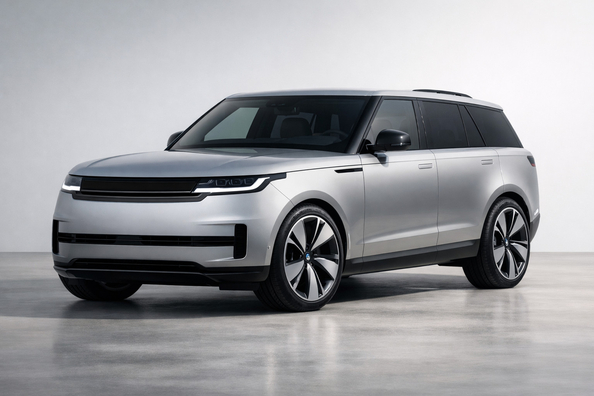
Range Rover Electric 2026-2027 matters not because it’s just another large electric crossover, but because it’s the first fully electric Range Rover. As of August 2026, it’s still a pre-production vehicle: the public debut has already happened, but the final figures for range, price, towing, and some technical specs for the production version have not yet been finalized.
Essentially, the model is aimed at those who want the silence of an EV without giving up a high seating position, a large body, and real capability beyond asphalt. It won’t suit those who already need precise ownership numbers, proven reliability statistics, and a clear market price right now.
In the premium electric SUV segment, Range Rover Electric is trying to take not a tech-demo niche, but the role of a traditional flagship in a new format. Its main bet is not record efficiency, but a blend of quietness, ride smoothness, low-speed torque, and preserving the off-road character people buy this lineup for.
The closest rival in concept is the Mercedes G 580 with electric technology. But Range Rover plays it differently: less showy toughness, more emphasis on isolation from the road, long-distance comfort, and refined all-wheel-drive behavior on slippery or uneven surfaces.
This isn’t a separate new Range Rover with a different body; it’s an electric version of the current full-size model on the MLA-Flex platform. The logic is simple: the familiar full-size Range Rover, but without an internal combustion engine.
The launch timeline is already fairly clear. In late 2023 the waiting list opened, in 2024-2025 cold-weather and durability testing took place, in July 2026 there was a public reveal at Goodwood, the full disclosure was promised later that year, and order books are expected to open in late 2026. 2027 should be seen as the first full year of market presence, but exact delivery schedules still need to be checked separately.
Nothing exotic in layout, but ambitious in execution: two electric motors, one per axle, and permanent all-wheel drive. For an electric model, engine displacement doesn’t apply, so there’s nothing meaningful to list here. There’s no conventional gearbox either, and the manufacturer hasn’t yet disclosed details of the production reduction-gear configuration.
Power figures require caution. Prototype reviews mention roughly 542-550 hp and 850 N·m, but officially the only confirmation so far is that performance should be on par with the flagship V8. The 0-100 km/h benchmark is around 4.7 s, though this is also not yet a final production figure.
Visually, the electric Range Rover is almost indistinguishable from the current body. That’s good news for those who want the classic silhouette without attempts to make an EV look like a futuristic capsule. There will be short- and long-wheelbase versions, and the body remains very large, so in the city it’s not just cameras that matter but also being used to the size.
On the chassis side, the big question is whether it will retain a sense of lightness despite a mass of around 2.8 t. Early impressions suggest yes: electric torque masks the weight well at low speeds, and precise torque distribution helps on slippery surfaces and off-road. At the same time, some early reviews mention slightly lower ground clearance than ICE versions.
| Parameter | What is known as of 2026 |
|---|---|
| Model status | Pre-production EV, full disclosure later in 2026 |
| Platform | MLA-Flex |
| Powertrain layout | Two electric motors, permanent all-wheel drive |
| Engine displacement | Not applicable for an EV |
| Power | Prototype materials cite 542-550 hp; production value not yet confirmed |
| Torque | Approximately 850 N·m in prototype estimates |
| Battery | 117 kWh, 800-volt architecture |
| Fast charging | Up to 350 kW DC |
| Range | No official cycle yet; early estimates around 451-483 km |
| Length | SWB 5052 mm, LWB 5252 mm |
| Wheelbase | SWB 2997 mm, LWB 3197 mm |
| Width with mirrors | 2209 mm |
| Height | 1870 mm |
| Ground clearance | 219 mm standard, up to 295 mm in off-road height |
| Turning radius | 10.95 m for SWB and 11.54 m for LWB |
| Wading depth | Up to 900 mm |
| Trunk | No separate official BEV data yet; the current body offers about 818-857 L behind the second row depending on version |
| Towing | Final figure not announced; early estimates mention around 2500 kg |
The strongest first impression is the silence. For a large premium EV, that’s not a minor detail but a key argument: when the body is big, the mass is big, and the seating position is high, sound insulation and ride smoothness determine whether the vehicle feels truly premium. Early feedback suggests it’s very good here.
When it comes to safety and electronics, it’s important not to speculate. The full list of production systems hasn’t been revealed yet, but very fast traction management has already been confirmed, along with one-pedal operation both on-road and off-road, and the retention of hill descent control. So the emphasis isn’t only on highway assistants, but also on vehicle control in demanding conditions.
In daily driving, the model looks strong where an EV genuinely delivers: city quietness, smooth launches, no gear changes, and powerful regenerative braking. The 800-volt architecture and up to 350 kW charging also sound convincing, but with no official 0-80% charging time yet, real-world route practicality has to be judged with a margin.
There are also limiting factors. A mass close to three tons is unlikely to make it an efficiency benchmark, and a width of over 2.2 m with mirrors means tight parking garages and older courtyards will remain a challenge. In winter, the thermal management system will help reduce heating losses, but there simply aren’t any real owner reports on energy consumption yet.
From a future owner’s perspective, Range Rover Electric has a very strong core idea: take the familiar large Range Rover and remove noise, vibrations, and delays associated with a conventional powertrain. But precisely because the model is still at an early stage, it’s worth buying not on emotion, but after production numbers are verified.
| Pros | Cons |
|---|---|
| Very quiet, smooth ride — seemingly the model’s main advantage | Some key data is still not finalized: range, price, towing |
| Genuine off-road capability retained, including up to 900 mm wading depth | High mass will almost certainly hurt efficiency |
| 800-volt architecture has the potential for fast long-distance travel with charging stops | No official 0-80% charging time yet |
| Classic Range Rover body with no odd compromises in seating position or shape | It appears there won’t be a seven-seat version |
| Very precise torque distribution is useful both in the city and on challenging surfaces | A very high starting price is expected |
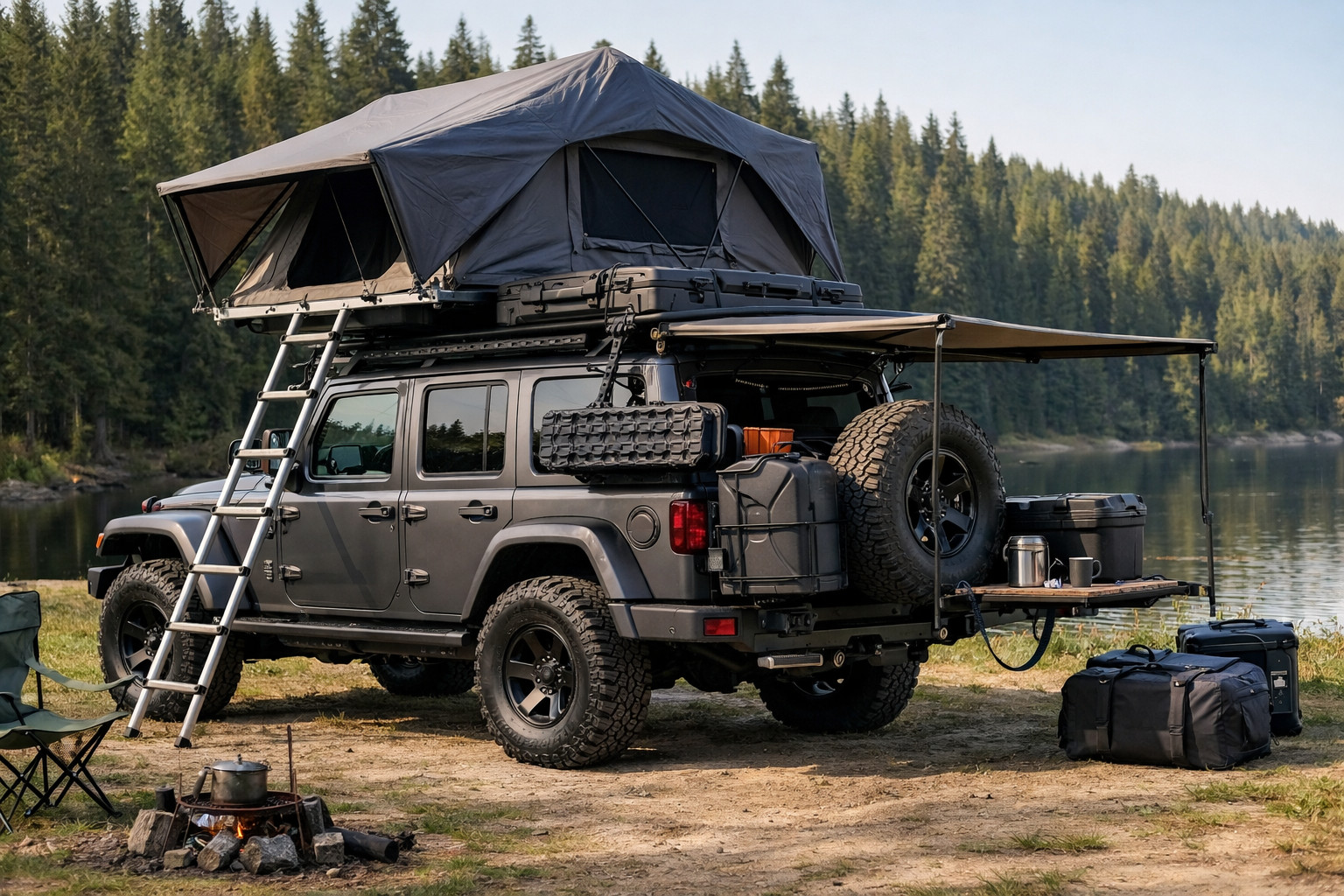
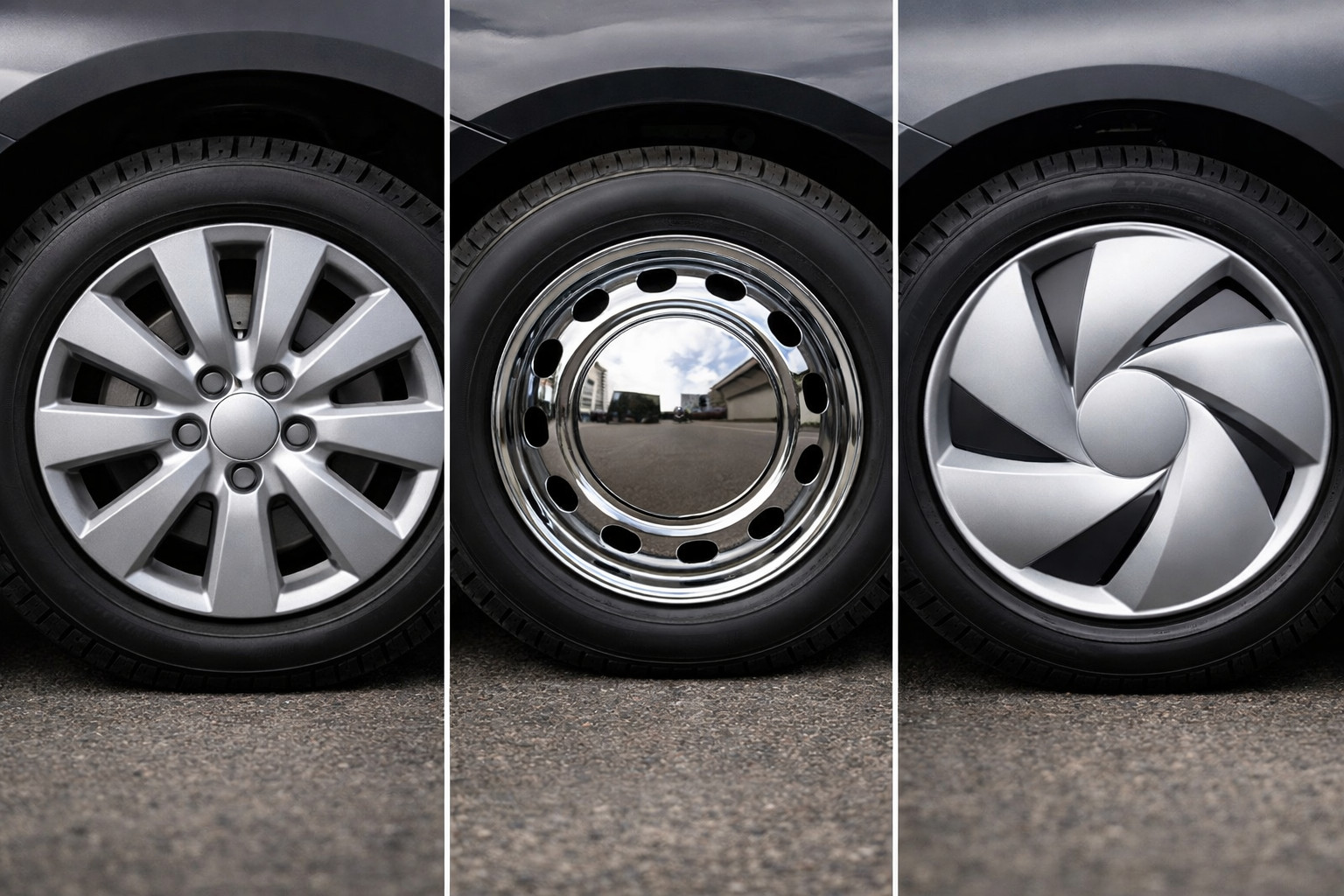
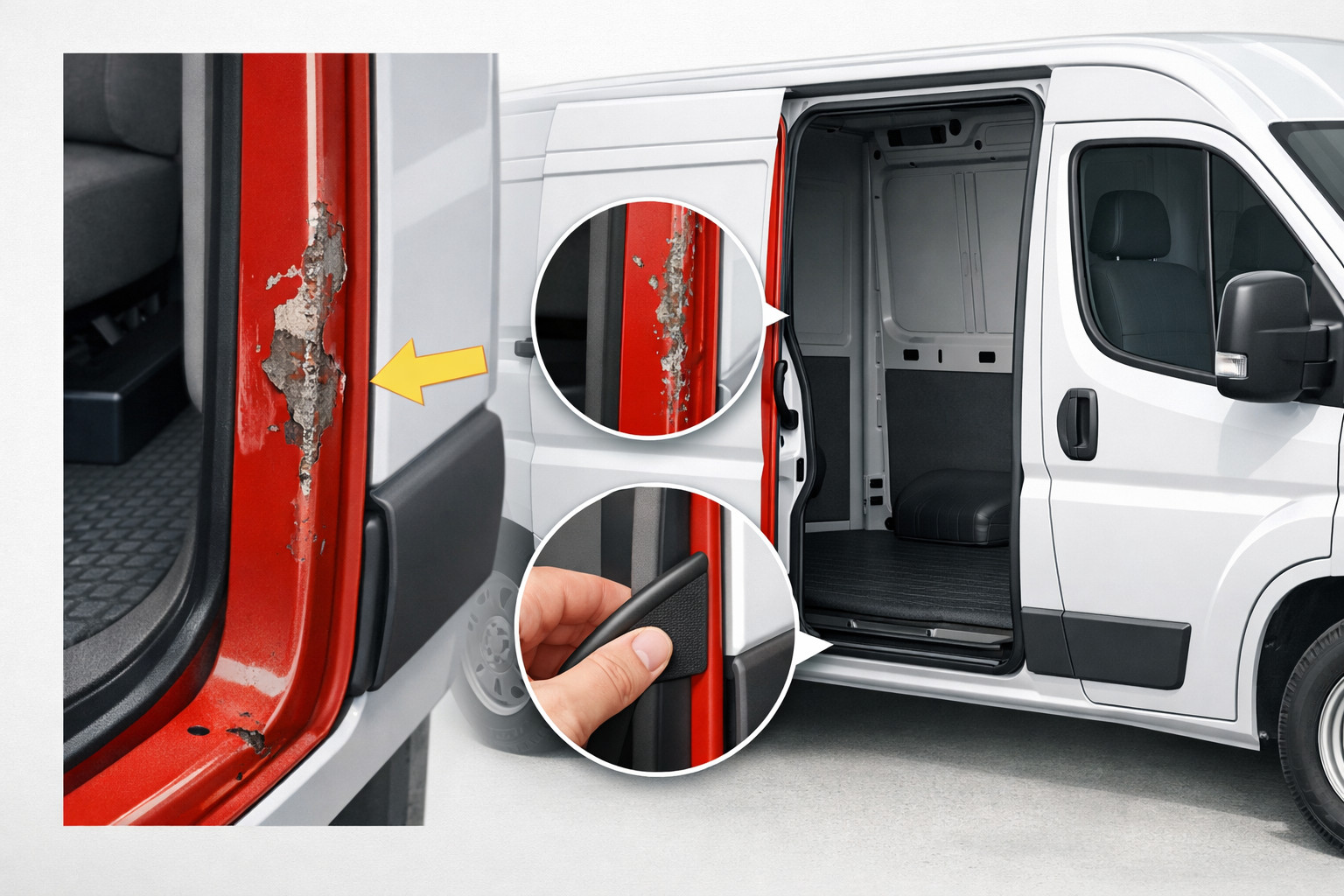
With this model, the point is less about power tuning and more about the right accessories. For a body like this, you truly need items that reduce everyday wear: floor mats, sill protection, trunk solutions, charging cable organization, care for large wheels, and paint protection in high-contact areas.
The key advice is simple: don’t rush into rigid, model-specific parts until the production vehicle has its final contours and mounting points. Accessories tied to the exact geometry of the cabin or trunk are best purchased after real deliveries begin, when templates and compatibility have been verified.
Range Rover Electric looks highly convincing as an idea: a large, quiet EV without giving up seating position, comfort, and off-road functionality — the very reasons this model is valued. But this is exactly the case where a final verdict should be made only after production figures for range, charging, towing, and price are published. This material is based on real selection experience, practical know-how, and real-world use scenarios for similar vehicles, so the main focus here is not advertising, but a sober assessment of what’s already confirmed and what isn’t yet.
| ✔ | Quiet and smooth running looks like the model’s main advantage, especially for a large premium SUV. The article directly notes that sound insulation and smoothness may be what define the feel of a “premium” car. |
| ✔ | Full off-road capability is retained: there is permanent all-wheel drive, an off-road driving mode, and a wading depth of up to 900 mm. This makes the electric version not just a city crossover, but a vehicle for challenging surfaces. |
| ✔ | The 800-volt architecture and charging up to 350 kW provide good potential for fast top-ups on the road. For a large electric SUV, this is an important plus for everyday trips and highway driving. |
| ✔ | The body retains the classic Range Rover silhouette without radical changes in shape. For those who need the familiar format of a large SUV, this is more practical than design experiments. |
| ✔ | Precise torque distribution between the axles should help both in the city and on slippery or uneven surfaces. Combined with the high seating position, this should make the car convenient in various usage scenarios. |
| ✘ | The model is still pre-production, and some key data has not been finalized: there are no final figures for range, price, towing, or the full list of technical specifications. Because of this, it is currently difficult to assess the real cost of ownership. |
| ✘ | A mass of around 2.8 t will almost certainly affect efficiency. This is not a car from which one should expect particularly good economy. |
| ✘ | There is still no official 0-80% charging time, so the practicality of long-distance trips has not yet been confirmed by numbers. For now, one has to rely only on preliminary estimates. |
| ✘ | A width of over 2.2 m with mirrors and a large body will make everyday maneuvering in narrow courtyards and tight parking lots more difficult. For city use, this will be a noticeable downside. |
| ✘ | It seems there will be no seven-seat version, and the starting price is expected to be very high. In other words, the car is aimed at a narrow circle of buyers who are ready to pay for this format without compromises. |
Shipping to EU
Wholesale and retail
Own warehouse
Опис продукту
Подарунки не надаються при оформленні покупки у кредит під 0,01% або при покупці частинами.