14.05.2026
824
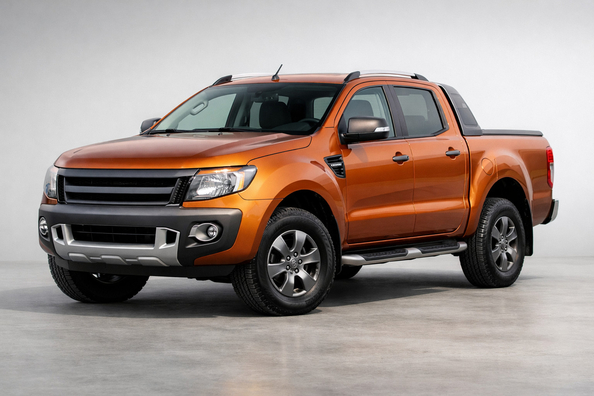
Ford Ranger from 2011 to 2022 is a body-on-frame pickup that, within one model cycle, went from a tough T6 with big diesels to a much more modern next-generation vehicle. Its main arguments are straightforward: pulling power, towing up to 3,500 kg, wading depth up to 800 mm, and a very practical load bed.
Ranger is best for those who need more than just a tall vehicle—it’s a work tool for trailers, gear, dirt roads, and family trips. But it’s not a universal answer for every task: specifications vary greatly by market and body style, and on some vehicles you should pay close attention to noise levels and how the 10-speed automatic transmission behaves.
Ranger stayed in the segment where buyers expect two things from a pickup at once: it must handle hard work and not be purely utilitarian in everyday life. That’s exactly where it’s strong. With a double cab, it’s no longer a “vehicle for two people and tools,” but a full-fledged vehicle for a family, a boat, a quad bike, or a long trip with a trailer.
Who it suits: those who actually haul loads, tow trailers, go fishing, head to the fields, construction sites, or travel with lots of gear. Who it doesn’t: those who spend most of their time in the city, value easy parking, quiet cruising, and want crossover-like running costs and ride softness.
So within the 2011–2022 scope there are effectively two major phases: the long evolution of the T6 and the all-new Ranger from 2022. When buying used, you shouldn’t lump these generations together—the differences in hardware and driving feel are very noticeable.
| Period | Engines | Gearboxes | Practical takeaway |
|---|---|---|---|
| Early 2010s | 2.2 diesel 96/118 kW, 3.2 diesel 147 kW, in some markets 2.5 petrol 122 kW | Depending on the market, manual or automatic | Focus on straightforward pulling power and working under load |
| 2015–2018 | 2.2 diesel 96/118 kW, 3.2 diesel 147 kW | 6-speed manual or 6-speed automatic | The most straightforward choice for those looking for a proven configuration |
| 2019–2021 | 2.0 diesel 96/125 kW, 2.0 biturbo 157 kW | 6-speed manual or 10-speed automatic | More efficient and more modern, but the automatic needs careful testing |
| From 2022 | 2.0 diesel 110/125 kW, 2.0 biturbo 155 kW, 3.0 V6 turbodiesel 184 kW; separately the Raptor with 3.0 petrol V6 292 kW | 5- or 6-speed manual, 6- or 10-speed automatic depending on the market | The widest choice: from a work version to a very torquey or fast one |
In practical terms, the 2.2 and 3.2 diesels are most appealing for those buying a pickup “for work.” The updated 2.0-liter diesels offer a better balance of torque and consumption, while the 3.0 V6 is a logical choice for those who often drive with heavy loads. On vehicles with the 10-speed automatic, be sure to check shift smoothness, engagement delays, and on-the-move jolts.
For a pickup, it’s more accurate to talk about the load bed rather than a trunk. This is where Ranger is one of the strongest in its class: there’s enough space between the wheel arches for a Euro pallet, there are plenty of tie-down points, and the new generation is even better suited to accessories, roof systems, and add-on bodies.
| Parameter | Value |
|---|---|
| Double cab dimensions 2022 | 5 370 x 1 918 x 1 884 mm |
| Wheelbase 2022 | 3 270 mm |
| Ground clearance | 230 mm on the Ranger 2019, 235 mm on the double cab 2022 |
| Wading depth | 800 mm, on the Raptor — up to 850 mm |
| Approach/departure angles | 29°/21° in 2019, 30°/23° in 2022 |
| Load bed size 2022 | 1 584 x 1 564 x 540 mm |
| Between the wheel arches | 1 224 mm |
| Load bed volume | 1 233 l |
| Payload | Up to 1 252 kg |
| Towing | Up to 3 500 kg, on the Raptor — up to 2 500 kg |
Chassis logic is typical for a serious pickup: it’s tuned not only for comfort, but also for payload and towing. In the new generation, the wider track and longer wheelbase add stability, and on certain versions the 4WD system with 4A mode makes the Ranger more convenient on mixed surfaces.
Early vehicles feel simpler and more utilitarian, while the Ranger 2022 is noticeably closer to a passenger car in interior layout and equipment. The double cab can accommodate even four tall passengers, which matters for a pickup: it’s often bought not only for work, but also for family trips.
Safety progress is noticeable too. The 2019 update brought a stronger standard package of driver assists, and the new generation in some markets was offered with nine airbags, blind-spot monitoring with trailer support, and a high overall safety rating. The weak spot isn’t new: on some versions, wind and road noise are quite noticeable, especially on more aggressive tires.
In daily life, the Ranger is better than many expect from a body-on-frame pickup, but the compromises don’t go away. In the city, its length, turning radius, and the open-bed format get in the way if no canopy is installed. On the highway and on trips it makes more sense: a high seating position, plenty of pulling power, decent cabin space, and the ability to bring along what simply won’t fit in a crossover.
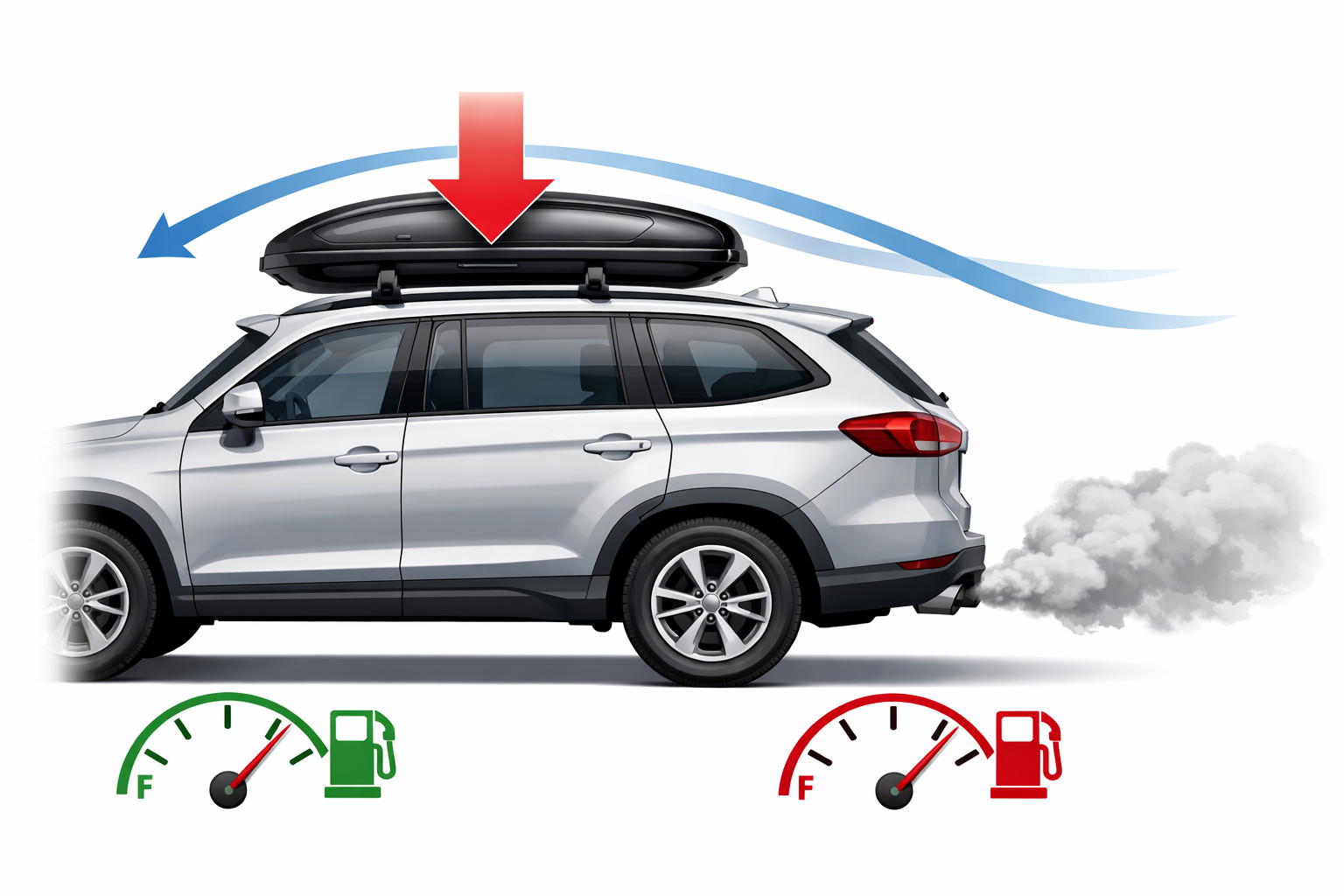
Fuel consumption varies widely. For the Ranger 2019, the official figures were around 8.0–9.2 l per 100 km depending on the 2.0-liter diesel, and for the new generation the range is even wider—it all depends on the version, tires, weight, and aerodynamics. If the vehicle regularly runs with a canopy, roof rack, trailer, or heavy cargo, real-world consumption will be noticeably higher than the brochure figures.
| Aspect | Pros | Cons |
|---|---|---|
| Torque and work | Strong diesels, towing up to 3,500 kg, high real-world usefulness | Not every version is equally good for city driving |
| Off-road capability | Ground clearance 230–235 mm, 800 mm wading, good geometry | Off-road ability heavily depends on tires and the specific trim |
| Body | Large load bed, 1 224 mm between the arches, plenty of tie-down points | An open bed in everyday life often requires additional accessories |
| Comfort | Double cab works for a family, the new generation is more modern | Wind and road noise are noticeable on some vehicles |
| Hardware | A wide choice of engines and gearboxes for different tasks | Easy to get lost in multi-market specs; the 10-speed automatic should be checked separately |
From an owner’s perspective, the Ranger’s main advantage is that it genuinely covers tasks that are already inconvenient or impossible for a crossover. The main downside is that you pay for these capabilities with size, noise, and a need to choose the exact version more carefully.
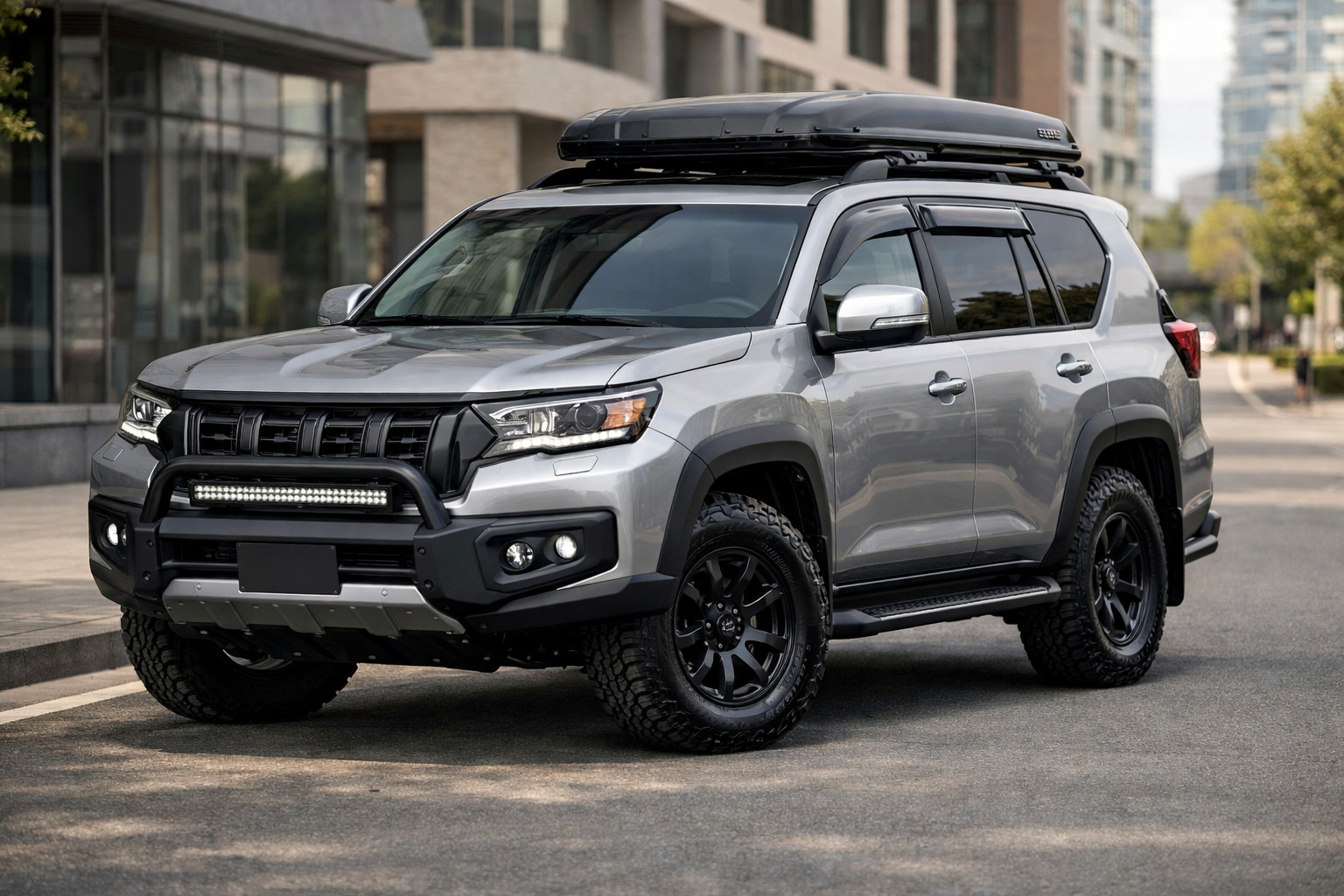
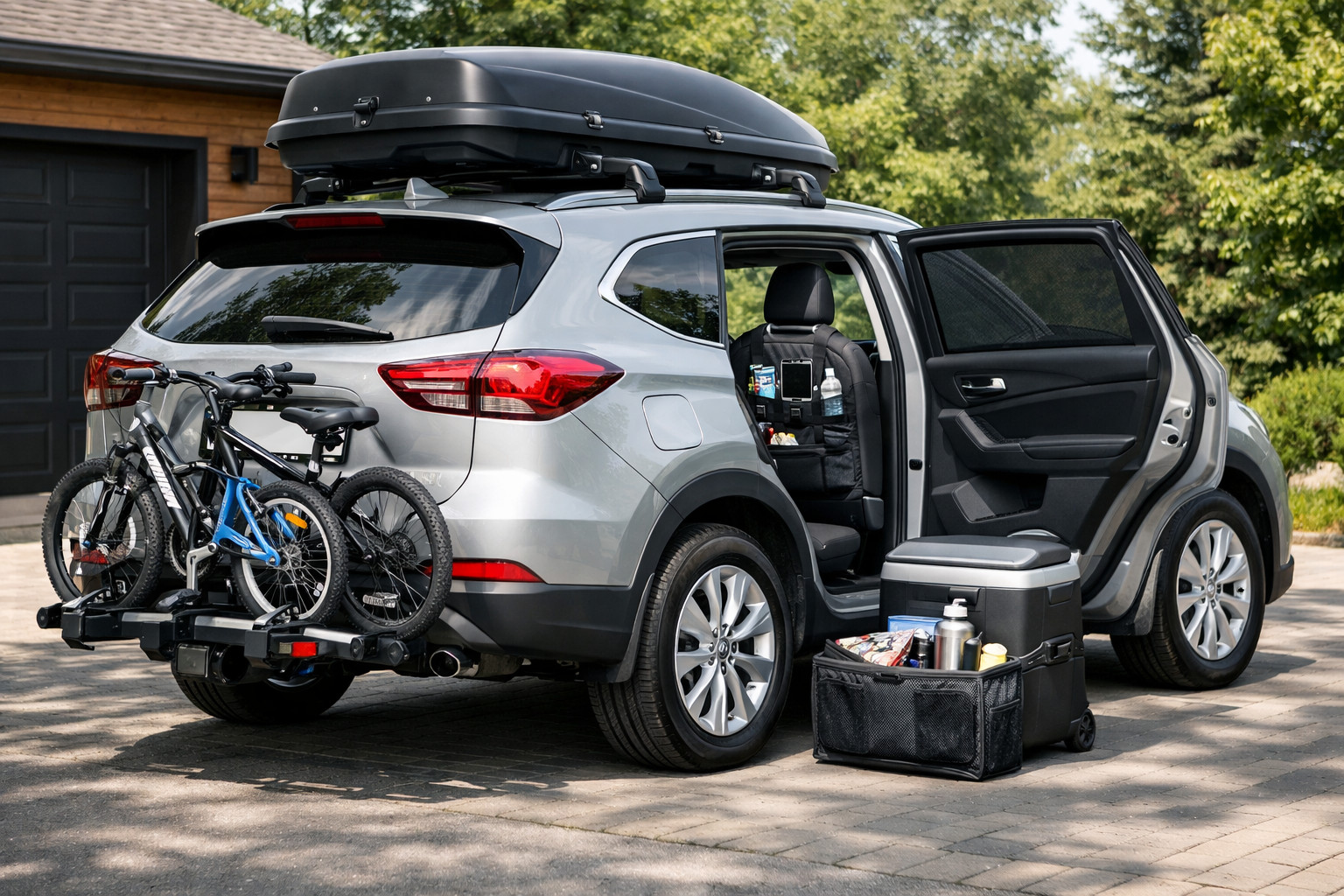
Tuning a Ranger makes sense when it solves a specific task. For this model, accessories are often not decorative, but practical: protecting the bed from rain, making entry easier, organizing cargo, preparing the vehicle for expeditions or daily deliveries. It’s one of those pickups where upgrades truly change the usage scenario.
The Ford Ranger 2011–2022 is worth considering for those who need a real pickup with plenty of pulling power, serious towing capability, and decent suitability for family use. In its best versions, it’s not just a “big vehicle,” but a tool for work, travel, and regular use of the bed as intended.
If your main scenario is the city, short trips, and minimal cargo, the Ranger makes less sense. This material is based on real selection experience, hands-on practice, and real usage scenarios, so the key advice is simple: choose not an abstract Ranger, but a specific year, engine, gearbox, and body type for your task.
| ✔ | Strong pulling power and high towing capacity: Ranger can tow a trailer weighing up to 3,500 kg, making it suitable for hauling heavy loads and equipment. |
| ✔ | A practical cargo bed: there is enough space between the wheel arches for a Euro pallet, plenty of tie-down points, and the new generation’s bed is even better suited for accessories and add-ons. |
| ✔ | Good off-road capability for a work pickup: up to 235 mm of ground clearance, a wading depth of up to 800 mm, and good geometry help on dirt, in the field, and off-road. |
| ✔ | The double cab is suitable not only for work but also for family trips: the cabin has enough space for four tall passengers, especially in later versions. |
| ✔ | There is a wide choice of engines and gearboxes for different tasks: from simpler diesel engines for work to more modern 2.0-liter versions and the 3.0 V6 in the new generation. |
| ✘ | In the city, the Ranger is inconvenient because of its large size, turning radius, and open cargo bed if it doesn’t have a canopy or other add-on. |
| ✘ | On some vehicles, wind noise and road noise are noticeable, especially on rough tires, so on the highway the comfort level does not quite match passenger cars. |
| ✘ | The 10-speed automatic transmission requires a separate check before purchase: the article directly recommends looking at shift smoothness, delays, and jerks. |
| ✘ | It is difficult to navigate the specifications between markets and model years: within one model there are very different engines, gearboxes, and equipment, which should not be mixed up. |
Shipping to EU
Wholesale and retail
Own warehouse
Опис продукту
Подарунки не надаються при оформленні покупки у кредит під 0,01% або при покупці частинами.