18.06.2026
531
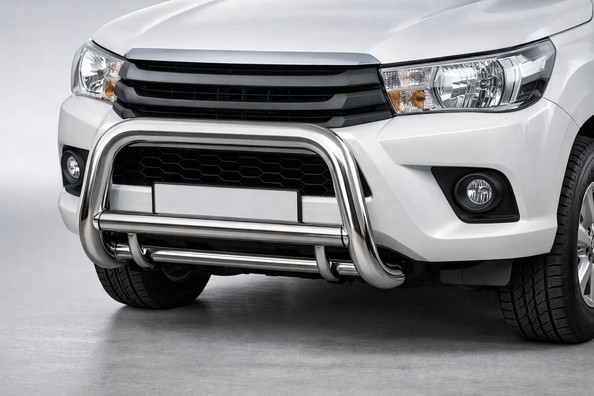
For the city, a front bull bar is almost never a universal way to “save” the front end. On most passenger cars and crossovers it mainly adds visual impact, takes a bit of contact with branches or minor touches, but it doesn’t address typical urban risks: curbs, bollards, low obstacles, parking mistakes, and expensive bumper plastic.
The issue is different: the driver expects real protection from a metal structure, while a modern car is engineered around the factory front end—crumple zones, airbags, radars, and parking sensors. That’s why in the city a front protection bar often turns out to be more stainless steel for looks than a practical solution.
The confusion comes from mixing two different scenarios. The first is rural roads—branches, tall grass, the risk of hitting an animal—where a front bar can genuinely help. The second is urban traffic, parking lots, tight courtyards, and curbs, where the main damage hits the lower part of the bumper, the grille, the lip, or the underbody protection—not the area where the bar is mounted.
Psychology adds to it: metal up front looks “strong,” so it seems to make the car safer. But a rigid element on the nose doesn’t mean better safety. For pedestrians it’s often more dangerous, and for the car itself it can change how the factory structure works in a crash.
DD Tuning expert comment: The most common mistake is installing a front bar “just in case,” when the real problem is completely different: curbs, winter ruts, or fragile lower plastic. The second typical mistake is buying universal stainless steel based on photos without checking sensors, geometry, and mounting. If the car is modern and city-driven, compatibility matters more than tube thickness.
| Symptom | Likely cause | What to do |
|---|---|---|
| You want to “save the bumper” in the city | Overly high expectations from a decorative structure | Don’t treat a front bar as insurance against all urban impacts; separately address parking, visibility, and the lower edge of the bumper |
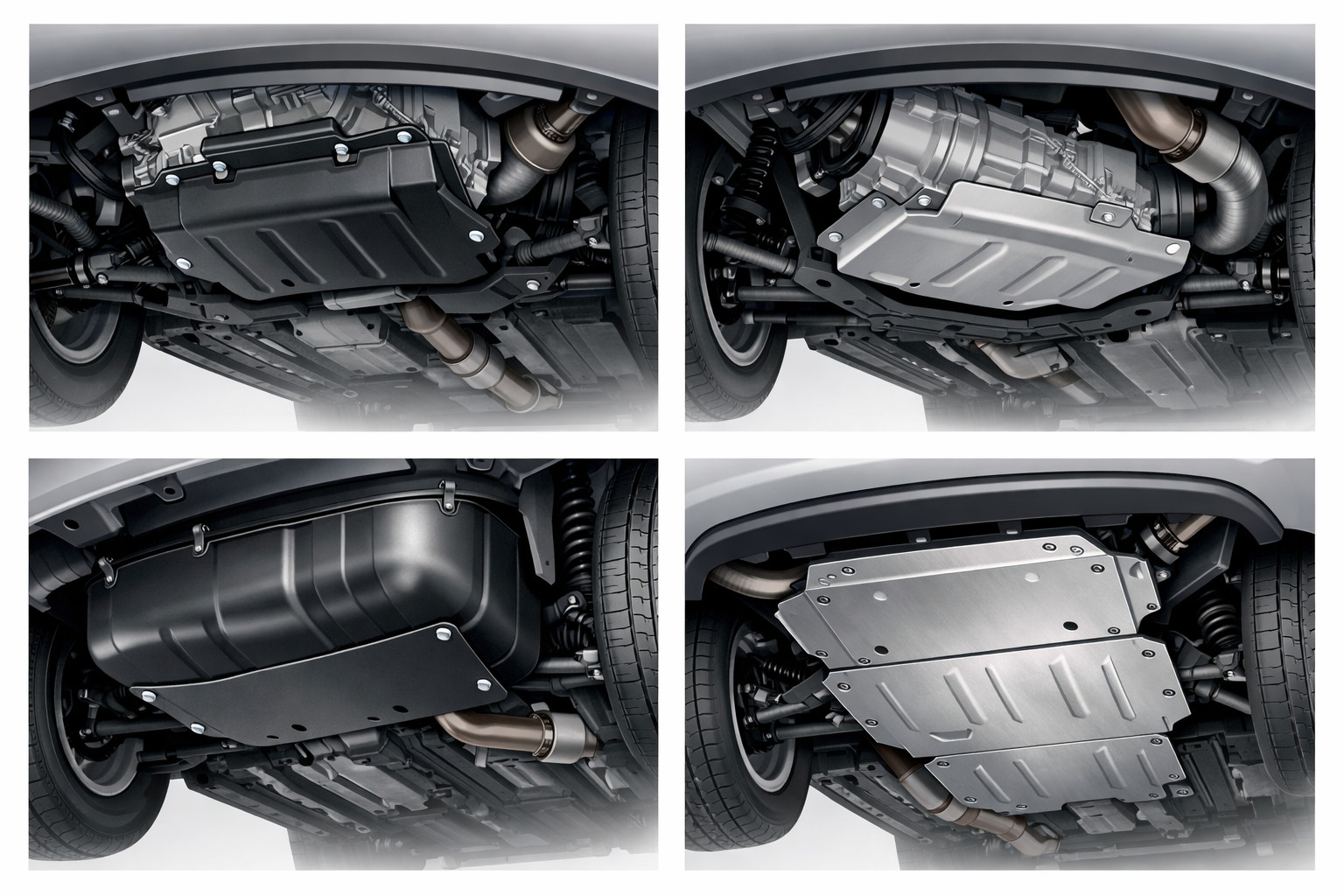
| Main damage appears underneath: curbs, ice, ruts | The problem area isn’t where the bar works | Look toward underbody protection or replacing lower elements, rather than putting metal up front “for everything” |
| After installation, sensor errors or false triggers appeared | The structure blocks the radar/parking sensors or alters their operating field | Check compatibility, mounting, and geometry; sometimes the right solution is removing an ill-chosen accessory |
| The front end got heavier, vibrations appeared, or the nose sagged | Product is too heavy or brackets are weak | Avoid heavy universal models and choose a lighter vehicle-specific design only if there’s a real need |
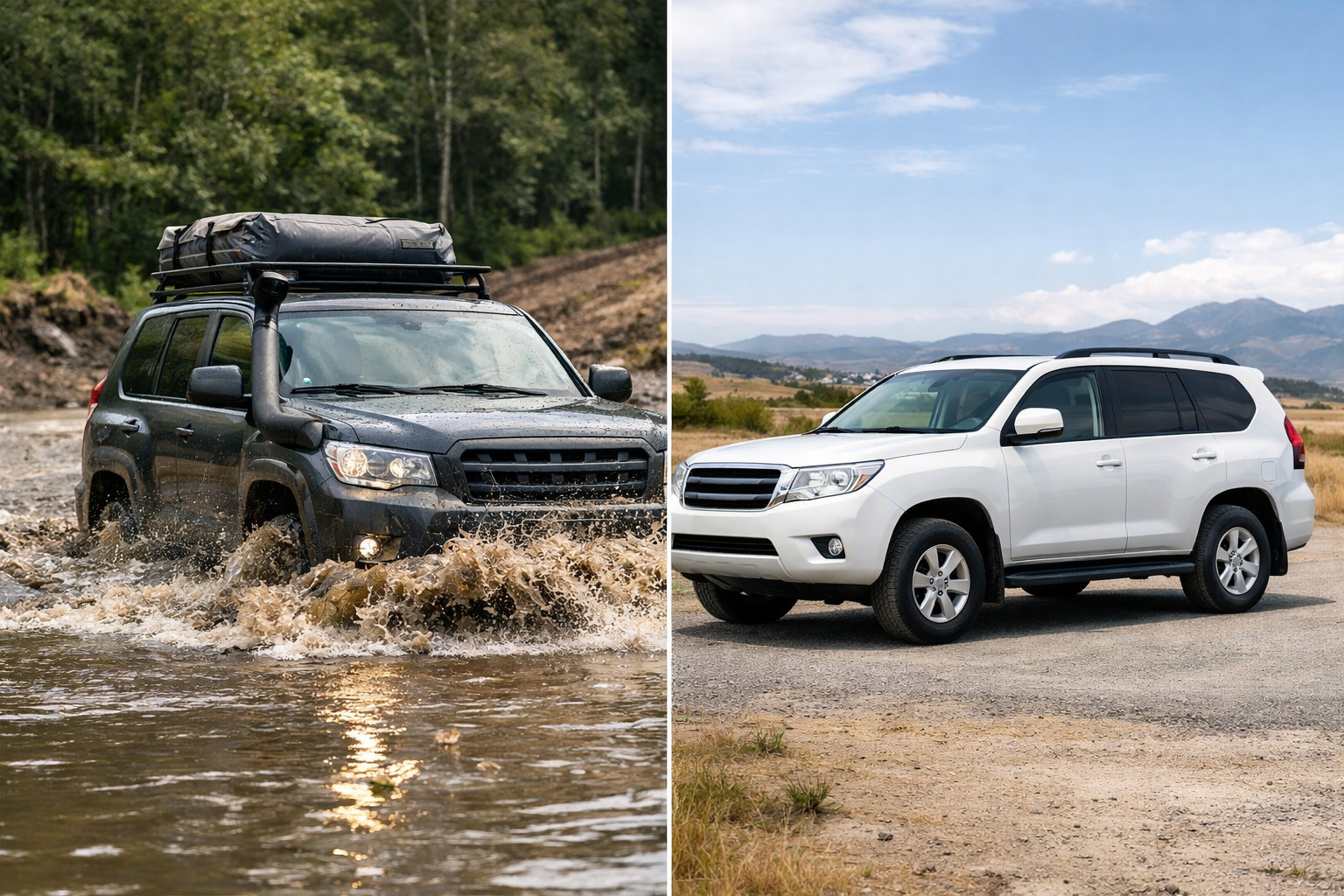
| Frequent trips outside the city, brush, risk of contact with an animal | There is a scenario where a front bar can be useful | Consider only vehicle-specific solutions with proper geometry and no conflict with electronics |
In the city, what works best is not simply having metal up front, but solving the specific task correctly. If the issue is minor parking contacts, you’ll gain more from visibility, parking sensors, a camera, and the habit of leaving extra space. If the underside suffers, it’s more logical to protect the lower part rather than install a bar higher up.
A front bar makes sense when the car regularly goes where there’s a real risk of contact with branches, tall grass, or an animal—and when a lighter vehicle-specific design is chosen for the particular car. In that scenario it can reduce the chance of damaging the grille or radiator and keep you from being stuck on the roadside after an unpleasant contact. But that’s no longer a pure city scenario—it’s mixed or out-of-town use.
Another practical approach is not to interfere with the factory front-end logic without a real need. On a modern car this is often cheaper and safer than later fighting electronics errors or weird accessory behavior after the first winter.
The idea “I’ll install stainless steel and the bumper will be fine” almost doesn’t work. In real city driving, damage often happens lower, to the side, or on plastic that the bar doesn’t cover. The universal approach doesn’t work either: the same construction can’t fit different cars equally well with different geometry and electronics.
A bad bet is heavy old-school constructions on modern crossovers and passenger cars. They can worsen visibility, add extra load to the front end, and create problems for sensors. A separate downside is pedestrian safety: a rigid protruding front makes the consequences of an impact more severe, so the urban argument “it’s for safety” usually doesn’t hold up to facts.
If you approach it without myths, the accessory should be selected for the real risk—not just “something strong up front.”
There’s also a simpler option: sometimes it’s cheaper and smarter to periodically replace the lower grille, lip, or bumper trim than to constantly carry extra metal up front for a rare scenario that barely exists in the city.
| Solution | When it works | When it’s not worth spending money |
|---|---|---|
| Vehicle-specific low-profile front protection bar | Frequent out-of-town trips, branches, grass, risk of contact with an animal, no conflict with sensors | If the car is almost always in the city and expectations boil down to “it will protect from everything” |
| Universal decorative stainless steel bar | Only as an exterior styling element, when the owner understands the limitations | If you need real function, compatibility with electronics, and proper geometry |
| Engine and transmission underbody protection | Curbs, ice, ruts, rocks, bad roads | If the problem is only the front-end appearance |
| Parking sensors or a camera | Urban maneuvers, tight courtyards, frequent parking | If the car is used mainly off-road and the main risk is frontal contact with brush or an animal |
| Replace lower bumper elements as needed | When damage is localized and the scenario is rare | When there are regular trips in conditions where the front end truly needs extra protection |
From customer experience: the owner of a city crossover wanted to install a massive front bar because he feared daily curbs and minor parking contacts. After selection, it turned out his main risk was the lower part of the car, not the center of the front end, so he chose underbody protection and kept the factory front without a bar. As a result, the sensors continued to work normally, and there was more practical benefit in everyday driving.
For the city, a front protection bar in most cases is not a must-have practical purchase. In short: when a car lives in traffic, parking lots, and near curbs, this part more often works as an appearance element than as real protection from the main urban problems. On top of that, a poorly chosen product can harm sensor compatibility, visibility, and the overall safety logic of the front end.
It’s worth spending money on it when there’s a clear out-of-town use case and a vehicle-specific design has been selected for the exact car. In all other cases, it’s smarter to address the vulnerability that’s real for you: the underside, chips on the hood, parking, or individual bumper elements. This material is based on real selection experience, hands-on practice, and real usage scenarios—not on the myth that any stainless steel up front automatically makes a car protected.
| ✔ | In urban settings, front protection almost does not solve the main problems — curbs, bollards, parking mistakes, and damage to the lower part of the bumper. That is, for typical city risks, it often simply does not work where it should. |
| ✔ | A metal bar can interfere with the radar, camera, parking sensors, and driver assistance systems if it is installed poorly. The text explicitly mentions that after installation, sensor errors and false activations are possible. |
| ✔ | On modern cars, such a design may conflict with the factory safety systems, particularly crumple zones and the airbag deployment logic. In other words, a rigid element at the front does not necessarily make the car safer. |
| ✔ | Universal decorative versions often turn out to be a compromise in terms of mounting, weight, and geometry. Because of this, they may add vibration, front-end sagging, or simply fail to provide any practical benefit they were installed for. |
| ✘ | In the city, front protection may slightly help against minor touches and contact with branches, if such scenarios really happen. It is better than nothing, but only within the limits of light damage. |
| ✘ | For mixed driving or trips outside the city, it can be useful when there is a risk of contact with brush, tall grass, or an animal. In such a case, a model-specific guard can partially cover the grille or radiator. |
| ✘ | If the correct model is chosen for a specific car, there is a chance to avoid conflicts with electronics and not spoil the factory front-end geometry. The text emphasizes precisely the importance of a model-specific solution, not a universal tube. |
| ✘ | In some cases, installing front protection gives the owner a feeling of a more solid car on uneven roads outside the city. This only makes sense when expectations match the real risks. |
Shipping to EU
Wholesale and retail
Own warehouse
Опис продукту
Подарунки не надаються при оформленні покупки у кредит під 0,01% або при покупці частинами.