07.05.2026
367
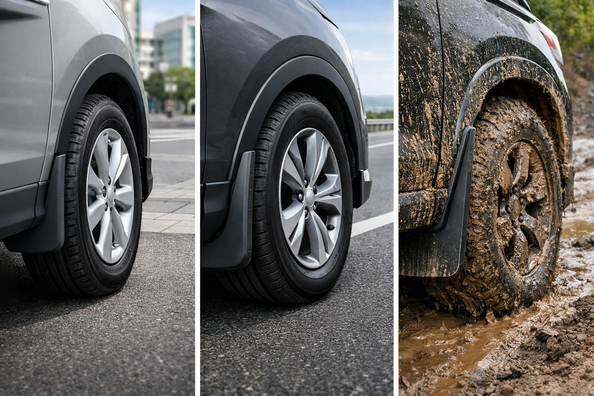
In short: for city driving, molded model-specific or OEM mud flaps most often win—those that fit factory mounting points and don’t require extra trimming. For highway use, it’s better to choose not-too-long options with proper stiffness to avoid noise, flapping at speed, and contact with the wheel. For mud, gravel, and winter, longer flexible rubber or polyurethane flaps are more practical, but universal kits almost always require manual fitting.
The biggest mistake when choosing is looking only at the material or the price. In real life, what matters is installation, wheel compatibility, noise at speed, durability in the cold, actual coverage area, and how much time you’re willing to spend on fitting.
Mud flaps aren’t simply “good” or “bad”—they’re right or wrong for your use case. In the city, a tidy look, minimal installation hassle, and no conflicts with curbs matter most. On the highway, stability comes first: if the flap is too long or too soft, it can get noisy, move in the airflow, and wear out faster.
On muddy roads the logic is different: more coverage and a flexible material that isn’t afraid of rock hits and frost work better. That’s why the same kit that looks appropriate in the city may be weak on gravel, while a heavy long off-road option can be unnecessary and inconvenient for everyday urban driving.
| Option | Strengths | Weaknesses | Who it’s for |
|---|---|---|---|
| OEM molded | Neat fit, often no drilling, quick installation | More expensive, can be sensitive to non-standard wheels | Those who drive in the city and want a factory look |
| Model-specific aftermarket | Fit better than universal, often more reasonable in price | Plastic and hardware quality depends on the manufacturer | For mixed use: city plus highway |
| Universal polyurethane | Flexible, better for cold and gravel, can be trimmed to height | Requires fitting, drilling holes, and accurate installation | For muddy roads, winter, non-standard tasks |
| Long heavy-duty rubber | Maximum coverage, good impact resistance, available in heavy thick versions | May be noisy at speed, can catch snow and curbs | For pickups, commercial use, towing |
DD Tuning expert comment: most often people go wrong when they buy a universal kit and expect a model-specific fit. The second common issue is not checking full steering lock and wheel offset, and then getting rubbing on the tire. If the car drives highway ежедневно, overly long soft flaps are better to rule out right away.
This is the simplest route for a city car. These mud flaps are usually made for a specific body, often use factory mounting points, and don’t require drilling. If the car has standard wheels and suspension, it’s the least problematic scenario.
The downside is limited compatibility margin. If you have wider tires, a different wheel offset, or a slightly lifted car, the neat OEM shape may no longer forgive deviations.
This is a compromise between price and fit. They’re also made for a specific model, but can differ in thickness, stiffness, and hardware quality. For most passenger cars and crossovers, it’s a sensible option if you want a near-OEM look without overpaying for the brand.
It’s important not to confuse them with universal kits. If the set is truly model-specific, it usually installs faster and more predictably, and typical installation takes about 1–2 hours.
This is a choice driven not by looks, but by practicality. Polyurethane flexes well and handles cold and rock impacts better. Typical universal sets may be around 305 × 381 mm, and larger rear versions are even taller—so protection is genuinely greater.
But there are no free upsides: fitting is almost inevitable. You need to set the height, wheel clearance, side-to-side symmetry, and drill holes accurately. If you rush it, the mud flap will either sit crooked or won’t work as expected.
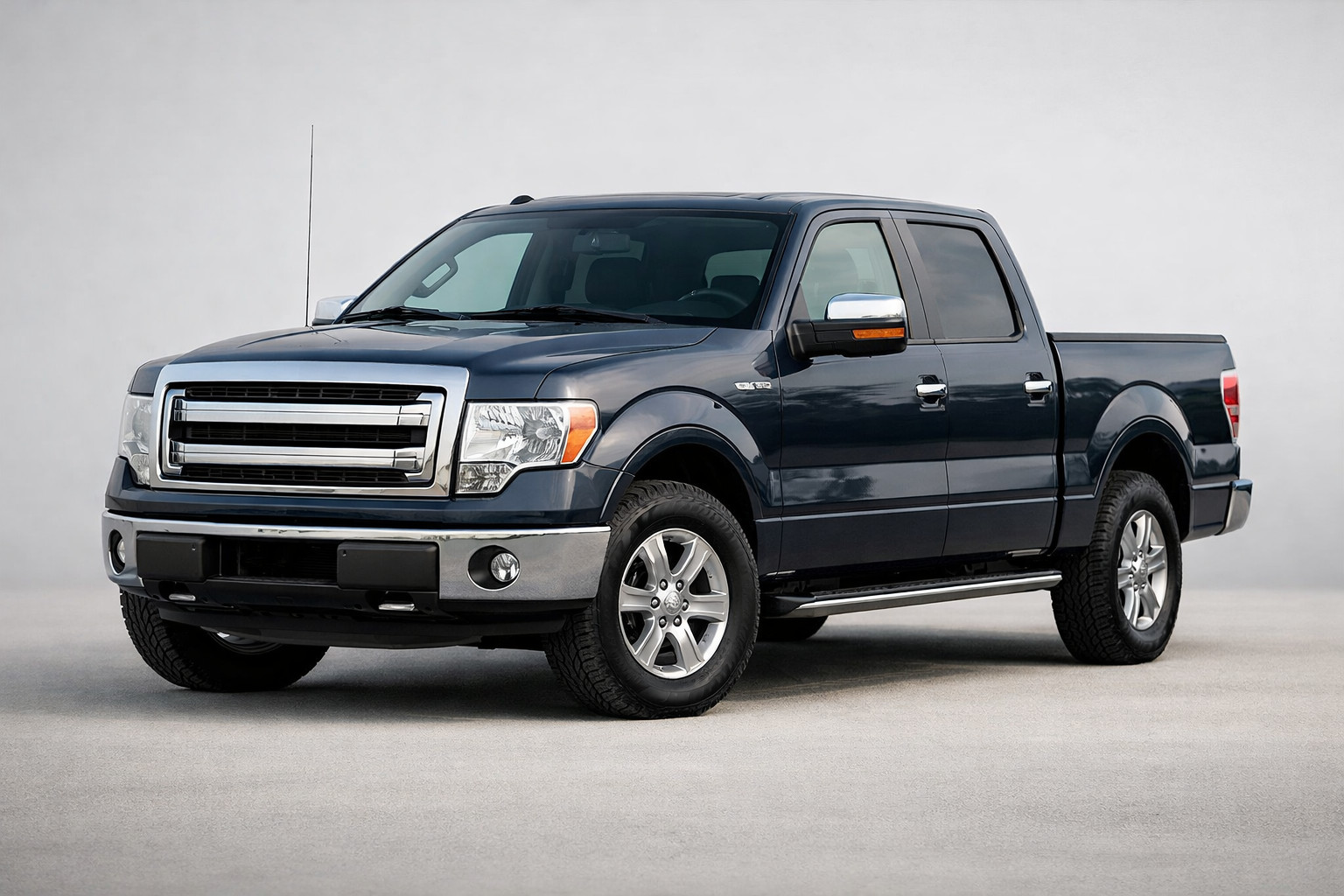
This is the option for mud, gravel, winter, pickups, and vehicles that tow. In heavy-duty versions, the rubber can be thick, sometimes with metal reinforcement, and available in multiple sizes for different ride heights. These provide the maximum coverage behind the wheel.
On a typical city car, such a set often turns out to be overkill. On the highway, long soft rubber can be noisy, and in winter the lower edge more often contacts snow, ice, or a tall curb.
For the city, there’s no point chasing maximum length. Precise fit, no drilling, and proper clearance to the wheel matter more. That’s why the first choice is OEM or good model-specific kits.
For the highway, it’s important not only that the mud flap catches dirt, but also that it doesn’t interfere at speed. Usually, shorter molded solutions or moderately flexible model-specific options without excessive length work better.
For muddy roads, country houses, gravel, and winter, the logic is the opposite: you need coverage and a material that won’t crack from impacts or мороз. Here, universal polyurethane or longer rubber is often more useful than nice-looking short plastic.
If your use is mixed, you should look not for the “most heavy-duty” kit, but for the least compromised one. For a crossover that drives both in the city and to a country house, a model-specific or molded set of medium length often works best.
| Scenario | Best choice | Why |
|---|---|---|
| Daily city driving | OEM or model-specific molded | Faster installation, neat look, less chance of catching curbs |
| City plus daily highway | Model-specific, moderate length | Less risk of noise and flapping than long soft options |
| Country house, gravel, rural roads, winter | Universal polyurethane or longer rubber | Better dirt coverage, better performance in cold and on stones |
| Pickup, towing, commercial loads | Heavy-duty long rubber | Provides the largest protection area where a short molded kit is already слабкий |
Paying extra is justified when you’re buying not just material, but fewer risks. If fast installation, a proper fit without drilling, and a neat look matter, it makes sense to look at OEM mud flaps. If you want to compare all available types first, it’s convenient to start with the mud flaps catalog.
A pricier option also makes sense with non-standard wheels, towing, frequent gravel trips, or when what matters is not just having a flap, but accurate function without rubbing or misalignment. If you need more freedom to fit to a specific car or task, it’s worth taking a separate look at universal mud flaps—but with the understanding that installation will be more demanding.
From a customer’s experience: a crossover owner was looking for long rubber mud flaps because he often drove to his country house after rain. After test fitting, it turned out that for his daily highway driving they would be too soft and too low, so he chose a model-specific kit of medium length. As a result, he got sufficient mud protection without noise at speed and without conflict with standard wheels.
The choice is simple if you base it not on advertising but on your scenario. For the city—molded OEM or model-specific; for the highway—moderate length and stability at speed; for mud and winter—flexible longer rubber or polyurethane options, with readiness to fit them. This material is based on real selection experience, practical know-how, and real use cases, so there’s one main tip: don’t buy the “coolest” kit—buy the one that won’t create new problems on your roads.
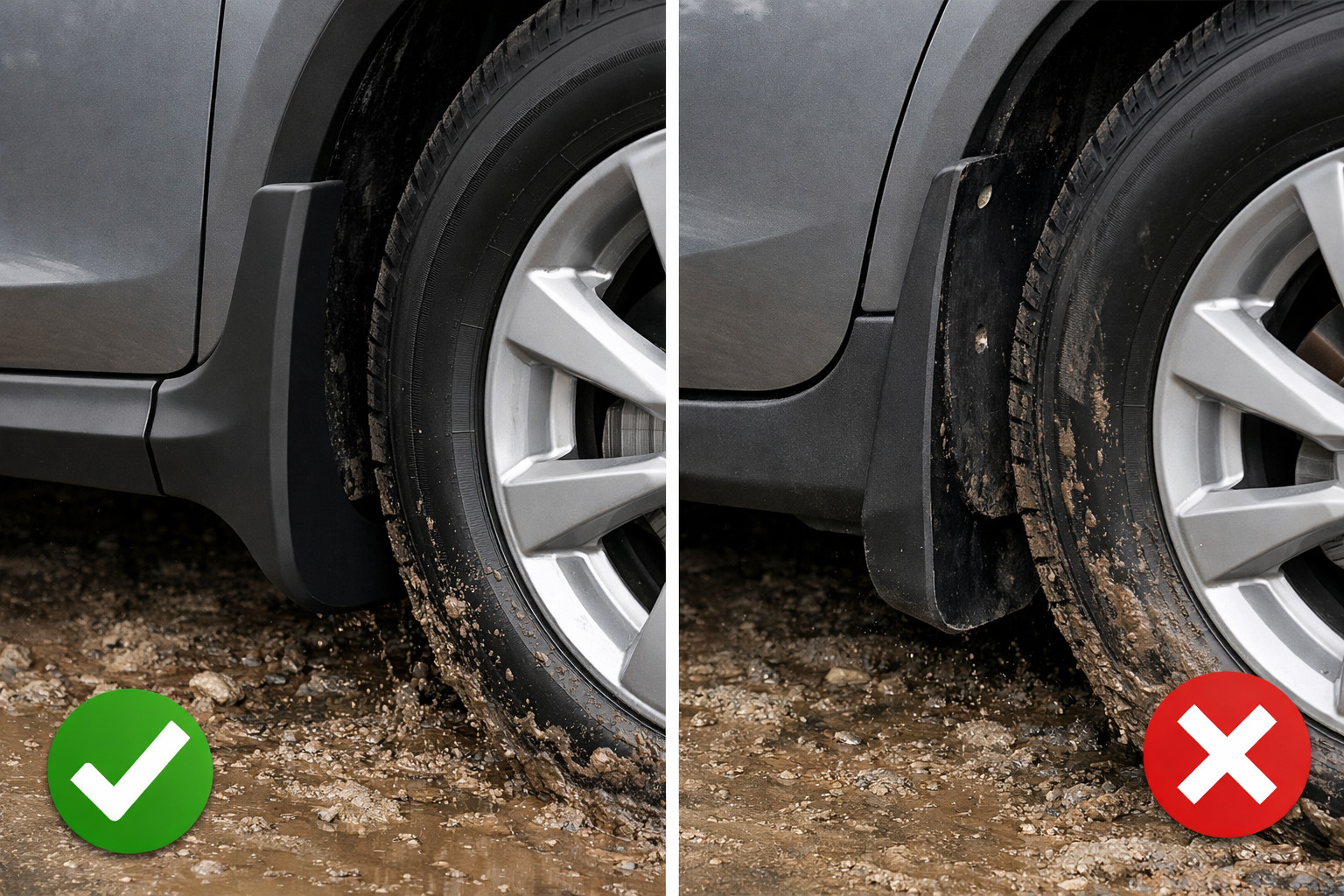
| ✔ | For city use, the most convenient are molded vehicle-specific or original mud flaps: they fit the factory mounting points, install quickly, and usually do not require drilling. This reduces the risk of installation mistakes. |
| ✔ | For highway driving, shorter or moderately stiff options are better, as they make less noise and do not flap at speed. This choice also reduces the risk of contact with the wheel. |
| ✔ | For mud, gravel, and winter, longer flexible rubber or polyurethane guards are more practical. They cover the wheel better and withstand stone impacts and cold better. |
| ✔ | Vehicle-specific aftermarket kits offer a compromise between price and fit. They often fit better than universal ones and can be a sensible option for mixed city plus highway use. |
| ✔ | A more expensive kit may be justified if precise fit, quick installation, and no wheel conflicts are important. In that case, you are paying not only for the material, but also for fewer risks and rework. |
| ✘ | Universal kits almost always require trimming, marking, and careful installation. If you expect them to fit like vehicle-specific ones, it is easy to end up with a crooked install or rubbing against the wheel. |
| ✘ | Long soft mud flaps can make noise on the highway, flap at speed, and wear out faster. For everyday city driving, they often turn out to be unnecessary as well. |
| ✘ | Rigid plastic performs worse in severe frost, and rubber and polyurethane can also develop cuts over time. In other words, there is no perfectly universal material here. |
| ✘ | Even a good kit may not fit if you have non-standard wheels, a different wheel offset, or a suspension lift. In such cases, the factory shape no longer guarantees proper compatibility. |
Shipping to EU
Wholesale and retail
Own warehouse
Опис продукту
Подарунки не надаються при оформленні покупки у кредит під 0,01% або при покупці частинами.