10.09.2026
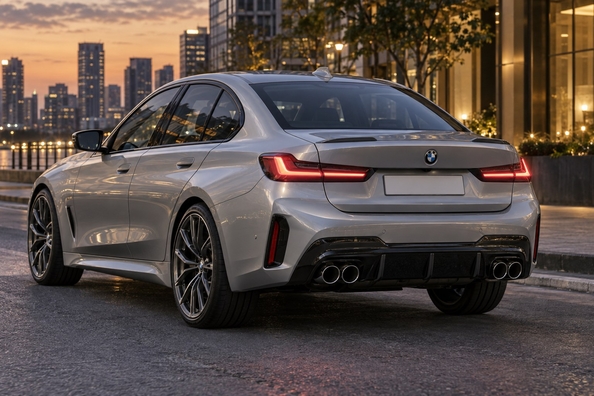
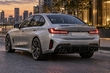
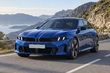
BMW officially unveiled the eighth generation of the 3 Series (factory code G50) on September 30, 2026. The sedan received the Neue Klasse design, like the electric BMW i3, but remained gasoline-powered: at launch there are the four-cylinder 318 and 320 and the six-cylinder M350 xDrive with 443 hp, all with a 48-volt mild-hybrid system. The body grew to 4,765 mm; inside there is Panoramic iDrive with projection across the entire windshield and a 17.9-inch display. Order intake in Germany opened on the day of the premiere, production in Dingolfing starts in November 2026, and the first cars in Europe arrive in early 2027.
Contents
The premiere took place on the night of September 29–30 (at 00:01 Central European Time, i.e., the evening of the 29th in America). BMW showed the entire eighth-generation lineup at once: the electric BMW i3 40 xDrive and i3 50 xDrive, whose design was revealed back in March 2026, and the gasoline models — 318, 320, and M350 xDrive. For North America, 330 and 330 xDrive are offered instead of the 320. The company promises a plug-in hybrid later, in 2027; the Touring wagon — also in 2027; there are no diesel versions in any official material.
The key thing to understand: the i3 and the gasoline “3” are one model line with the same design language, but two different constructions. The EV is built on the new Neue Klasse platform and assembled in Munich, while the G50 with internal-combustion engines is based on an evolved version of the current architecture; it will be produced in Dingolfing starting in November 2026. Engines are supplied by the plant in Steyr (Austria). We have already written separately about the electric version — the new BMW i3 2027: range up to 900 km.
From the outside, the G50 is recognizable at first glance as Neue Klasse: the narrow “kidneys” are stretched horizontally and merged into a single block with twin headlights, while the daytime running lights are set vertically — BMW’s classic “four-eye” face in a new interpretation. The profile with a “shark nose,” long hood, and rear-set cabin retains the proportions of a rear-wheel-drive sedan; the door handles are hidden in the body and pop out when unlocked. At the rear are flat three-dimensional taillights that extend onto the fenders and emphasize width, and on the M350 xDrive you also get four exhaust outlets, a spoiler on the trunk lid, and yellow daytime running lights in the style of racing prototypes.
Compared with the electric i3, the gasoline sedan is 1 cm lower, slightly narrower, and has a shorter wheelbase: 2,860 mm versus 2,897 mm. The difference is visible inside as well — the G50 has a center tunnel, whereas the i3 has a flat floor. Compared with its predecessor G20, the body has grown in all dimensions:
| Parameter | BMW 3 Series G20 (2018–2026) | BMW 3 Series G50 (2027) | BMW i3 (electric) |
|---|---|---|---|
| Length | 4 713 mm | 4 765 mm (+52) | 4 760 mm |
| Width | 1 827 mm | 1 850 mm (+23) | 1 865 mm |
| Height | 1 448 mm | 1 455 mm (+7) | 1 480 mm |
| Wheelbase | 2 851 mm | 2 860 mm (+9) | 2 897 mm |
| Trunk | 480 L | 450 L | 420 L + 31 L front |
| Wheels | 17–19″ | 18–20″ (overall diameter 680 mm instead of 654) | 19–21″ |
The track is wider, the arches more pronounced. At launch, 11 colors are available, including the exclusive M Le Castellet Blue. The M Sport package adds its own bumpers, side skirts, diffuser, and brakes with blue calipers.
All gasoline engines come with a 48-volt mild-hybrid system and an eight-speed Steptronic automatic. The base 318 and 320 are a 2.0-liter turbocharged four-cylinder: 115 kW (156 hp) and 155 kW (211 hp) respectively; on the 320, the gain over its predecessor is 20 kW. For North America, the same engine in 330 form produces 255 hp and 400 N·m.
The flagship is the M350 xDrive, which replaced the M340i. The 3.0-liter inline-six with a starter-generator on the crankshaft delivers 326 kW (443 hp) and 580 N·m; xDrive all-wheel drive is standard. As standard, the M350 gets adaptive M suspension, a sport steering system with variable ratio, and an M Sport differential, and during 2027 an over-the-air update will add Drift Moment mode — sending all torque to the rear axle — which previously was only available on BMW M models.
| Version | Engine | Power | Torque | 0–100 km/h | Top speed |
|---|---|---|---|---|---|
| BMW 318 | 2,0 L, 4 cyl., turbo, 48 V | 115 kW / 156 hp | 250 N·m* | 9,5 s | 215 km/h |
| BMW 320 | 2,0 L, 4 cyl., turbo, 48 V | 155 kW / 211 hp | 330 N·m | 7,4 s | 240 km/h |
| BMW 330 xDrive (North America) | 2,0 L, 4 cyl., turbo, 48 V | 255 hp | 400 N·m | 6,1 s | 250 km/h |
| BMW M350 xDrive | 3,0 L, inline 6 cyl., turbo, 48 V | 326 kW / 443 hp | 580 N·m | 4,1 s | 250 km/h (limited) |
| BMW i3 50 xDrive | two electric motors, battery 108,7 kW·h | 345 kW / 469 hp | 645 N·m | 4,7 s | up to 912 km WLTP, charging up to 400 kW |
*318 torque — according to BMWBLOG; BMW has not yet provided it in official materials. WLTP fuel consumption: 320 — 169 g CO₂/km, M350 xDrive — 187 g/km (UK specification).
The chassis has been revised: up front — a double-joint McPherson strut, at the rear — a five-link suspension; stabilizer mounts are stiffer, and variable-rate dampers depending on stroke are standard on all versions; electronically controlled suspension is optional. For the M350 xDrive, an additional front strut brace is предусмотрена.
The cabin is the biggest change in the model’s history. There is no longer a classic instrument cluster in front of the driver: the BMW Panoramic iDrive system consists of the Panoramic Vision projection along the entire lower edge of the windshield, a free-form 17.9-inch center screen angled toward the driver, and an optional 3D head-up display. Everything runs on BMW Operating System X based on Android, with a voice assistant enhanced by Amazon Alexa+. The iDrive controller knob on the tunnel is gone — control is via touch, the steering wheel, and voice. The steering wheel is new, with a central upper spoke; on gasoline versions, paddle shifters are standard.
A panoramic glass roof is standard (in the UK and the USA), and seats with electric adjustment and memory are also standard; optionally available are multifunction seats with ventilation. The rear seatback folds in a 40:20:40 split; the trunk of gasoline versions is 450 L, 30 L less than the G20. Driver aids include Driving Assistant Plus as standard; optional is Motorway Assistant, which on highways allows hands-off driving up to 130 km/h in 21 countries; the Symbiotic Drive system does not отключает assistance when the driver makes small steering inputs, intervening only when there is a real risk of collision.
Order intake in Germany has been open since September 30, 2026. Manufacturer prices on the domestic market: BMW 318 — from €49,900, 320 — from €54,900, M350 xDrive — from €80,900. In the UK, gasoline versions will arrive starting January 2027 (320 — from £44,975, M350 xDrive — from £66,785), in the USA and Canada — in the first quarter of 2027 (330 — from $49,900 excluding destination charges). The electric i3 rolled off the line in Munich back in August 2026 and will reach customers earlier than the gasoline versions. BMW has not yet published official data on timing and pricing for Ukraine.
Next on BMW’s schedule are a plug-in hybrid and the Touring wagon in 2027; a full-fledged next-generation M3, according to the press, is expected in 2028.
There are no accessories for the G50 yet — neither from tuning manufacturers nor from us: the car has only been shown, and until the first real examples appear, nobody is taking templates for floor mats, spoilers, or diffusers. Transferring parts from the G20 will not work: the new sedan has different bumpers, headlights, doors without external handles, and a body that is 23 mm wider. The only things that carry over without reservations are universal items like trunk organizers.
At the same time, the G20/G21 from 2018–2026 will remain the most common “3” on our roads for many years, and it is precisely for it that a full range is assembled today — from M-Sport body kits for BMW 3 G20 and trunk lid spoilers to EVA mats and textile mats for G20/G21. When choosing a body kit or diffuser, pay attention to the year: parts for pre-facelift cars 2018–2022 and the 2023+ facelift are different. Body kits for the facelift can be installed in the network of certified service centers DD Tuning — the nearest one will be suggested by a manager. The entire catalog is in the section BMW 3 Series G20/G21 tuning, and a detailed overview of this generation is available in our article BMW 3 Series G20/G21: a modern 3 for those who love driving.
We ship via Nova Poshta throughout Ukraine.
Shipping to EU
Wholesale and retail
Own warehouse
Опис продукту
Подарунки не надаються при оформленні покупки у кредит під 0,01% або при покупці частинами.