06.08.2026
263
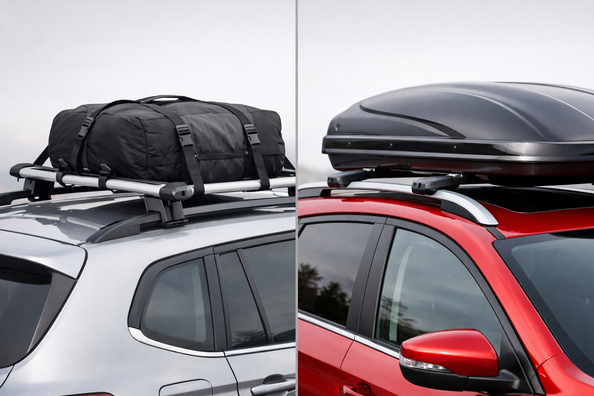
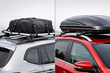
If you need quiet operation, a precise fit, and predictable behavior on the highway, in most cases a vehicle-specific solution wins. A universal option makes sense when the budget is tight, you rarely need a roof rack, or you’re planning to change the car soon.
It’s important not to mix up the terms: on the market, “universal roof rails” often refers both to the rails themselves and to the crossbars mounted on them. Here we’re talking about a roof mounting system: a universal kit for a wide range of cars versus a vehicle-specific kit with feet and mounting hardware for a particular car. And in both cases, the main limitation is not the rack but your car’s permitted roof load.
The point is simple: a universal system wins on price and flexibility, while a vehicle-specific one wins on fitment, noise, and stability. If a kit is designed precisely for the roof geometry, rails, or factory mounting points, there’s less chance of misalignment, play, uneven clamping force, and whistling at speed.
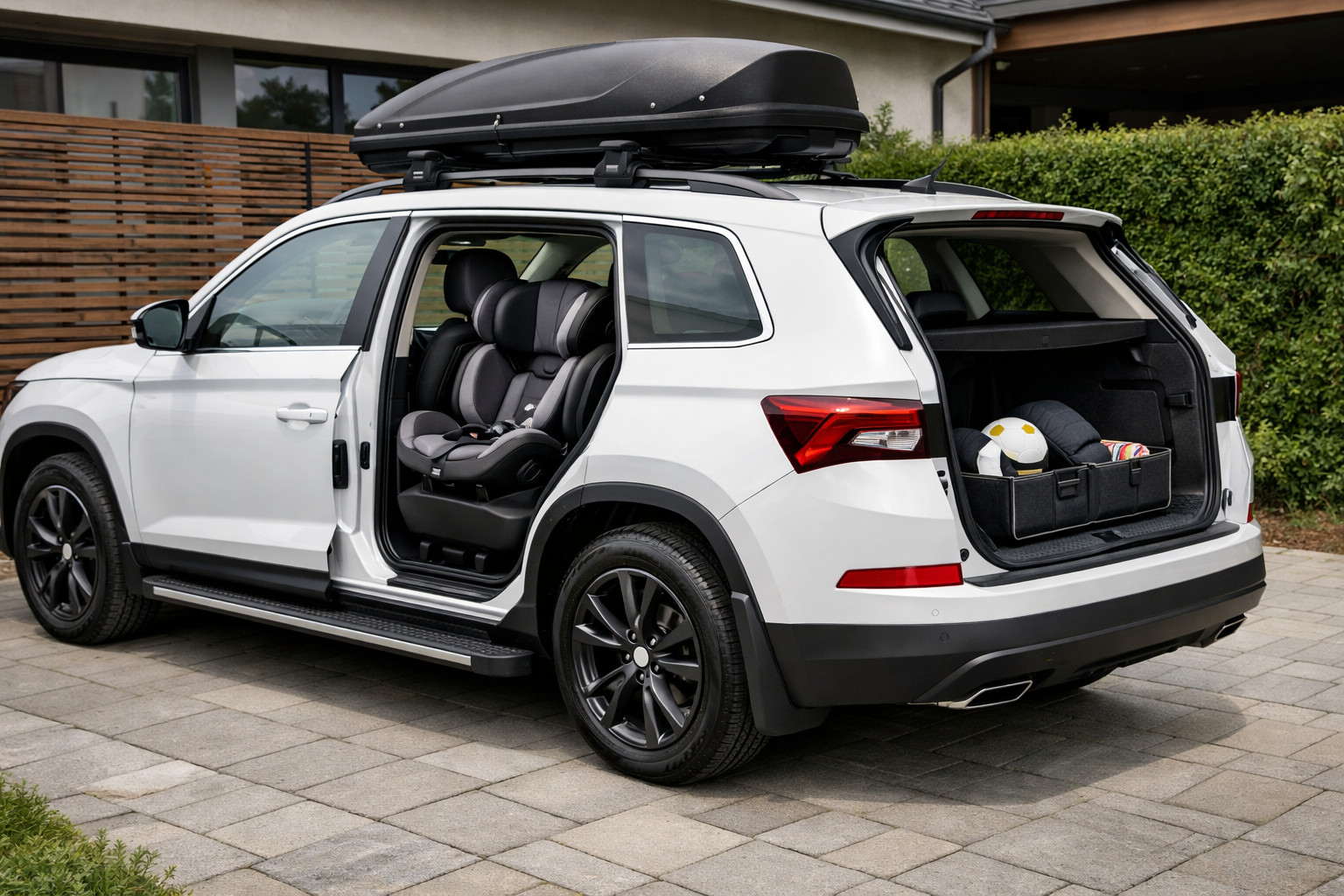
Universal solutions work fine when the car has standard raised rails and the load is moderate: a roof box, a couple of bikes, skis, vacation luggage. But compatibility can’t be judged “by eye.” The same clamp can sit differently on different rails, and that affects durability, noise, and safety.
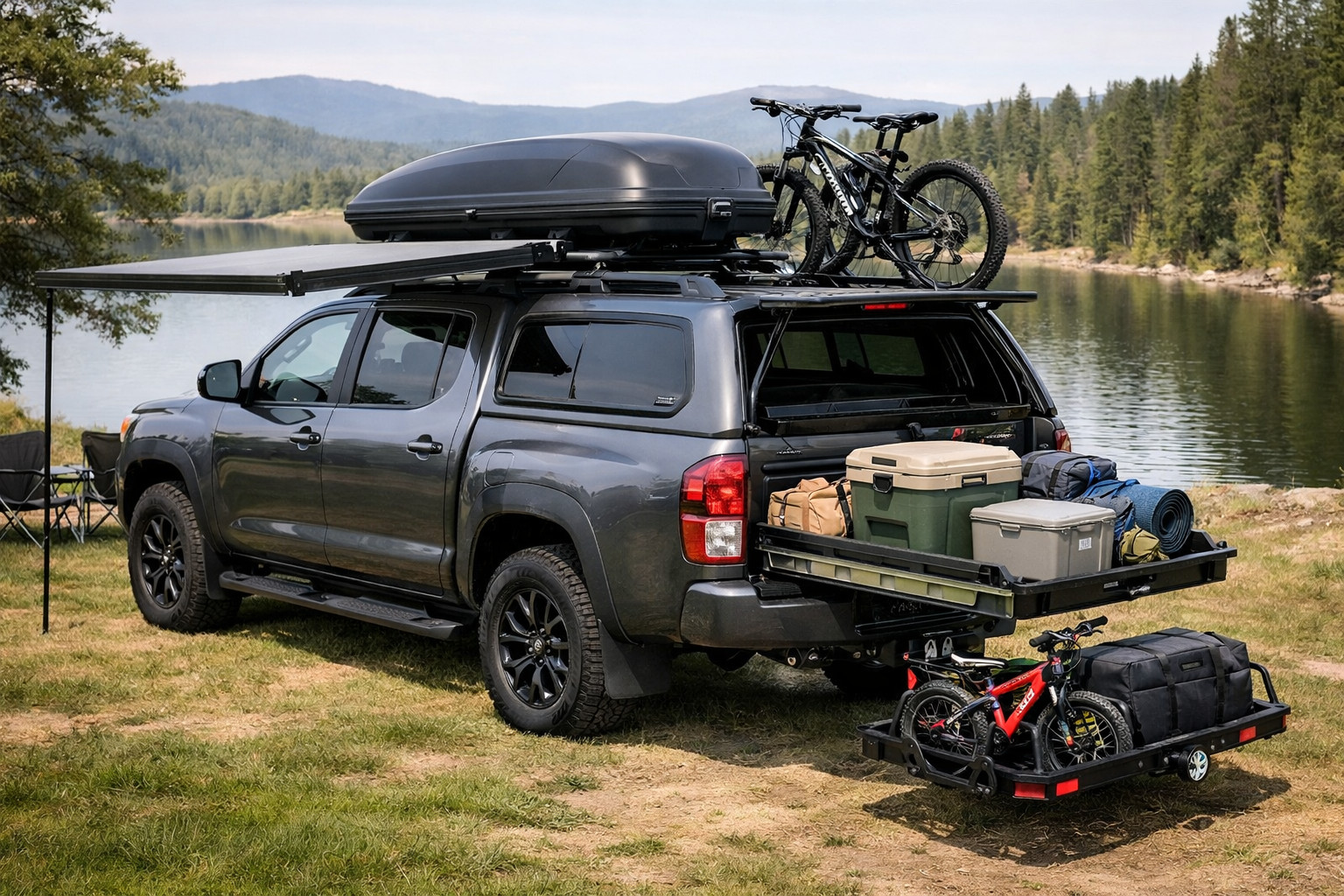
For heavy or concentrated loads, the difference becomes more noticeable. A rooftop tent, a large platform, long cargo, frequent highway driving—these are the scenarios where a precise vehicle-specific mounting system usually justifies the higher price.
It’s worth comparing not by ads and not only by the load rating number. Five criteria really matter: installation, noise, durability, practicality, and price.
Also look at the roof type: raised rails, integrated rails, factory mounting points, or a bare/smooth roof. What’s convenient on standard rails can be a bad fit—or completely incompatible—on another design.
| Option | Strengths | Weaknesses | Who it’s for |
|---|---|---|---|
| Universal rails or a universal kit for rails | Lower price, quick start, easier to resell or transfer, often enough for occasional use | Higher risk of noise, imperfect fit, compatibility must be checked carefully, worse for heavy loads | For those who use a roof rack rarely, carry light cargo, and don’t want to overpay |
| Vehicle-specific rails or a vehicle-specific system for the car | More accurate geometry, less play, better stability, usually quieter at speed | Higher price, less universality, changing cars may require a different fitting kit | For those who often drive on highways and carry a box, bikes, skis, or heavier gear |
DD Tuning expert comment: The most common mistake is buying an “almost fits” universal kit because the mounts look the same in photos. In real use, it ends up with a crooked crossbar, whistling after 80–90 km/h, or weak contact with the rail. If the car has integrated rails or complex roof geometry, the savings on a precise kit usually don’t last long.
Its advantage is that it quickly covers the basic need. For a car with standard raised rails, such a kit is often installed without complicated fitting, and for seasonal tasks it’s sufficient. If twice a year you take a roof box on vacation or occasionally mount a bike holder, a universal system can be a rational choice.
But this is also where the risk of getting the fit wrong is the highest. Different rail diameter and shape, distance to the roof, foot angle, crossbar profile—all of this affects how rigidly the kit sits. Hence typical issues: drone at speed, the need to retighten more often, and worse behavior in crosswinds.
A vehicle-specific system usually consists of crossbars, feet, and mounting hardware for a specific car. Its strong point is predictability. If the kit is selected for your model year, body, and roof type, installation is easier not because there are fewer parts, but because you don’t have to guess the position and clamping force.
In everyday use, the benefit is most noticeable on the highway. A more precise fit more often means less noise, less minor play, and a calmer response with a roof box or long cargo. For heavier scenarios, this is especially important because the rack doesn’t make the roof stronger: if the load is close to the limit, it’s better to avoid extra tolerances in the mounts.
One downside: the entry price is higher. On the other hand, when you change cars, sometimes it’s enough to replace only the fitting kit or feet rather than buying everything from scratch. This should be confirmed for the specific system, not assumed in advance.
For city driving and occasional trips, a universal solution is usually enough—provided it’s truly compatible with your rail type. There’s no point overpaying just for the fact that it’s “vehicle-specific” if the rack spends most of its time in the garage.
If the car regularly drives on highways, especially with a roof box, skis, or a bike, the priority shifts toward a vehicle-specific system. At speed, small differences in fit are felt more strongly than during short city trips.
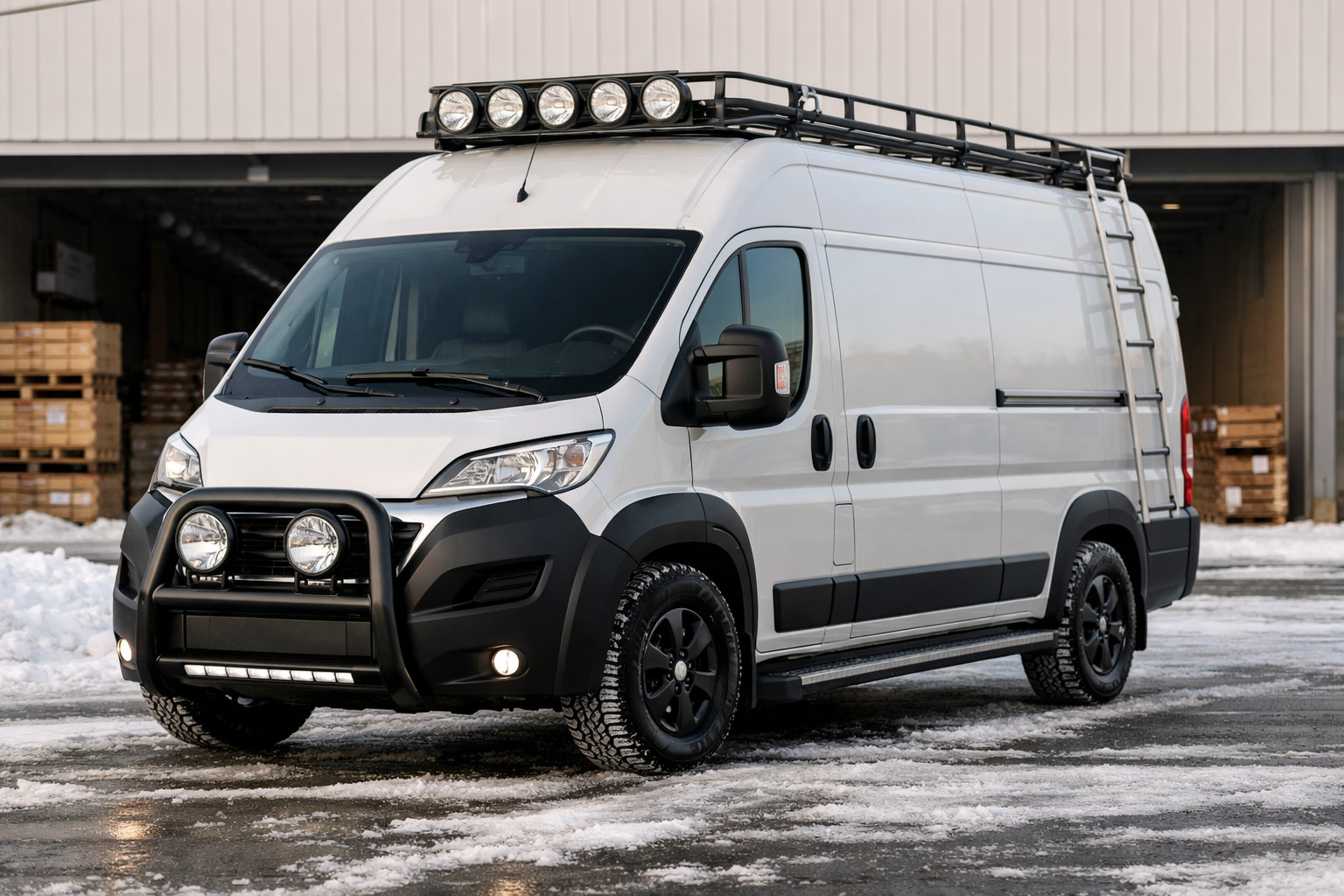
For a rooftop tent, a heavy platform, or expedition gear, the question isn’t “cheaper vs more expensive,” but “fits vs doesn’t fit.” Here you need to look at confirmed dynamic load, crossbar spacing, mounting type, and the tolerance specifically for your car.
If the car is rented, leased, or you plan to sell it soon, a universal kit is often more logical. If it’s a long-term car and the rack will be used regularly, the more expensive solution usually pays off not in money, but in the absence of small problems.
| Scenario | What to choose | Why |
|---|---|---|
| 2–3 trips per year with a light roof box | Universal kit | Provides basic function without a big overpayment if compatibility is verified |
| Frequent highway driving | Vehicle-specific system | Less chance of noise, play, and nervous behavior at speed |
| Carrying bikes or skis every season | Vehicle-specific system | Holds the load better and works more stably with accessories |
| Rooftop tent or heavy platform | Vehicle-specific or reinforced system | You need confirmed compatibility and proper load distribution |
| Temporary car or quick vehicle sale | Universal kit | Easier to remove, sell, or transfer with minimal loss |
| Integrated rails with complex geometry | Vehicle-specific system | Universal clamps more often fit worse and get louder here |
The extra cost is justified when the rack is used not occasionally but regularly: highway driving, a roof box, sports gear, long trips, or heavier cargo. In these scenarios, people buy the more expensive kit not for the brand, but for a more precise fit, less noise, and calmer vehicle behavior.
If you have standard longitudinal rails, it makes sense to start with the category roof racks for standard rails. For cars with integrated rails, it’s better to look straight away at systems for integrated rails, because a fitment mistake costs more there. And if the main concern is whistling and droning at speed, it’s useful to separately check what exactly causes noise on rails.
A more expensive solution also makes sense if you don’t want to remove the rack after every trip. When the system lives on the roof permanently, the difference in aerodynamics, rigidity, and small vibrations becomes noticeable very quickly.
From a customer’s experience: a crossover owner initially looked for an inexpensive universal kit for a vacation roof box, but after several long trips complained about droning and the need to constantly check tightening. After switching to a vehicle-specific system, the whistling issue almost disappeared, and the box sat more evenly. In his case, the extra cost made sense specifically because of frequent highway driving, not because of cargo weight.
If you need a rare, budget option for light tasks, a universal system can be a perfectly fine purchase—but only after an honest compatibility check. If quiet operation, precise fit, stability, and fewer chances of play matter, it’s more practical to look toward a vehicle-specific solution.
The worst-case scenario is buying a kit based only on price or “by photo,” without considering roof type, real load, and usage pattern. This material is based on real selection experience, hands-on practice, and real usage scenarios: for occasional tasks, a universal option is often enough, while for highway use, a roof box, heavier gear, and regular operation, a vehicle-specific system is usually more reliable and convenient.
| ✔ | Universal roof rails or a roof rail kit are cheaper and simpler for occasional use. This is convenient if the roof rack is only needed a few times a year or the car will be changed soon. |
| ✔ | Model-specific systems fit the particular car better, so there is less chance of misalignment, play, or uneven clamping. At speed, this usually means quieter operation and more stable behavior. |
| ✔ | For regular highway trips, a roof box, bicycles, skis, or heavier gear, the model-specific option is more practical. In such scenarios, precise fit matters more than saving money upfront. |
| ✔ | A universal kit is easier to move or sell if the car is temporary or a replacement is planned. This makes it a logical choice for leased cars or short-term ownership. |
| ✘ | Universal solutions handle complex roof shapes and different types of roof rails less well. Because of this, compatibility must be checked very carefully, otherwise the risk of a poor fit increases. |
| ✘ | Universal kits are more likely to produce noise, hum, and whistling at speed. It may also be necessary to tighten the mounts more often. |
| ✘ | Model-specific systems cost more, and that is a noticeable downside if the roof rack is used rarely. Their advantage does not always pay off for occasional trips. |
| ✘ | If the car changes, a model-specific option may require a different mounting kit or feet. In other words, the system is less versatile in long-term use. |
Shipping to EU
Wholesale and retail
Own warehouse
Опис продукту
Подарунки не надаються при оформленні покупки у кредит під 0,01% або при покупці частинами.